Sign in. It’s quick, free and it’s up to you.
An account is an optional way to support the work we do. Find out more.
Sign in. It’s quick, free and it’s up to you.
An account is an optional way to support the work we do. Find out more.
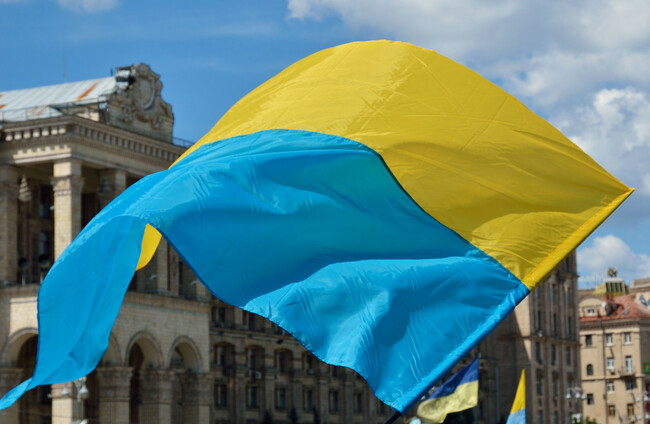
WAR IN UKRAINE has raged for several days.
There have been massive developments in recent days, as Russian troops roll into Ukrainian cities and shelling continues in cities like Kharkiv.
EU taboos have been shattered, with the bloc now moving to supply weapons, ammunition and other military goods to the government in Kyiv.
All this has happened while Ukraine continues to push for membership of the European Union.
Ukrainian President Volodymyr Zelenskyy, Ukrainian Prime Minister Denys Shmyhal and Ruslan Stefanchuk, the Chairman of the Ukrainian Parliament all signed an application to join the EU yesterday, saying it was the choice of the Ukrainian people.
President @ZelenskyyUA signed #EU membership application for #Ukraine. This is the choice of 🇺🇦 and Ukrainian people. We more than deserve it. pic.twitter.com/FRhLTfyjvJ
— Denys Shmyhal (@Denys_Shmyhal) February 28, 2022
This call for immediate Ukrainian membership of the bloc has been pressed by some eastern European countries.
Presidents of eight eastern European countries signed a letter to the EU saying that “Ukraine deserves the perspective of EU accession” and urged EU members to take steps to grant Ukraine candidate status.
The President of the European Parliament, Roberta Metsola, said that she welcomed the Ukrainian application to join the EU.
“We welcome Ukraine’s application for candidate status and we will work towards that goal,” said Metsola.
“We will and we must stand to face the future together.”
Speaking yesterday, Taoiseach Micheál Martin said that while he favoured an accelerated process for Ukraine to join the EU, he did not think it would be possible for them to join immediately.
“I don’t know whether it can be done immediately. But I certainly would be a proponent and supporter of accelerating it and making it very clear that they can become members of the European Union,” he said.
“I’ve always favoured the acceleration of the European perspective for countries in our neighbourhood.”
European Commission President Ursula von der Leyen also told Euronews that she wanted to see Ukraine join the EU.
“They are one of us and we want them in,” von der Leyen said.
However, EU officials later poured cold water over Zelenskyy’s calls for immediate membership of the EU, stressing that the process takes years.
Speaking to Euronews, European Commissioner for Home Affairs Ylva Johansson said that she believed the process would take a long time, but that she backed Ukraine joining the EU.
“I share with almost all Europeans when I say Ukraine belongs with us – that’s the emotional aspect,” Johansson said.
“But to be a member of the EU is a long and well regulated way to go so I think it will take a long time.”
When asked about a potential fast track, Johansson said that it has never been done before so she was unable to comment further.
Irish MEP’s have backed the accession of Ukraine to the EU, with Independent MEP Luke ‘Ming’ Flanagan calling for Ukraine to be granted all the benefits of the EU now, while leaving official accession procedures until after the war has finished.
Instead of starting accession procedures in the middle of war time the EU with immediate effect should give Ukrainian citizens all of the benefits of the EU membership now. When the mayhem and chaos of war has abated then start the official procedure.
— Luke 'Ming' Flanagan (@lukeming) March 1, 2022
Fine Gael MEP, Frances Fitzgerald called for the Irish government to promote Ukraine as a candidate country for EU membership.
“Ireland must take a leading role in the European Council to encourage all Member States to welcome Ukraine as a candidate country,” Fitzgerald said.
There are differing views when it comes to enlargement of the EU. But with war on our doorstep, the EU must look beyond these differences and show the highest level of solidarity to the Ukrainian women, men and children that needs us in their darkest hours.
Process of joining the EU
There are currently five countries that have candidate status and are trying to join the EU: Turkey, Serbia, North Macedonia, Montenegro and Albania.
Previously, Croatia was admitted to the EU in 2013 and the UK officially left the bloc in 2020 after the Brexit vote in 2016.
It is unlikely that Ukraine will be able to fast track its application to the EU, despite motions within the European Parliament seeking to have the application processed quickly.
The process itself can take decades, with the EU saying that joining the bloc is a “complex procedure which does not happen overnight”.
Currently, there are three very broad stages to joining the EU. These are:
Candidate status
The candidate status stage is the most straightforward of the three. It works by a European country submitting an application to join the EU and then the bloc examining whether or not that country meets the ‘Copenhagen criteria‘.
This essentially boils down to whether the country:
There is also space around whether or not the EU can accommodate and integrate new member states.
In this case, the European Commission would then issue an opinion on the application before the 27 member states must decide unanimously whether or not to grant that country candidate status.
Following the candidacy stage, formal negotiations to become a member can begin.
According to the European Commission, this process involves formally adopting established EU laws and preparations to properly apply and enforce these laws.
Other reforms, around economic, judicial and administrative matters are also required to ensure the country meets EU standards.
Negotiation process
Following a country reaching candidate status and the start of negotiations, the EU Council must unanimously decide on a framework for those negotiations between the bloc and the country in question.
Currently, the negotiation process is extremely long. For example, Albania was first granted candidate status in 2014 – five years after it had submitted its application to join in 2009.
While the country received this status eight years ago, the European Commission did not recommend to open negotiations until 2018 and it was a further two years before the European Council made the decision to open negotiations in 2020.
While the negotiations may take a long time, what exactly are they working through?
According to the European Commission, the negotiations are around the “conditions and timing of the candidate’s adoption, implementation and enforcement of all current EU rules”, otherwise known as the ‘acquis‘.
The acquis is broken down into 35 policy groups and it includes subjects like:
These policy groups – known as chapters - are negotiated following an in depth examination by the European Commission to determine how prepared a candidate country is to join the EU.
A report will then be published by the Commission on whether or not negotiations should be published immediately or whether certain criteria – known as opening benchmarks – should be met first.
If these benchmarks are met, official negotiations between the EU and the candidate country can begin.
The European Commission has said that the pace of EU accession negotiations entirely depend on the speed of the reform and alignment with the bloc’s rules and regulations.
The negotiation process itself is then closed on a chapter-by-chapter basis, with all EU governments needing to be satisfied with the candidate country’s progress before they can be deemed completed.
It is fully complete when all chapters have been agreed on and closed.
EU accession
The final stage of the process is accession to the EU by the candidate country.
This is finalised through what is known as an accession treaty, which details the terms and conditions of the country’s membership as well as a date for when membership of the EU comes into effect.
However, the treaty is not seen as binding until it receives the support of the EU Council, the European Commission and the EU Parliament, as well as being signed and ratified by the candidate country and each member state.
The ratification process itself depends on the individual country’s constitution on whether it needs to hold a referendum or just pass it through it’s parliament.
When Ireland sought to join the EU – then European Economic Community (EEC) – in the 1970s, a referendum was held on 12 May 1972 on amending the constitution to allow for Ireland to become a member.
After the signing of the treaty, the candidate country becomes an acceding country and will officially join the EU on the date set out within the treaty.
Until then, the country will have some say over EU policies, including being permitted to comment on draft EU proposals and has can speak on but not vote on issues related to EU bodies and agencies.

To embed this post, copy the code below on your site









have your say