Sign in. It’s quick, free and it’s up to you.
An account is an optional way to support the work we do. Find out more.
Sign in. It’s quick, free and it’s up to you.
An account is an optional way to support the work we do. Find out more.
LAST UPDATE | 21 Apr 2025
POPE FRANCIS’S DEATH has made headlines around the world today. The 88-year-old leader of the Catholic Church died following a period of illness.
His burial will take place between the fourth and sixth day after his death, which means Francis’s funeral will take place between Friday 25 April and Sunday 27 April.
The mayor of Rome Roberto Gualtieri has said it is his understanding that the funeral will take place on Saturday.
Francis was discharged from hospital recently and rallied in the last few weeks, but passed away this morning.
Francis was admitted to the hospital with bronchitis on 14 February after suffering breathing difficulties, but the Vatican later revealed he had developed pneumonia in both of his lungs.
He spent five weeks in hospital before being discharged to convalesce. In recent weeks, Francis was spotted around Rome attending various religious events.
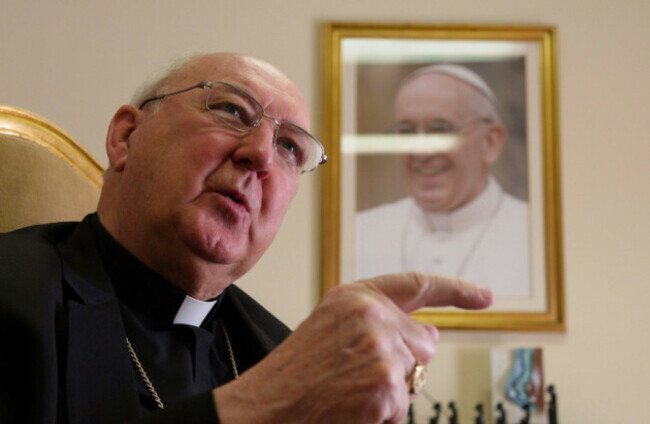
In the moments after Pope Francis’ passing, an Irish-born Cardinal played a significant role in announcing his death to the world.
Cardinal Kevin Farrell, born in Dublin in 1947, has been the Camerlengo of the Holy Roman Church since 2019.
The Camerlengo administers the property and revenues of the Holy See, which is the governing body of the Catholic Church and Vatican City State.
But the Camerlengo is also responsible for officially confirming the pope’s death and announcing it to the waiting world.
He announced the news at 9.45am this morning.
At 9:45 AM, Cardinal Kevin Farrell, Camerlengo of the Apostolic Chamber, announced the death of Pope Francis from the Casa Santa Marta with these words:
— Vatican News (@VaticanNews) April 21, 2025
"Dearest brothers and sisters, with deep sorrow I must announce the death of our Holy Father Francis. At 7:35 this morning,… pic.twitter.com/De4pEZkvs9
“Dearest brothers and sisters, it is with deep sorrow that I must announce the death of our Holy Father Francis,” said Cardinal Farrell.
“This morning at 7:35 am (06:35 Irish time) the Bishop of Rome, Francis, returned to the home of the Father.
“His entire life was dedicated to the service of the Lord and His church.”
Cardinal Farrell will also manage the administration of the Vatican until the election of a new pope, though no major decisions will be made in this period.
In what is a largely ceremonial practice, the Camerlengo visits the deceased pope and calls out his baptismal name three times – in the case of Francis, this was Jorge Mario Bergoglio.
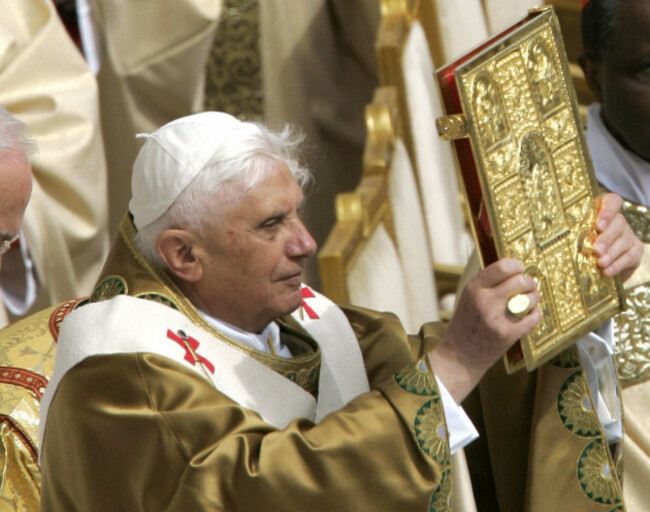
After the pope is declared dead, the Camerlengo takes the pope’s Fisherman’s Ring and defaces it — Francis only wore his for special occasions, preferring to wear the one he had as Archbishop of Buenos Aires, in Argentina.
The Fisherman’s Ring is presented to the pope at his papal inauguration and refers back to St Peter, the first pope, who was a fisherman.
In centuries past, destroying the ring would have served a practical purpose and prevented the signet ring from being fraudulently used on papal documents.
Nowadays, it is mostly a symbolic act that signifies the end of the pope’s reign – the Vatican is one of the few absolute monarchies that remain.
It is also the role of the Camerlengo to place seals on the pope’s study and bedroom, and later the entire papal apartment.
The areas will be opened again and the seal broken after the conclave is completed and a new pope is elected.
While this once served the practical purpose of preventing the pope’s apartment from being looted, it is now a symbolic act to signal the end of his time in office.
Meanwhile, many reputable outlets, including the BBC and the Britannica Encyclopaedia, wrongly claim that in addition to reciting the baptismal name of the pope three times, the Camerlengo also gently taps his head with a ceremonial silver hammer while doing so.
This claim was first reported online in The Guardian in 2003 and was later retracted a few weeks later, with The Guardian noting that the Vatican labelled it a “myth”.
A 2005 article from the Catholic News Agency claims that the Apostolic Constitution Apostólica Universi Dominici Gregis issued by Pope John Paul II in 1996 confirms this practice. However, there is no such reference to this to be found in the aforementioned document.
Cardinal Farrell will oversee the rite of the ascertainment of the death of Francis, which will take place this evening at 8pm Rome time.
The placement of the Francis’s body in his coffin will take place afterwards.
His remains will be placed in the Chapel of the Vatican’s Casa Santa Marta, before being moved to St Peter’s Basilica on Wednesday.
Cardinal Farrell is now tasked with making arrangements for the pope’s burial, though Francis has left behind a detailed wish of how he wants his funeral to be.
Nine days of official mourning have been declared following Francis’s death and the burial will take place between the fourth and sixth day after his death.
Popes are usually buried in St. Peter’s Basilica, where the body will be laid in State for people to pay their respects.
Francis’s remains will be removed to St. Peter’s Basilica on Wednesday.
However, Francis had asked that things be done differently for him.
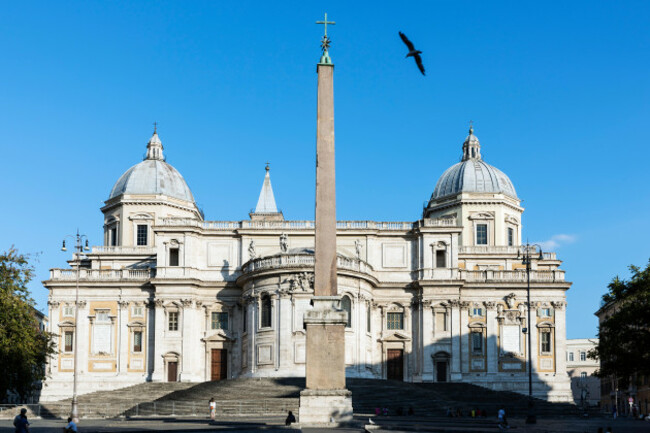
In his recently published memoir, Hope, Francis said that he will not be buried in St Peter’s Basilica, writing: “The Vatican is the home of my last service, not my eternal home.”
Instead, Francis will be buried at the Santa Maria Maggiore, one of four papal basilicas in Rome and the largest Marian church in Rome.
The last pope to be buried outside the Vatican was Leo XIII, who died in 1903.
Francis also described the funeral service planned for him as “excessive” and “arranged with the master of ceremonies to lighten it”.
While deceased popes are typically displayed on a raised platform known as a catafalque, Francis said this will not be that case for his ceremony and that he will lie in an open coffin.
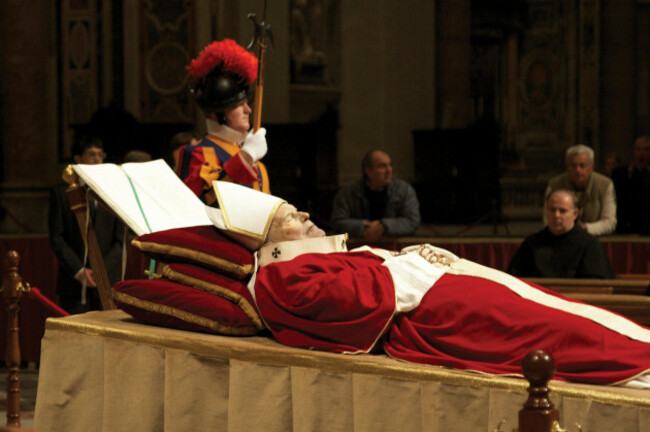
Meanwhile, popes are often buried in multiple coffins – one made out of cypress, one of lead and one of elm, which are placed one inside the other, before the papal body is interred.
However, there will be one coffin for Francis, made of wood and zinc.
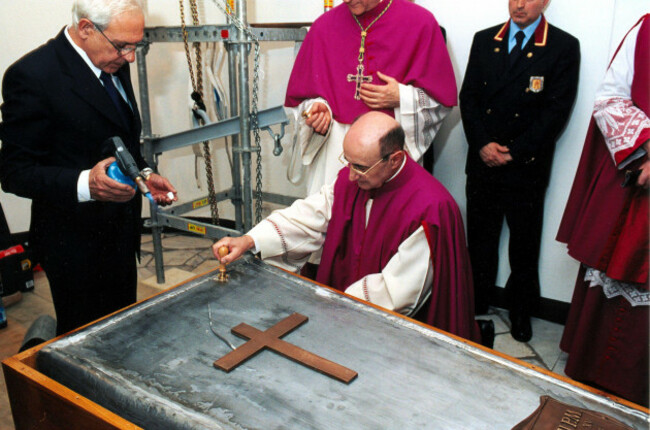
“No catafalque, no ceremony for the closure of the casket, nor the deposition of the cypress casket into a second of lead and a third of oak,” Francis said in his autobiography.
“With dignity, but like any Christian, because the bishop of Rome is a pastor and a disciple, not a powerful man of this world.”
The placement of the Francis’s body in this coffin will take place this evening at 8pm Rome time.
Cardinal Farrell will preside over the rite in the Chapel of the Vatican’s Casa Santa Marta.

To embed this post, copy the code below on your site









have your say