Sign in. It’s quick, free and it’s up to you.
An account is an optional way to support the work we do. Find out more.
Sign in. It’s quick, free and it’s up to you.
An account is an optional way to support the work we do. Find out more.
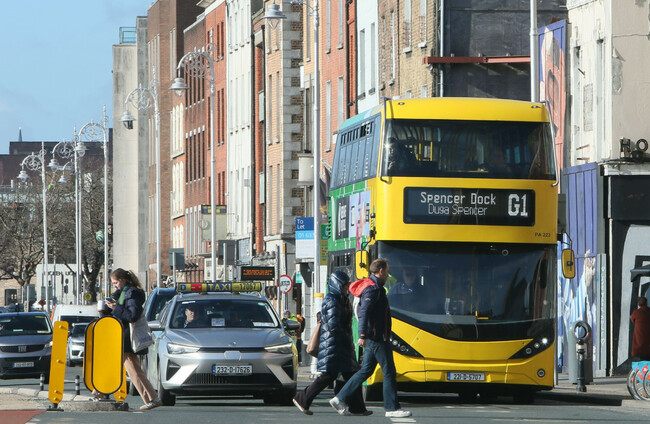
NEW BUSCONNECTS ROUTES have gained more passenger numbers and improved more on punctuality than the non-updated parts of the Dublin Bus network, according to the National Transport Authority.
The first phase of Bus Connects started in June 2021 with the introduction of the H-spine, which has been followed since by the C, N, G, W, S and E routes, and well as new local buses.
Up to the end of 2024, passenger numbers in areas where the new network has been implemented have increased by 48%.
In contrast, the rest of the network has seen an increase in passengers of only 8%.
That’s according to a new progress report published by the NTA.
Additionally, there was a 8.5% improvement in punctuality in the redesigned network compared with just a 2.3% improvement on non-BusConnects routes.
NTA Interim CEO Hugh Creegan said the growth in passenger numbers is “very encouraging” and described it as an indication that “members of the travelling public are responding positively to the improved service levels and greater connectivity that BusConnects offers”.
“The BusConnects Dublin Programme has already delivered significant passenger benefits, but there’s more to be done,” said Creegan.
The most recent change under Bus Connects was an overhaul of several routes in north Dublin in January, including replacing the 11 and the 13 with the 19 and introducing two 24 hour ‘spines’, the E1 and E2.
Residents in areas like Glasnevin and Wadelai strongly protested the change, expressing concerns about the new service options, including worries that the city-bound buses will fill up at Dublin Airport before reaching residential estates further down the line.
Locals were also concerned about the availability of bus drivers to fulfil a promise from the NTA that the termination point will be extended from Parnell Square to Merrion Square.
Creegan said that the “introduction of bus priority along the Core Bus Corridors and the new ticketing system will shorten journey times, and improve punctuality and reliability, making travel bus an even more attractive option”.
However, that new ticketing system that is in development, which will allow credit or debit cards and mobile phones to be used to pay for fares, will take another three years before it’s ready, according to the report.
In 2021, the NTA told The Journal that contactless payment could be available by 2023 or 2024.
Under BusConnects, 110 electric buses have been introduced into service.
The buses are charged up at Dublin Bus depots in Summerhill and Phibsborough.
The new report says that the electric bus fleet covered nearly two million kilometres in 2024.
They saved about 1,900 tonnes of CO2 emissions compared to what would have been produced by diesel buses travelling the same distance.
The NTA plans for 85% of the Dublin metropolitan area to be operated by low and zero emission buses by 2032, and solely by zero emission buses by 2035.

To embed this post, copy the code below on your site












have your say