Sign in. It’s quick, free and it’s up to you.
An account is an optional way to support the work we do. Find out more.
Sign in. It’s quick, free and it’s up to you.
An account is an optional way to support the work we do. Find out more.
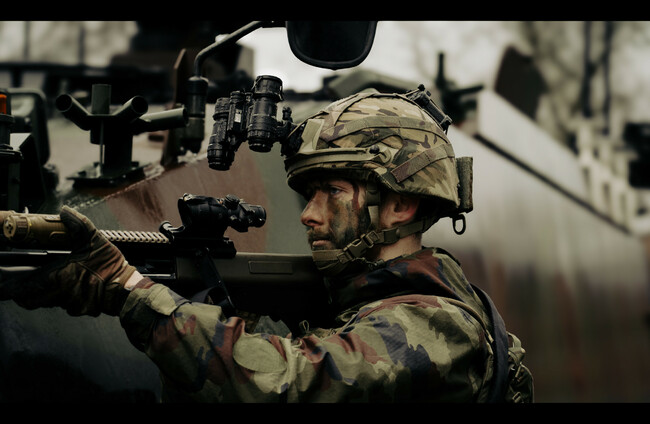
THE EUROPEAN UNION has detailed a major plan to boost its member state’s defence budgets with proposed financial loans for military kit and a loosening of fiscal rules on spending.
The White Paper for European Defence was released today in Brussels and sets out the EU’s plans to ramp up defence spending and increase military capability across the continent.
The document comes after the bloc announced this month a raft of proposals it says could mobilise up to €800 billion.
It is not known if Ireland’s opt out from an EU mutual defence pact will limit its ability to benefit from the programme.
The document which sets out plans up to 2030 and it includes a strategy to move away from a reliance on the US for mutual security. It also has said that it is to boost the defence industries in the EU so that they can increase the manufacturer of equipment and weapons.
The document states that “given the urgency” the Commission proposes a new EU regulation in a Treaty to provide Member States with “loans backed by the EU budget”.
“With up to €150b billion, the Security and Action for Europe (SAFE) instrument will strongly support a significant increase in Member States’ investments in Europe’s defence capabilities, now and over this decade,” the document said.
The plan for the new model begins from the start of April.
Former Estonian Prime Minister Kaja Kallas who is now High Representative for Foreign Affairs and Security Policy and Vice-President of the European Commission is an exponent of a stiffer stance by Europe.
She said: “This is a pivotal moment for European security. It is a pivotal moment for action.”
The foreign affairs chief criticised the EU’s lack of spending on defence for the “past few decades” and said “we must spend more”.
“At the same time, the value we add by working together is priceless. It gives us a competitive advantage that is unrivalled anywhere in the world. In our White Paper for European Defence – Readiness 2030, we set out concrete ways to do this.
“Be it in our support for Ukraine, addressing our own capability gaps, or standing up for a world where might does not make right, we are always stronger together,” she said.
Key to the plan is a proposal to ease stringent fiscal rules to allow states to spend much more on defence – the document said this could potentially free up €650 billion over four years.
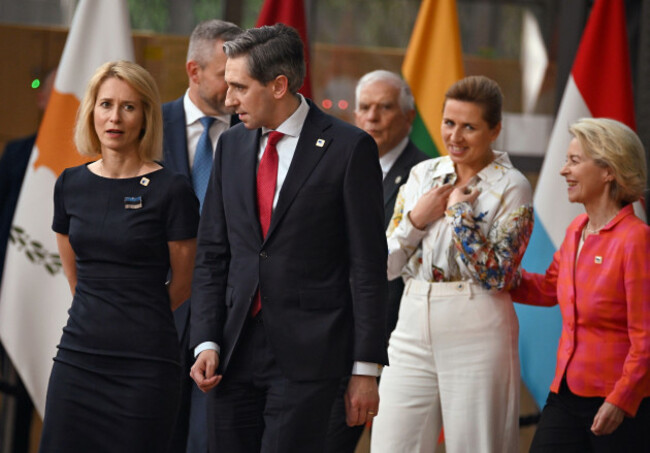
Kallas said that it would not adopt a bigger programme of joint borrowing. Some member states had argued in recent meetings that there should be a similar spending splurge as happened during the Covid pandemic.
“But is it completely off the table? I don’t think so,” she added, saying it could still be envisioned to finance flagship common projects between countries,” she said.
There would also be plans for a deal with Turkey to avail of a joint procurement scheme and a new security deal between Britain and the EU.
The Irish Government has not commented on the proposed plan.
Labour TD Duncan Smith who is the Party’s Foreign Affairs, Trade and Defence spokesman said that his party did not support anything that be an ”infringement on our neutrality in terms of common defence union, that’s not something we support”.
He said that Ireland needs to get “its own house in order”.
Meanwhile the Taoiseach Micheál Martin has announced the establishment of a Ministerial Council on National Security.
The new council, chaired by the Taoiseach, will review strategic developments in Ireland’s national security, and consider reports on national and international security.
Membership of the council will also include the Tánaiste and Minister for Foreign Affairs and Trade and Minister for Defence, and the Minister for Justice, Home Affairs and Migration.
The Garda Commissioner, Defence Forces Chief of Staff, Director of the National Cyber Security Centre, Secretaries General of Government, Foreign Affairs, Defence and Justice, and the Taoiseach and Tánaiste’s Chiefs of Staff will also attend meetings.
The ministerial council will meet at least three times a year.

To embed this post, copy the code below on your site











have your say