Sign in. It’s quick, free and it’s up to you.
An account is an optional way to support the work we do. Find out more.
Sign in. It’s quick, free and it’s up to you.
An account is an optional way to support the work we do. Find out more.
LAST UPDATE | 6 May 2025
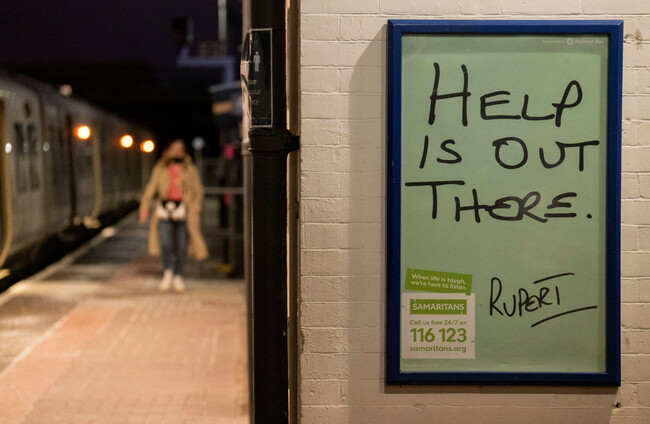
PRELIMINARY FIGURES FOR 2023 show that there were 302 deaths by suicide in Ireland last year, the lowest preliminary figure for over 20 years.
The decline has been welcomed by Minister of State for Mental Health Mary Butler, who will update Cabinet on the latest statistics this morning.
There is a significant time lag in reporting deaths by suicide, and because of this, the number will be revised upwards as coroner investigations conclude.
Between 2000 and 2021, Ireland has seen a 28% reduction in the number of deaths by suicide, falling from 12.9 per 100,000 in 2000 to 9.2 per 100,000 in 2021 (the last year for which we have official figures).
This means that Ireland now has the 11th lowest suicide rate in the EU.
Cabinet will be told this morning that a recent consultation on the development of a new national suicide reduction policy received 1,895 submissions, with the majority coming from members of the public.
Cabinet will also be advised that previous self-harm remains the biggest risk factor for suicide, and that the National Suicide Research Foundation Self-Harm Registry data highlights that between 2010 and 2023 self-harm rates decreased by 12%.
It is understood Butler will inform Cabinet of her plans to finalise a new strategy to further reduce self-harm and suicide by the end of 2025, with a view to establishing implementation and oversight monitoring structures early next year.
Elsewhere, Taoiseach Micheál Martin is set to inform Cabinet that the Government has been advised to introduce more flexible rent controls and increase investment in cost-rental housing in a bid to hit its goals in relation to population density in Irish cities.
The recommendations are laid out in a report from the National Economic and Social Council, which the Taoiseach will bring to Cabinet this morning.
The report looks at the benefits of compact growth, which in Ireland’s case is the goal of having half of all population growth within its five biggest cities and their suburbs from now to 2040.
Some of the benefits outlined in the report are higher productivity and innovation, more sustainable travel, improved access to services and lower energy consumption.
Between 2016 to 2022, the share of population growth represented by the five cities was just 32 per cent.
The report found that while the National Planning Framework target of having 40% of new housing developments within existing built-up areas is being achieved, more could be done.
If you have been affected by any of the issues mentioned in this article, you can reach out for support through the following helplines:

To embed this post, copy the code below on your site















have your say