We need your help now

Support from readers like you keeps The Journal open.

You are visiting us because we have something you value. Independent, unbiased news that tells the truth. Advertising revenue goes some way to support our mission, but this year it has not been enough.

If you've seen value in our reporting, please contribute what you can, so we can continue to produce accurate and meaningful journalism. For everyone who needs it.

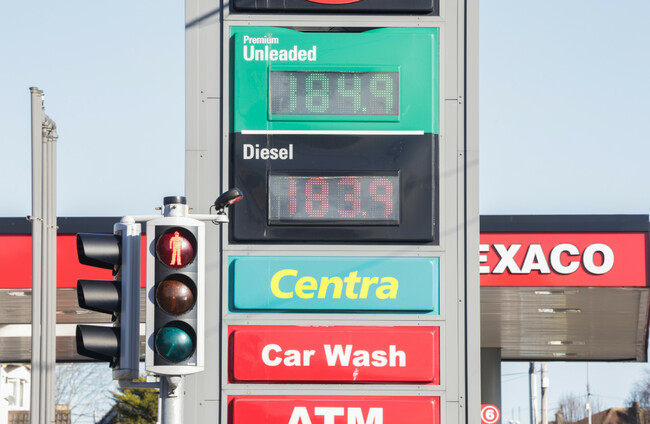
Luxembourg, as well as the Australian states of Victoria and Tasmania, have made travel on public transport free recently to encourage people to drive less and conserve fuel. Leah Farrell/RollingNews.ie

Calls to make public transport free to help conserve fuel as energy prices soar

“We can’t tax cut our way out of this crisis and every energy crisis,” Labour TD Ciarán Ahern said.

OPPOSITION POLITICIANS HAVE called on the government to make public transport free and expand remote working to support the public as fuel prices continue to soar.

The Strait of Hormuz has been virtually closed since the US-Israeli war against Iran started on 28 February, impacting global supplies of fuel and leading to a sharp rise in energy prices that continues to increase.

Luxembourg, as well as the Australian states of Victoria and Tasmania, have each made travel on public transport free to encourage people to drive less and conserve fuel.

Speaking to The Journal, Labour TD Ciarán Ahern said expanding remote working and making public transport free are solutions that the government should implement.

The transport spokesperson said that as well Labour endorsing these measures, the moves have also been recommended by the International Energy Agency (EIA), whose number one piece of advice on managing the energy crisis is to work from home where possible.

The advice was endorsed this week by the EU Commissioner for Energy, who urged EU member states to look at the EIA recommendations for inspiration to support their citizens.

“I’m not sure why the government is so hesitant, I just don’t understand it,” Ahern said.

He said all public transport across the country should be made free for a limited time, while remote working should be allowed where possible.

A week ago the government’s excise duty cut on fuel, which cut the price of diesel by 20c per litre and the price of petrol by 15c, came into effect. Ahern said the cuts are welcome, but more can be done.

“We can’t tax cut our way out of this crisis and every energy crisis,” he said.

Yesterday the Irish Road Haulage Association also called for more government support, saying the continued increases in fuel prices have “effectively eroded” the benefit of the excise cuts.

Ahern highlighted the other recommendations made by the EIA, including reducing speed limits.

He believes the recommendations are wrongly being viewed as ‘green measures’ by members of government, rather than cost saving measures.

“The government is led by a bunch of rural independents who don’t want to be seen to impinge on anyone’s driving,” he said.

When it comes to expanding remote working, Ahern said the government has offered “no justification” on why they won’t endorse the measure, which he said is “cost neutral”.

He said that despite there having been a push back to the office recently, most jobs can be done remotely and Covid-19 proved a move to remote work can be made almost overnight. 

“There’s lots of things the government could be doing that they’re not doing,” he added.

He said that long term measures, such as increased investment in renewable energy, should also be taken so that Ireland is not so reliant on imported fossil fuels.

Social Democrats TD Jennifer Whitmore agreed that the government must take further steps to support people amid the energy crisis.

Speaking to The Journal, Whitmore said the government needs to implement an “immediate response” – especially as the crisis came so soon after price increases from the war in Ukraine.

The transport spokesperson said the government should look at making travel free on public transport, but highlighted that this would be “limited by the availability and reliability” of Ireland’s transport system.

Whitmore also called for increased access to remote working and an information campaign to be implemented by government.

The Social Democrats are calling for a €400 targeted energy credit, something Whitmore said must be the “first thing” the government should do as everybody uses electricity.

“It’s a shame government hasn’t used the last several years to invest in energy infrastructure,” Whitmore said, adding that the country would not be so reliant on fossil fuels if this had been done.

She described the lack of action in recent years as a “missed opportunity and reckless” by the government.

“If government had been using the last couple of years, homes and people would be more resilient.”

Tánaiste Simon Harris has said the government has no plans to alter its advice around remote working or travel. Meanwhile, Energy Minister Darragh O’Brien told reporters this week that government advice on conserving energy will be delivered in the coming weeks.

When asked about impacts to public transport the fuel crisis might have, the minister said there are no plans to curtail public transport operations.

He said fuel supply is not an issue for Ireland right now, if that were to change in the weeks ahead, then government advice would of course have to reflect that situation.

“There are no threats or fears to our public transport sector, or indeed our haulage sector, which we did move to support last week. They’ve been very constructive in their engagement with us. But this is something that we’ve got to continue to monitor every single day, and we’ll continue to do so and respond appropriately,” he said.

Department responses

The Department of Transport and The Department of Finance were both contacted for comment.

A spokesperson for the Department of Transport said that it is aware of “growing pressure” across the public transport sector for operators and users given the impacts already being seen on fuel prices in Ireland.

“It is essential that we monitor these impacts to assess if they are temporary or become more long-term,” the spokesperson said.

“Government continues to closely monitor developments in fuel markets, which remain highly volatile at present due to international geopolitical factors.

“In this regard, the Department of Transport is also engaging closely with industry stakeholders through existing structures to ensure that the domestic supply position and market impacts are kept under ongoing review.”

The spokesperson added that the Public Service Obligation programme to fund public transport represents a significant expenditure of taxpayers’ money, and has seen increases in recent years to cater for additional services, fare initiatives and growing demand.

“The Government recognises that an equitable and reliable public transport network plays a vital role in encouraging a shift away from private car use,” the spokesperson said, before adding that public transport fare policy “must balance affordability for passengers with the long-term financial sustainability” of the network.

Readers like you are keeping these stories free for everyone...
A mix of advertising and supporting contributions helps keep paywalls away from valuable information like this article. Over 5,000 readers like you have already stepped up and support us with a monthly payment or a once-off donation.

View 145 comments
Close
145 Comments
This is YOUR comments community. Stay civil, stay constructive, stay on topic. Please familiarise yourself with our comments policy here before taking part.
Leave a Comment
    Submit a report
    Please help us understand how this comment violates our community guidelines.
    Thank you for the feedback
    Your feedback has been sent to our team for review.

    Leave a commentcancel

     
    JournalTv
    News in 60 seconds