Sign in. It’s quick, free and it’s up to you.
An account is an optional way to support the work we do. Find out more.
Sign in. It’s quick, free and it’s up to you.
An account is an optional way to support the work we do. Find out more.
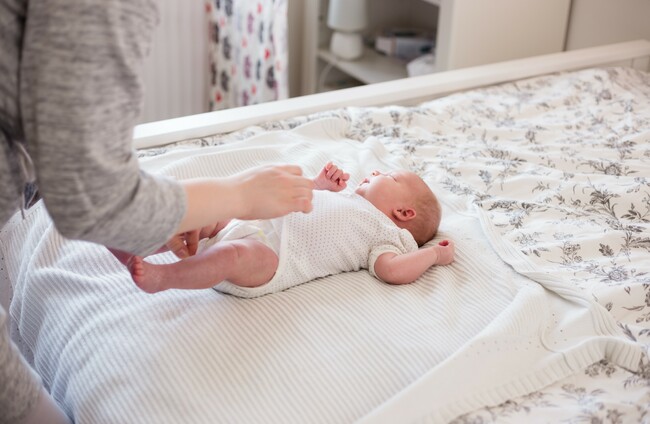
I WAS SEVERAL months into parenting when I made a life changing discovery.
My son was still in the poo-up-the-back stage, which every parent knows all too well, and I was still far from adept at managing to hoist my baby’s vest over his head without creating even greater messy carnage.
Many nappy changes turned into baths, but then I made a revelation: I discovered The Truth behind baby onesie necklines – most of them are designed to allow you to roll the babygro off, from the neck down, if needed.
That’s not the only baby product revelation I’ve made along the way. Thanks to a thorough investigation (and years of getting it wrong with my own two kids), I can shine a light on some of the hidden hacks you may not have figured out yet…
1. You don’t always need to pull a babygro upward to take it off
It’s generally assumed that the foldy bits on vests are just to help you get them over a wriggly baby’s giant head, but it turns out it’s actually a genius bit of design. The ‘envelope folds,’ as they’re properly called, are there to let you roll down the onesie in instances of explosive poos, rather than having to try and lift the manky vest over baby’s head. Blogger Tiaras & Prozac is widely hailed as the source of this revelation (her video on it has now had over eight million views).
2. The car seat handle should stay up (not down) during journeys
There’s obviously a lot that you need to make sure you’re getting right when it comes to car seat safety, and I thought I’d ticked all the boxes by having a seat correctly fitted by a professional and making sure it was rear facing and the right weight. But it was only when my second child was several months old that a friend pointed out I should be leaving the carry handle in the up position when the car was moving. The frame will also act as a roll-bar in the event of a collision, offering baby extra protection. This site explains more, if you’re curious.
3. The + sign on nappies signals absorbency, not a half-size
You probably thought it was a size thing, right? I know I did. I figured nappies with a 4+ label were somewhere between 4 and 5, like a half shoe size. Wrong. While the number refers to the size, the plus sign actually relates to absorbency, meaning + size nappies could be a better option for nights. You’ll find this information on many manufacturer and retailer websites, but it was widely unknown until UK mum Nicci Pearse’s Facebook post on the topic went viral in 2016 (Pearse was even interviewed by local press at the time).
4. And those blue sticky tabs are for wrapping nappies up
The brand of nappies I use has a blue tab on the back. Until my mother pointed it out, it hadn’t really registered, let alone considered what it was for. After years of using them, I went onto the website to find out, and lo and behold, it’s supposed to be a sticky strip to hold the nappy together, containing all contents, once rolled up. Weirdly, even though I now know this and think it’s a handy notion, I still don’t manage to it.

5. The double seam helps you tell back from front on baby tights
Unless your baby tights have a cute ruffle or design on the rear, many parents report being stumped by which way is the right way round. Thanks to scouring online forums (seriously, this is an issue that plagues many a mum and dad) the answer comes down to seams. One seam should go in the front, two seams should apparently go in the back. The double seam is to accommodate a little more junk in the trunk.
6. No sunshade on your car seat? Check under the rim
For about six months, I looked longingly at other babies being wheeled round in their travel system car seats and thought, ‘why do they all have sunshades and our seat doesn’t’ Until one day I looked closer and realised many of them had the exact same model of car seat as me. A more thorough inspection revealed that the sunshade was tucked behind the grey rim of the car seat, a bit like a hidden hood on a jacket.
7. And changing tables are designed to be used side-on for a reason
I fought with my changing table at the start – resolutely insisting on changing him facing his feet, instead of side-on. This was, after all, the position I’d seen most of my friends change their (much older) babies in. It was only when I had my second child and decided to give side-changing a go from the outset that I realised side-changing is a defence position to protect parents against projectile poos and wee fountains! Turns out the table-makers actually do know what they’re doing, as confirmed by heaps of online forum evidence. It’s only when your babies are bigger (and more or less past the defecating on you stage) that you’re safe – or at least safer – to take them off the changing table and switch to changing them feet forward on a mat on the floor.

To embed this post, copy the code below on your site







have your say