Sign in. It’s quick, free and it’s up to you.
An account is an optional way to support the work we do. Find out more.
Sign in. It’s quick, free and it’s up to you.
An account is an optional way to support the work we do. Find out more.
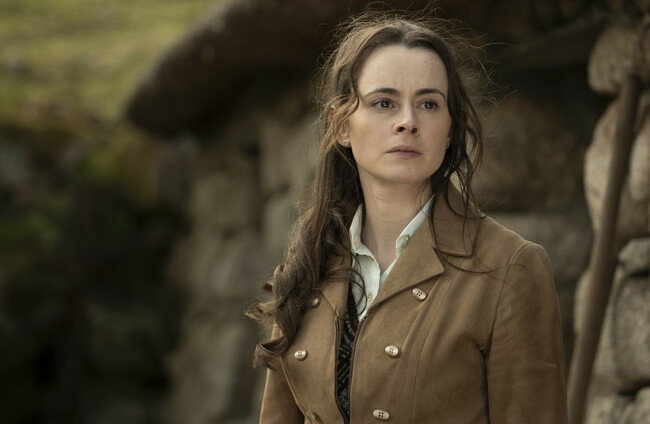
(This article is produced by our Gaeltacht team. You can read the original Irish version of this piece here)
WE’RE IN THE mid seventies in a small village in a lake valley in the heart of Ireland and the body of a young woman has been found in the water close to the beach. Who was she, how did she die, was she murdered and who did it?
This is the starting point for Báite (The Drowned), a new film that is showing in cinemas nationwide this week and the ninth film released under the same scheme that brought us An Cailín Ciúin and Kneecap, the Cine 4 scheme, a joint venture between TG4, Fís Éireann and Northern Ireland Screen.
You’ve probably figured out by now that it’s an Irish language film. ‘An Cailín Ciúin’, the first Irish language film to receive an Oscar nomination in 2023, was a clue, wasn’t it?
All Quiet On The Western Front, a German film, won the award for International Film that year, and was also shortlisted for best film.
This highlights the fact that non-English language films are gaining more international attention and in 2020, Parasite, a Korean film made in Korean, won the Oscar for Best Picture. This had never happened before.
There was talk last year that Kneecap would have a chance in the international film section but it didn’t make the shortlist. (The boys would probably have trouble getting in anyway, given that Donald Trump wouldn’t be too happy with their statements).
It’s unlikely think this particular film will win an Oscar, in my opinion. It’s not that it’s not a good film – I enjoyed it immensely.
The script holds water. The characters are believable. The story is interesting and engaging. The ESB had a plan to flood this valley, Gleann a’Phúca, in order to build a dam to generate power for the ‘Dublin Jackeens’. Gleann a’Phúca is a long way from Dublin in east Galway but there’s a discernible anti Dublin undercurrent in the narrative.
Back before the valley was flooded, they had to move the bodies in the cemetery to a new location. Something similar happened here in the Lee Valley in West Cork during the 1950s. It would have been a daunting task to relocate the occupants of the cemetery.
The remains found on the shore of the lake, perhaps twenty years later, was initially thought to be a corpse that had been left behind 20 years previously but gradually we learn that it was a young woman who lived in the area but who had emigrated, it was said at the time of the flood. Now it seems there’s a more sinister explanation for her disappearance.
It is suspected that her postman, Colmán (Pádraig Ó Loingsigh), killed her. He was in love with her. But another man was also taking an interest – an American soldier – and she was smitten with the Yank.
Peggy (Eleanor O’Brien) is the landlady of Casey’s pub on the shore of the lake. She likes to go swimming there. Her brothers and sister want to leave the village and seek a life elsewhere and to do this they must sell the pub. Peggy thinks there is a chance to develop the pub into a worthwhile business and wants to stay.
Detective Frank Ryan (Moe Dunford) comes to Gleann an Phuca to investigate the murder. He is staying at Casey’s pub. The plot is now thickening.
All these plot threads are connected and you will know everything by the end of the film which lasts around 100 minutes.
The parish priest (Denis Conway) also plays an important role and you would not know what information you might glean if you visited the Uí Grógáin Shop in the village, home of the Grogans (Aonghas Óg McNally and Tara Breathnach), the shopkeepers who know the price of everything and the value of secrets.
The first thing that struck me about this film was the beautiful dramatic opening as the camera flies into the valley and the music of Emer Noone and Craig Stuart Garfinkle plays in the background. Then we go underwater in the lake where there are ruins of an old church and graves that are eerily empty.
The director, Rúán Magan, and his crew grabbed me from that point on and the story continues to flow smoothly from that point on. There is a lot of ‘vision’ and a lot of style – but it doesn’t go overboard.
The film has its faults. As an Irish speaker, for instance, I look out for language mistakes, grammatical errors, inconsistencies in the dialects and the like. (Don’t judge me, it’s a kind of sport).
I noticed a few of language issues, no doubt about it. And I was going to mention them – but it did occur to me that I would hardly do this in a review of a film in English.
Besides, shame wouldn’t let me do that – there are probably a lot of grammatical and spelling mistakes in the Irish version of this very article!
Most English language films feature poor use of language, incorrect grammar, appalling pronunciations and the like and no attention is paid to it, but because this is an Irish language film, the spotlight must be put on grammatical errors. I don’t think the judges for international awards take the niceties of Irish grammar into account in their deliberations.
I understand, however, that minor things can distract from the story and frustrate a few people in the audience and you have to be careful that the elements fit together comfortably, without any of them interfering with their bedfellows. The other issue is that there have been so few Irish language films over the years that we’re inclined to micro-review each one to the point of exhaustion.
This is the 9th film since the start of Cine 4. I have enjoyed them all to a certain extent, some more than others. This is closer to the top of the list than the bottom.
It’s worth a trip to the cinema to see Báite. You should enjoy it. This talented director and the production company, Danú Media, have more stories to tell, and I look forward to them.
The Journal’s Gaeltacht initiative is supported by the Local Democracy Reporting Scheme.
This article was originally written in the reporter’s native Irish and has been translated to English here. AI was used as part of the translation process before final edits.

To embed this post, copy the code below on your site














have your say