We need your help now

Support from readers like you keeps The Journal open.

You are visiting us because we have something you value. Independent, unbiased news that tells the truth. Advertising revenue goes some way to support our mission, but this year it has not been enough.

If you've seen value in our reporting, please contribute what you can, so we can continue to produce accurate and meaningful journalism. For everyone who needs it.

Alamy

'Highest since the Famine': Motion seeks ban on no-fault evictions and rent increases

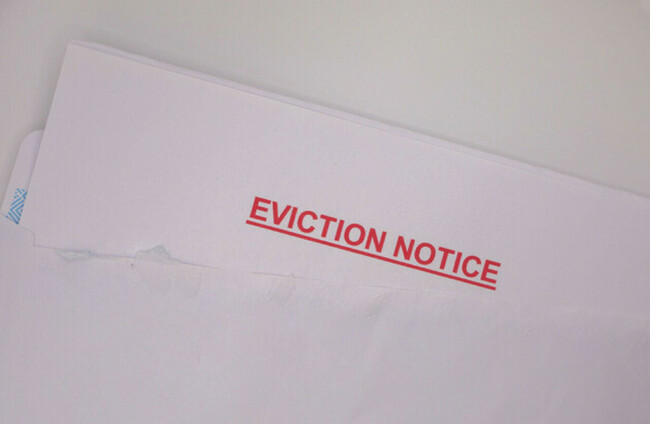
New data from the Residential Tenancies Board showed eviction notices were up 51% in the first three months of this year.

THE DÁIL WILL this evening debate a motion by Sinn Féin seeking to introduce emergency bans on both rent increases and no-fault evictions.

It follows the release of new data from the Residential Tenancies Board (RTB) that eviction notices in the three-month period spanning January through to the end of March were up 51% on the previous year.

Some 7,062 notices of termination were received by the RTB in the first three months of 2026. It’s the highest quarterly figure since the data series began.

The opposition has blamed the government’s recent reforms of the private rental sector for causing the spike in termination notices.

Under the sweeping changes, landlords can now reset rents to market rates when a tenancy has ended.

The government took the move as a way to entice investment in the sector to revive supply of accommodation, but there are fears it has caused spiking rents and major stress for families who now face eviction.

Speaking to media on the plinth at Leinster House today, Sinn Féin’s housing spokesperson Eoin Ó Broin said the figures were a clear sign that the government’s new rental rules that came into play on 1 March were acting against tenants.

“We now have the highest number of evictions since the Famine,” Ó Broin said.

This claim is based on recent data from the RTB showing that there were approximately 20,033 notices of termination issued in 2025. Meanwhile, a recent FactCheck article found that there were around 20,000 evictions in 1850.

Rising rents

The recent RTB data also showed a nationwide increase in existing rents of 4.4%, and 5% for new tenancy agreements in the final three months of 2025.

The average rent for new tenancies reached €1,755 in this period. Average rent for existing tenancies rose to €1,503.

It means that on average, sitting tenants pay €252 less per month than new tenants.

Ó Broin said these increased rental prices predate the new regulations, “which will see rents, evictions and disputes increase over the coming year”.

IMG_1306-2-1024x731 Sinn Féin spokesperson on Housing Eoin Ó Broin with TDs Thomas Gould and Sorca Clarke on the plinth this afternoon. Sinn Féin Sinn Féin

Within its motion, Sinn Féin is calling on the government to introduce an “emergency ban on rent increases and no-fault evictions”, and to oppose rent increases for council tenants, those in receipt of the Housing Assistance Payment (HAP), and the Rental Accommodation Scheme (RAS), and cost-rental tenants.

The motion also calls for the government to cut private rents by putting a “full month’s rent back into every private renter’s pockets”.

People Before Profit’s Richard Boyd Barrett expressed support for a ban on no-fault evictions and the imposition of “serious rent controls”.

He said the “new phenomena” he is seeing from constituents is evictions on the grounds of overcrowding.

“It’s bad enough you’re overcrowded, but now you’re going to be evicted and made homeless because you’re overcrowded, and that is allowed under the legislation.

“It’s being done because the landlord knows they can increase the rent by a huge margin because of the legislation the government has passed,” he continued, calling the rise in evictions a “disgrace”.

Labour’s housing spokesperson Conor Sheehan also expressed concern over the RTB figures today.

He criticised the rental changes, brought in by Housing Minister James Browne, as being “designed to stimulate a small amount of high-end, expensive, build-to-rent apartments in high-yield areas propagated by institutional investors”.

The cost-rental model, where rents are set 25% below market level, also needs to be looked at, Sheehan said. 

“Cost rental is absolutely vital for the cohort of people that are growing who don’t qualify for social housing support because they earn too much, but cannot access a mortgage because of either their age or the fact that they just do not have the requisite finance there to access a deposit or buy a home in the area in which they want to live,” Sheehan said.

With reporting by Eoghan Dalton

Readers like you are keeping these stories free for everyone...
A mix of advertising and supporting contributions helps keep paywalls away from valuable information like this article. Over 5,000 readers like you have already stepped up and support us with a monthly payment or a once-off donation.

Close
8 Comments
This is YOUR comments community. Stay civil, stay constructive, stay on topic. Please familiarise yourself with our comments policy here before taking part.
Leave a Comment
    Submit a report
    Please help us understand how this comment violates our community guidelines.
    Thank you for the feedback
    Your feedback has been sent to our team for review.

    Leave a commentcancel