Sign in. It’s quick, free and it’s up to you.
An account is an optional way to support the work we do. Find out more.
Sign in. It’s quick, free and it’s up to you.
An account is an optional way to support the work we do. Find out more.
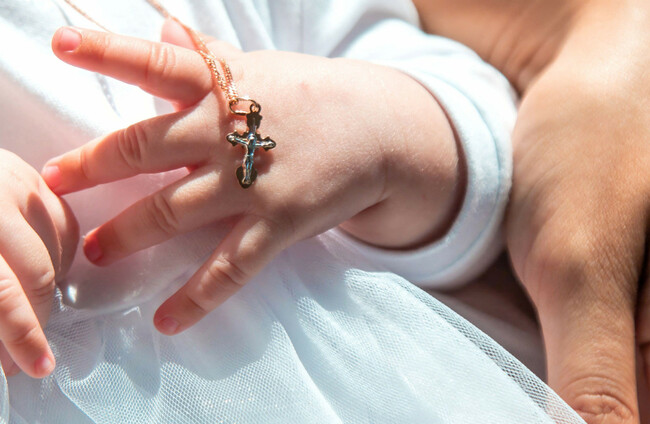

THE ARGUMENTS BEGAN during pregnancy. The source of the dispute for these soon-to-be parents was religious upbringing.
Ronan, the father, was adamant that his child would not be indoctrinated into Catholicism.
His girlfriend, Cecile, though not particularly religious herself, insisted that there would be a baptism – a plan Ronan, himself christened as an infant, found “hypocritical” and “against the rights of the child”.
His outlook was simple: “Let [the child] make that decision,” Ronan told me.
“It’s not too late to baptise them when they have all the facts.”
Cecile’s reasoning was that unbaptised children are too often excluded in a school system in which Catholicism is a major pillar. And there were her own parents, applying pressure on the couple to raise their grandson in Irish religious tradition.
This chasm between the pair became so severe that the three-year relationship ended before the birth. Soon enough, their son came into the world. Still, on the issue of baptism, Ronan knew he would never relent. And yet, on a Monday morning, he received a call from Cecile to inform him that, in the presence of about seven people, the boy had been christened the day before.
Ronan was stunned, bewildered, disgusted. How could this happen without the father’s consent?, he wondered.
The underhandedness of the act sent Ronan into a dark place. He discussed the situation with a support organisation for single parents but was told his rights as an unmarried father had not been violated. It was some time before he got over it; longer still before his co-parenting relationship with Cecile satisfactorily healed.
The moral soundness of a parent having their child baptised without the consent of the other is unclear. Parental disputes are typically resolved through mediation or, failing that, court intervention.
Yet a family lawyer I got in touch with opted not to comment due to lack of knowledge on this specific subject.
The literature provided by various churches that I’ve seen does include some rules for baptisms: godparents must be at least 16 years old; children aged eight and over go through a different programme than that of infants, etc. But on the issue of parental consent, one guide simply states that it is customary for “parents” to partake in the ceremony without specifying whether one parent requires permission from a non-participating co-parent.
And while some non-believers may see baptism as purely ceremonial, leaving no indelible mark on the child, in the rules of the church, it cannot be undone. This was at the heart of a recent article penned by former President Mary McAleese on baptism and its infringements on a child’s human rights.
If confusion reigns it’s because for generations the question of baptism was “when” not “if”. Babies born into Catholic families in Ireland were in turn baptised Catholic themselves.
That was just the way of it – it was “the done thing”. Yet as the country becomes more religiously diverse, and as more Irish people identify as non-religious, baptism has become something that’s on the table for debate and discussion between parents.
Similarly, many who are approached to become godparents must search their own moral conscience before saying “yes”.
“It was lovely to be asked, but I didn’t want to be hypocritical to my lack of beliefs, so after much turmoil I said no,” said Niamh, who turned down her sister’s approach to become godmother to her child.
I don’t think there has been any ill will since. I’ll always be a proud aunt.”
This sea change was reflected eight years ago, when the Dáil passed a bill outlawing the “baptism barrier” that previously allowed public schools to give enrolment priority to Catholic children.
It eased the squeeze on parents who are non-religious, or don’t wish to indoctrinate their children into a religion, to baptise their newborns. Indeed, baptism rates did fall in its wake. Still, undeniable pressures still exist – from schools, families, and broader society. These pressures can create tension and uncertainty, and, in the case of Ronan and Cecile and many others, conflict.
For parents wrestling with the idea of baptising their child, one question ultimately arises: schooling. Despite the smashing of the baptism barrier, there is still a perception that non-Catholic children are othered, even discriminated against, in state institutes. For some, the desire that their child has a smoother journey through school supersedes any indifference to religion. And so baptism is viewed as a necessity for an easier life.
Is there any merit to these fears? Education Equality, a parents group that campaigned for the baptism barrier to be removed, believes that there is.
“What we have found is that even though the baptism barrier was removed from outside the school gate, from our perspective it’s been moved inside the school gate,” said spokesperson Leigh-Ann Devereux.
This, claims Education Equality, includes more subtle forms of ostracisation, such as children being separated from larger groups during religious teachings, particularly during the sacrament year.
This also can lead to non-Catholic children receiving fewer taught hours as students who take part in religious instruction. And so the group favours all religious faith formation, including sacramental preparation, to be moved outside school hours.
“The state and education system puts parents under a lot of pressure to comply,” said Devereux. “They have to choose between their child being discriminated against and othered versus their own conscience.”
She continued, “We campaigned for equal access and now it’s about equal respect, right? If you’re being discriminated against throughout the day in school, then we don’t think that’s equal respect. So our ideal scenario would be that religious instruction is moved to a class outside of school.”
Glen is a first-time father; his daughter was born last July. Baptised as a child, Glen now identifies as an atheist. Though he insists he’s not anti-religion, scandals in the church have left a bitter taste. In 2024, his own former secondary school was named in the Scoping Inquiry report into sexual abuse in schools run by religious orders.
Glen’s partner, Esther, is of a Protestant denomination. The new dad takes the line that rather than choosing a religion for their daughter, the child should be allowed to make the decision when she’s old enough. But as the months have passed, he’s found that position getting “peeled away” by family expectations. During a family gathering, both of the baby’s grandmothers even discussed a potential baptism without checking in on the parents’ wishes.
For Glen, balancing his own will with that of family feels like a minefield that needs to be negotiated.
“It’s something that I’m not having much of a say in because I don’t want to escalate it – as in, I don’t want it to cause a problem with her family,” he told me. “I can’t be sure of what their response would be if we didn’t eventually do this, which we probably will have to do.”
He described the decision to baptise as currently “on the back burner”.
I’m not sure exactly when, but it’s something on the cards.”
The weight of family expectation was laid bare when Esther’s mother unexpectedly organised a blessing of the baby. It was an informal ceremony, nothing as final as a baptism. Still, it had been sprung on Glen without consultation.
“I wanted to be respectful to the family,” he explained. “Their family would be quite religious. And I just wanted to, not appease, but I wanted to be polite and I could see it was important to Esther’s mother. And I think she did it because she thought it was important to my mother.”
Inevitably, such frictions are a side effect of a societal shift towards secularism and inclusion. For specific cases in which parents disagree on whether to baptise their child, it seems unlikely there will be changes to either the set legal framework or Catholic doctrine in the near future. For now, such decisions can only be resolved through constructive dialogue.
For Glen, the future of his own child’s religious fate remains uncertain: “I don’t want to diminish it,” he said of spiritualism.
“I don’t cast it off. I think there are a lot of positives to being involved in a religious organisation for a lot of people, it brings them a lot of hope… but how do I balance what I think is important for my daughter versus the expectations of family members? That’s where I am at the moment, I’m trying to navigate that.”
To protect identities, some names have been changed throughout
To embed this post, copy the code below on your site















have your say