Sign in. It’s quick, free and it’s up to you.
An account is an optional way to support the work we do. Find out more.
Sign in. It’s quick, free and it’s up to you.
An account is an optional way to support the work we do. Find out more.
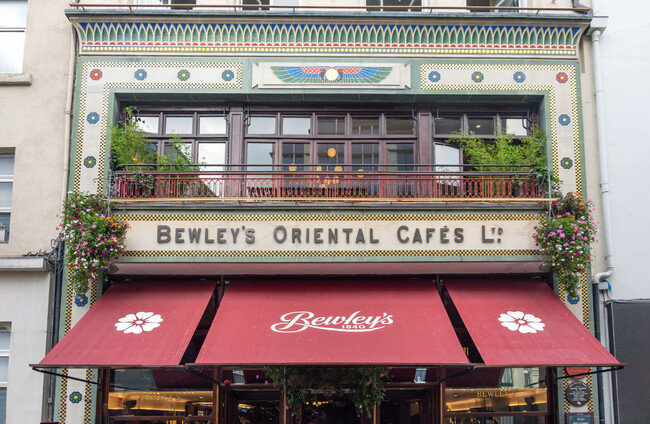
BEWLEY’S CAFÉ ON Dublin’s Grafton Street was among eight restaurants and food businesses to be issued with Closure Orders last month.
The Closure Order was issued to Bewley’s on 8 January under EU food legislation.
The premises did not have to close, but rather it was a “closed activity” order that called for Bewley’s to cease the use of its vacuum packing machine.
This was because during an inspection, it was noted that there was one vacuum packing machine in the premises, and it was discovered that raw fish was vacuum packed in the same machine where ready-to-eat foods, such as egg mayonnaise, were vacuum packed.
The HSE inspector said this dual use of a vacuum packing machine for both raw and ready to eat foods presents a significant risk of ready to eat foods becoming contaminated with bacteria.
There was also no documented cleaning and disinfection procedure or a cleaning schedule in place specifically for the vacuum packer.
This closure order was lifted on 17 January.
Two other business were hit with closure orders under EU legalisation, Xpress Pantry in the Dunshaughlin Business Park in Co Meath and Indian Tiffins restaurant on 143 Parnell Street, Dublin.
Xpress Pantry was ordered to cease the manufacture and wholesale of foods of animal origin because it had not been approved by a competent authority to do so.
The HSE said that “in the absence of appropriate official controls, it is not possible to verify compliance with food law and there is a risk that unsafe food may be placed on the market”.
Meanwhile, Indian Tiffins was ordered to close its premises due to a lack of evidence that the management system for food safety had been fully implemented and maintained.
The HSE said that without an effective food safety management system, there is an increased risk that the business will store, prepare and serve food in a way that could be dangerous.
This closure order was lifted on 30 January.
Five closure orders were also served under Irish legislation.
This includes:
A HSE inspector said there is a “grave and immediate danger to the public” from Balam Limited due to issues such as a “significant risk of cross contamination”, a failure to maintain the premises in a clean condition, and inadequate procedures to prevent pests.
The closure order on Lismore Golf Club was lifted on 30 January and was in place due to inadequate procedures being in place to control pests.
Meanwhile, The Turk Grill was served a closure order because the “operational practices were such that they could result in a serious risk of food poisoning” – this order was lifted on 31 January.
The closure order was lifted for Ella’s Heaven Café and Bakery on 22 January and had been in place due to an “active cockroach infestation”, with “live cockroaches noted in the kitchen”.
And in Miner’s Rest Public House, the closure order was in place due to inadequate procedures being enacted to control pests, with “rodent faeces observed on the floor of the external drinks storage room”.
This closure order impacted the external drinks storage room only and was lifted on 17 January.
Elsewhere, three Prohibition Orders were served under the FSAI Act 1998.
A Prohibition Order is issued if the activities involved with food or drink, such as handling, processing, disposal, manufacturing, storage, or distribution, involve or are likely to involve a serious risk to public health.
The effect is to prohibit the sale of the product, either temporarily or permanently.
The prohibition orders were issued in:
In Miner’s Rest Public House, the owners were instructed to destroy two open boxes of alcohol due to rat faeces being observed on the floor of the external drinks storage room, close to opened boxes of alcoholic drinks which were not protected against contamination.
At La Citadel, prohibition orders were placed on around 800 containers of food due to a lack of traceability information, as well as a lack of information on how the food was prepared.
And at M Tee Ventures, prohibition orders were put on 22 boxes of food, also due to a lack of traceability information and information on how the food was prepared.
Dr Pamela Byrne, Chief Executive of the FSAI, reiterated that the legal onus is on food businesses to ensure they fully comply with food safety legislation at all times.
“The Enforcement Orders served in January highlight unacceptable breaches of food safety legislation, including inadequate pest control, poor hygiene standards, and a lack of proper food traceability,” said Byrne.
“It is essential that all food businesses implement and maintain a robust food safety management system to prevent such violations.
“The law is clear, food safety is not optional, and food businesses that fail to comply will face enforcement action.”

To embed this post, copy the code below on your site













have your say