Sign in. It’s quick, free and it’s up to you.
An account is an optional way to support the work we do. Find out more.
Sign in. It’s quick, free and it’s up to you.
An account is an optional way to support the work we do. Find out more.
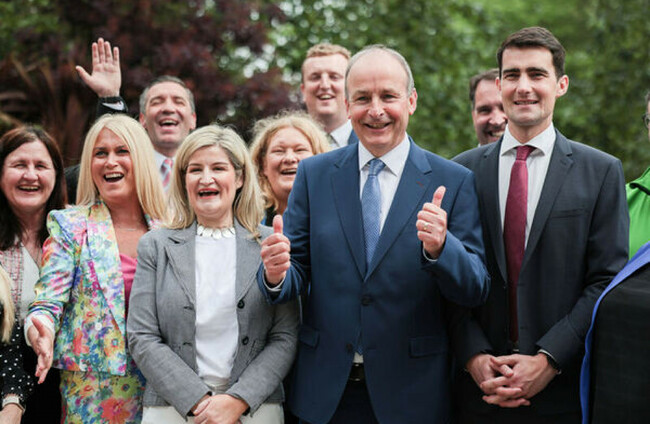
FIANNA FÁIL COMES bottom of the class compared to the other main political parties in Ireland in terms of the number of women running in the local elections.
The party has selected 365 candidates, of which 90 are women, just 25%.
The deadline for the receipt of nominations as a candidate for the local elections is today.
Earlier in the year, Fine Gael MEP Maria Walsh hit out at Fianna Fáil’s lineup for the European election stating it was “male, pale and stale”.
Asked about the remarks this week, party leader Micheál Martin’s said:
“I noticed some European candidates at the time were desperate to get a bit of profile. But that happens in elections.”
He went on to deny that 25% is a low percentage in terms of female representation on the ticket, stating “we’ve made very good progress”.
Fine Gael fares slightly better than its government colleagues when it comes to the number of women it is running in the upcoming local elections on 7 June.
The party is running 339 candidates, of which 97 are women or 28.6%.
Female candidates makeup 41% of the Labour Party’s local election candidates, with 58% are men.
Ireland currently ranks 103rd in the world for women’s representation in politics and sixth lowest in the EU. Just 25% of councillors are women.
However, the group Women for Election states that a record number of women candidates are running in the local elections in June, a 15% increase on the numbers running back in 2019.
The group says next month’s election presents a unique opportunity for Irish voters to address the current imbalance.
While there have been some positive changes in terms of encouraging more women into local politics since 2019, such as the introduction of maternity leave for councillors, it was noted at a recent briefing by Women for Election that there are a number of new obstacles discouraging women from entering politics such as the recent upsurge in online abuse.
While political parties are obliged by law to select at least 40% women candidates and 40% men candidates to contest general elections or risk losing 50% of their State funding, no such gender quota exists for local elections.
With local politics often a stepping stone into national politics, the question remains whether the legislation should extend to the local elections.
Women for Election CEO Brian Sheehan told The Journal the vast majority of TDs and senators had previously have been councillors.
Research shows that gender quotas are effective in increasing the number of women in politics, said Sheehan, although he said they are more tricky to operate at local level.
He added that the results of the upcoming election will indicate whether sufficient progress is being made in terms of more women being elected and whether further steps, such as gender quotas at local level, should be considered.
The group’s researcher Claire McGing told The Journal that tying gender quotas to party funding is what makes the legislation for the general election so effective.
“The sanction is so punitive,” she said. “There simply just isn’t that mechanism at local election level.”
McGing said there have been a number of ideas bandied about in recent years to encourage more political parties to run women in local elections.
She said one idea is rather than sanctions, there could be incentives for parties who run 40% women in local elections.
A party that runs 40% women as candidates a local level could get a top up payment instead. “So there are other mechanisms. That could be used,” she added.
“I don’t know if the political will is there just yet. What I do think is that the upcoming election and what happens may very well move something on, particularly if there’s a drop in women’s representation,” she said.

To embed this post, copy the code below on your site












have your say