We need your help now

Support from readers like you keeps The Journal open.

You are visiting us because we have something you value. Independent, unbiased news that tells the truth. Advertising revenue goes some way to support our mission, but this year it has not been enough.

If you've seen value in our reporting, please contribute what you can, so we can continue to produce accurate and meaningful journalism. For everyone who needs it.

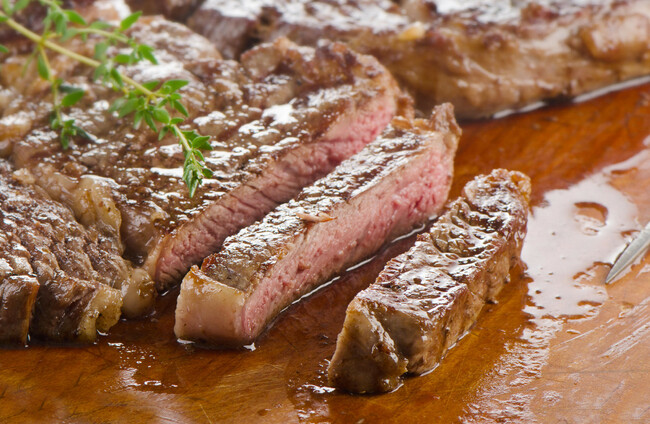
The Mercosur deal and a recent recall have put beef back on the Irish political menu Alamy Stock Photo

Why is Brazilian beef back in the news? And is it actually of lower quality than Irish beef?

The issue has recently returned to the political agenda.

BRAZILIAN BEEF IS firmly back on Ireland’s political menu.

An EU vote on the Mercosur trade agreement this month united politicians and farming lobbyists with concerns about more South American beef being imported into Europe.

Farmers argue the deal is unfair because they claim that producers in South American countries operate under looser environmental, animal welfare and food safety rules.

To add fuel to the fire in Ireland, controversy is swirling around the head of Bord Bia, Larry Murrin, over revelations that a company he owns sourced some of its beef from Brazil.

Pressure around Murrin has led multiple politicians to repeat the claim that Brazilian beef isn’t safe – particularly after a recent recall by the Food Safety Authority of Ireland.

As the discussion moves from farming circles into mainstream debates, questions about the safety of South American beef have become blurred – but do they stand up to scrutiny?

What’s the beef?

There’s much political capital to be gained from Ireland’s beef farmers and the agri-food industry.

Ibec estimates that the beef sector alone employs 80,000 people, while the Department of Agriculture says that beef accounts for over two-thirds of Ireland’s total meat exports.

It’s therefore no surprise that politicians from across the spectrum have pushed back against the Mercosur deal in a bid to appeal to Irish farmers.

The agreement would allow South American countries to export 99,000 tonnes of beef to the EU at a reduced tariff of 7.5%, compared to standard tariffs of around 40 to 45%.

Farmers and their supporters have claimed that this will put downward pressure on beef prices and create unfair competition in the market, honing in on what they argue are looser food safety rules in South America as a way to garner sympathy from consumers.

On Tuesday, MEPs narrowly voted to refer the deal to the EU’s Court of Justice, prompting more claims about the safety of beef imports from South America.

Welcoming the news, Fianna Fáil’s Cathal Crowe – a government TD – leaned into the narrative about the supposed safety of Brazilian beef by claiming that is “of much lesser quality” that beef produced in Ireland in Europe.

The controversy surrounding Larry Murrin, whom farmers argue has a duty to support them as part of his role as the head of Bord Bia, has also provided an outlet for politicians to attack the quality of Brazilian beef.

In a statement calling for Murrin’s resignation on Tuesday, Sinn Féin leader Mary Lou McDonald referenced “repeated scares” involving Brazilian beef in the European market, namely issues around “traceability”, “animal welfare” and the use of “growth hormones”.

Reference to growth hormones appears to be a particular line of attack by Sinn Féin.

In the days after McDonald’s statement, her party colleagues Pearse Doherty and agriculture spokesperson Martin Kenny both referenced a recent recall of Brazilian beef in Ireland due to the presence of a banned hormone. 

Recall

The recall was first announced by the European Commission at the start of December, when it emerged that consignments of frozen Brazilian beef products contained a banned hormone.

At the start of this month, the Department of Agriculture confirmed that 128kg of implicated beef was distributed to three food businesses in Ireland.

The beef came from animals treated with the hormone oestradiol and was part of consignments sent to Northern Ireland before being distributed into the Republic of Ireland in September.

Oestradiol is used to promote growth in livestock, but is banned in the European Union because scientists have suggested it may be carcinogenic.

The Food Safety Authority of Ireland (FSAI) subsequently confirmed that none of the affected beef is still in the Irish market.

Recalls of Brazilian beef are not common despite estimates that annual imports to Europe totalled almost 3 million tonnes last year - The Journal could not find another instance where the FSAI has recalled Brazilian beef since exports to Europe resumed in 2008.

The fact that this particular recall coincided with the build-up to the Mercosur vote may have given it a greater level of publicity than would be the case at another time.

EU regulation

Though there are concerns over the quality of meat imported from outside the EU, there are strict rules around the import of beef into Europe.

The EU’s rules, known as Sanitary and Phytosanitary (SPS) standards, aim to protect human and animal by ensuring that meat that’s imported is subject to certain levels of hygiene and consumer protection.

Meat products that are imported to the EU are subject to veterinary certification and only approved countries – including Brazil – are permitted to export meat products to Europe.

Those countries must have an authority in place that allows for inspections to take place that can ensure public and animal health, as well as hygiene standards.

Imports can only come from slaughterhouses or other plants that have been inspected by this authority and which have been found to adhere to EU requirements, while checks on products are regularly carried out at the EU border.

But Irish experts still believe these safeguards could be stronger.

Dr Patrick Wall, Emeritus Professor at UCD’s Institute for Food and Health, who this week called for detection and enforcement to be enhanced when it comes to the use of hormones.

He highlighted a 2024 audit that found “ineffective” precautions preventing the detection of oestradiol in EU-bound beef, and issues with the Brazilian health certification authority’s compliance with EU rules.

However, Wall also said that the import of chilled, vacuum-packed products that remain in good condition over a long logistics chain indicates good hygiene in the slaughter facilities where they are produced, and correct vacuum-pack and temperature conditions.

Gavin Collins, Associate Professor of Microbiology, Ryan Institute and School of Biological and Chemical Sciences, also said that “easy or illegal” access to veterinary antibiotics had been reported in Mercosur countries like Brazil.

He said it would “likely take time” for standards and compliance systems in South American countries to match those inside the EU, which may put Irish farmers at a disadvantage.

As it stands, the EU may have some way to go to allay farmers’ concerns around Brazilian beef imports – even if many of the products that arrive in Europe are of good quality.

Readers like you are keeping these stories free for everyone...
A mix of advertising and supporting contributions helps keep paywalls away from valuable information like this article. Over 5,000 readers like you have already stepped up and support us with a monthly payment or a once-off donation.

Close
JournalTv
News in 60 seconds