Sign in. It’s quick, free and it’s up to you.
An account is an optional way to support the work we do. Find out more.
Sign in. It’s quick, free and it’s up to you.
An account is an optional way to support the work we do. Find out more.
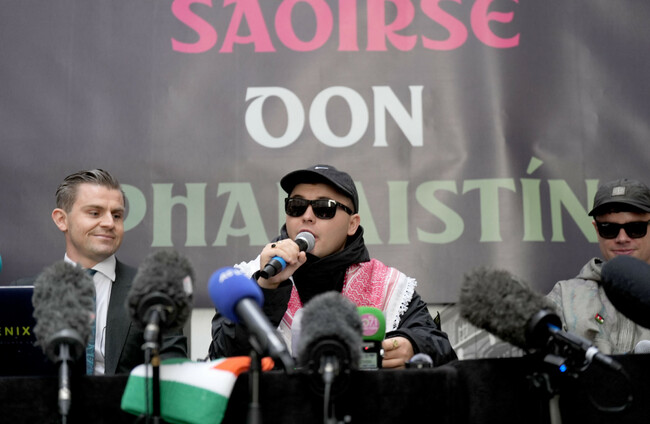
KNEECAP RAPPER LIAM Óg Ó hAnnaidh will not face a terror trial after judges at the UK’s High Court rejected a Crown Prosecution Service appeal against the decision to throw out the case.
Just after that ruling, Ó hAnnaidh, who goes by the stage name Mo Chara, appeared by a window at Conway Mill in Belfast, where the media has gathered for a press conference, with a sign saying: “I’m a free mawn!”
In a statement provided through his lawyers, Ó hAnnaidh said after the decision: “I owe eternal gratitude to my legal team, who left no stone unturned in ensuring justice was upheld.
“This entire process was never about me, never about any threat to the public and never about ‘terrorism’, a word used by the British government to discredit people you oppress both in Ireland and across the world.
“It was always about Palestine and about what happens if you dare to speak up. About what happens if you can reach large groups of people and expose their hypocrisy.
I will not be silent. Kneecap will not be silent.
The rapper had been accused of displaying a flag in support of proscribed terror organisation Hezbollah at a gig at the O2 Forum in Kentish Town, north London, on 21 November 2024.
The case was thrown out on technical grounds in September last year, with chief magistrate Paul Goldspring ruling that the proceedings had been “instituted unlawfully”.
The Crown Prosecution Service (CPS) announced the following month that it would appeal the decision, stating that the case involved an “important point of law which needs to be clarified”.
Speaking to The Journal in Belfast today, Ó hAnnaidh’s solicitor Darragh Mackin said that a malicious prosecution case may now be brought against the British government.
“I think there’s undoubtedly scope to take action against them,” he said following today’s ruling.
“It’ll be interesting to see what steps the British government take themselves to investigate just how this fiasco came about.
“The court is unquestionably critical of the manner in which this prosecution was brought. So I think the first step in the road is for the government to review their own processes to determine how this got to where it got to, and after that, then we will consider all options as to whether a malicious prosecution [case] is required.”
Mackin also said that today’s ruling shows that the justice system can address situations whereby the government applies political pressure to pro-Palestine activists.
“I think decisions like this give some comfort that when there is political pressure and political provocation, rule law can pave a way through the darkness,” he said.
He said today’s judgement “shows just how powerful the rule of law can be”.
With reporting from Diarmuid Pepper, Press Association and David Mac Redmond

To embed this post, copy the code below on your site












have your say