Sign in. It’s quick, free and it’s up to you.
An account is an optional way to support the work we do. Find out more.
Sign in. It’s quick, free and it’s up to you.
An account is an optional way to support the work we do. Find out more.
WHEN DOES AN Irish brand lose the rights to keep claiming its emerald-green heritage?
Is it when the label is taken over by a multinational firm with much, much deeper pockets than its one-time owners?
Or does the Irish tricolour start to fade once the last factory shuts up shop in the Republic and production of that household name is packed off to foreign shores?
This week, a survey from home-grown produce lobbyists Love Irish Food found the lion’s share of locals tried to “buy Irish” when they could – although what qualifies for that tag is often harder to piece together.
So let’s revisit that issue as we take a look back at what has been happening in the world in and around business lately:
Need to know
Not all that glistens green is Irish
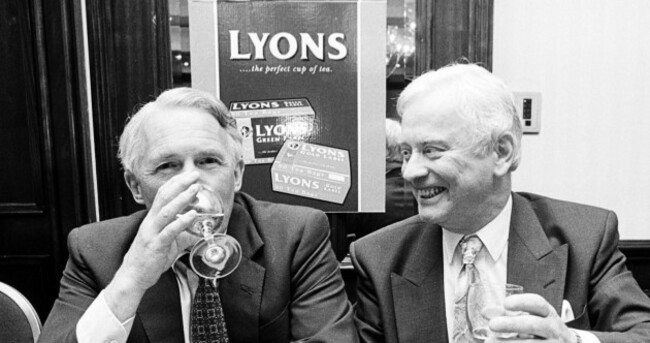
Ireland’s most popular tea brand, Lyons, began its blending life in Dublin in 1902 – just a year after its big rival, Barry’s, started cooking up something in Cork.
But for several years, after the brand was bought up by Anglo-Dutch grocery giant Unilever in 1996, that most Irish of teas has been packed in, wait for it, the UK.
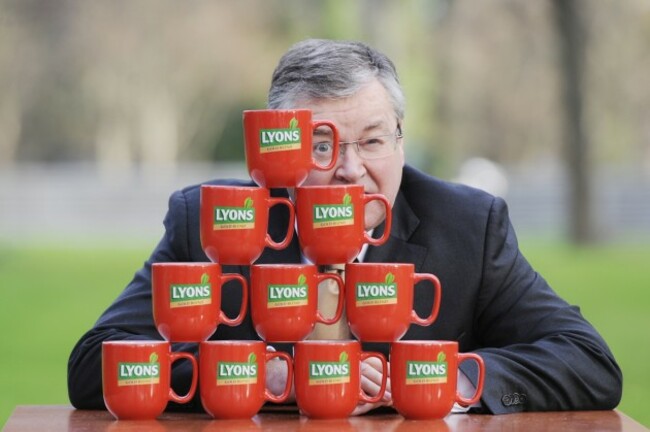
The raw tea ingredients are sourced in Africa and the sub-continent, much like its competitor Barry’s, and the company is quick to point out its brew is still blended to suit the Irish palate.
So does that, coupled with the company’s history, mean it can still lay claim to being one of “Ireland’s biggest and best-loved brands” as the website says? We’re sure Lyons (via its €95 billion parent Unilever) would argue it does.
However our readers weren’t quite so convinced. As one, David Higgs, put it: “Settles that age old conflict – which is better – Barry’s or Lyons.”
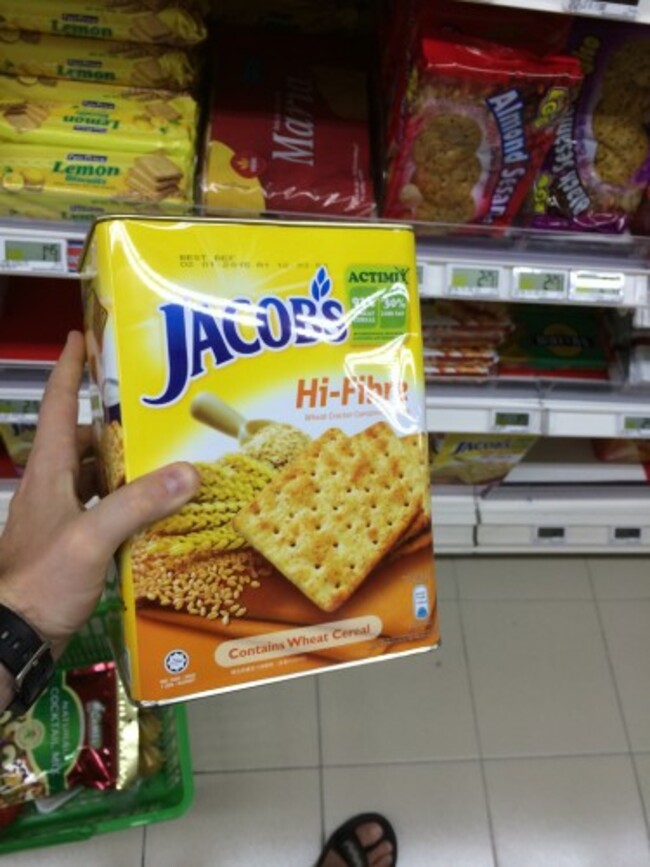
Other Irish brands to fall into the not-quite-so-Irish basket include Siúcra – literally Irish for sugar – which now ships out of Germany and other European countries, and the Valeo Foods-owned brands Jacob’s Biscuits and Fruitfield.
However, things are rarely as simple as a straightforward Irish/not-Irish proposition when it comes to processed foods, and a quick name-check of some big brands still made in the Republic highlights the problems in drawing a clear distinction.
Robert Roberts still blends its coffee in Dublin after over a century in the city but the raw ingredients, naturally, come from a long way off these green shores. Meanwhile, another domestic success story, SuperMac’s, can only guarantee its meat and a few other products are born-and-bred Irish.
Dairy is an easier nut to crack, with big labels like Avonmore and Kilmeaden still shipping from Irish farms to local factories. And while their owner, Glanbia, has become a global food player, its headquarters remain in the heartland of Kilkenny.
And does any of this even matter? The surveys may say yes, but as another one of our learned commentators asked – would you really buy an inferior product just because it was Irish?
We’re even more confused than when we started…
Nice to know
Now you know
One for the road
Cultural differences… is there a richer picking ground for humour? Judging from this video, no there isn’t.
The latest in an ongoing series in which Irish people tangle with the foibles of their US cousins, this one involves locals getting their first sample of some of the more-acquired tastes in American sodas.
Like this, on something called ‘Grape’: “The last ingredient in the contents just says ‘blue’.”
Originally published at 1.54pm yesterday

To embed this post, copy the code below on your site













have your say