Sign in. It’s quick, free and it’s up to you.
An account is an optional way to support the work we do. Find out more.
Sign in. It’s quick, free and it’s up to you.
An account is an optional way to support the work we do. Find out more.
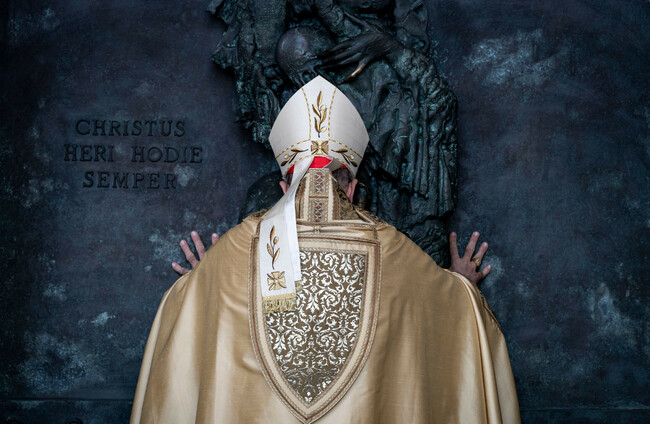
ON CHRISTMAS EVE, Pope Francis officially launched the Catholic Church’s 2025 Jubilee Year when he opened the “Holy Doors” of St Peter’s Basilica at the Vatican.
These doors only open during Jubilee Years, in a tradition that goes back to Pope Alexander VI in 1500.
Jubilee Years happen every 25 years within the Church, and extraordinary jubilees can also be called outside this timeframe, such as the Extraordinary Jubilee of Mercy in 2016.
The theme of this Jubilee Year is ‘Pilgrims of Hope’, with the Church aiming to highlight the impacts of war, the ongoing effects of Covid-19 pandemic, and the climate crisis.
To mark the beginning of the current Jubilee Year, Pope Francis will open five “Holy Doors”, the first of which was opened on Christmas Eve and the last which will be opened on Sunday at the Papal Basilica of Saint Paul.
“In Catholic tradition, the Holy Door represents the passage to salvation — the path to a new and eternal life, which was opened to humanity by Jesus,” explained Pope Francis in a document proclaiming the Jubilee Year of 2025.
But this symbolic gesture, dating back 1500 and which is meant to “evoke the passage from sin to grace”, has been described by some online as “the opening of five spiritual portals that have never been opened before”.
Others online say “this ritual has never been done before”.
No, and the claim seems to have started cropping up after an article by the New York Post.
In a clickbait headline on an article published on 9 December, the New York Post said: “Pope Francis to open 5 sacred portals on Christmas Eve — for a ritual that’s never been done before”.
The “sacred portals” referred to in the headline might be a misunderstanding of “Porta Sancta”, which is Latin for “Holy Door” and the term used for the Holy Door in St Peter’s Basilica.
However, one of the dictionary definitions of “portal” includes “grand and imposing doorway”, which is perhaps what the New York Post was aiming to convey.
Nevertheless, many online seemed to read the term “portal” as meaning a doorway to another dimension.
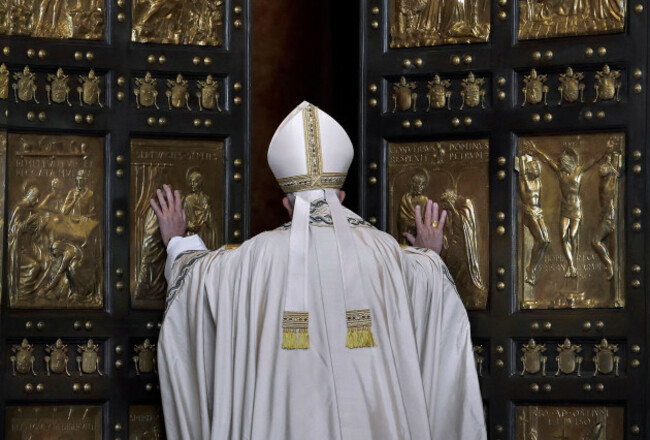
And the “never been done before” element of the headline refers to the fact that for the first time, the Holy Door in the Rebibbia Prison of Rome was opened.
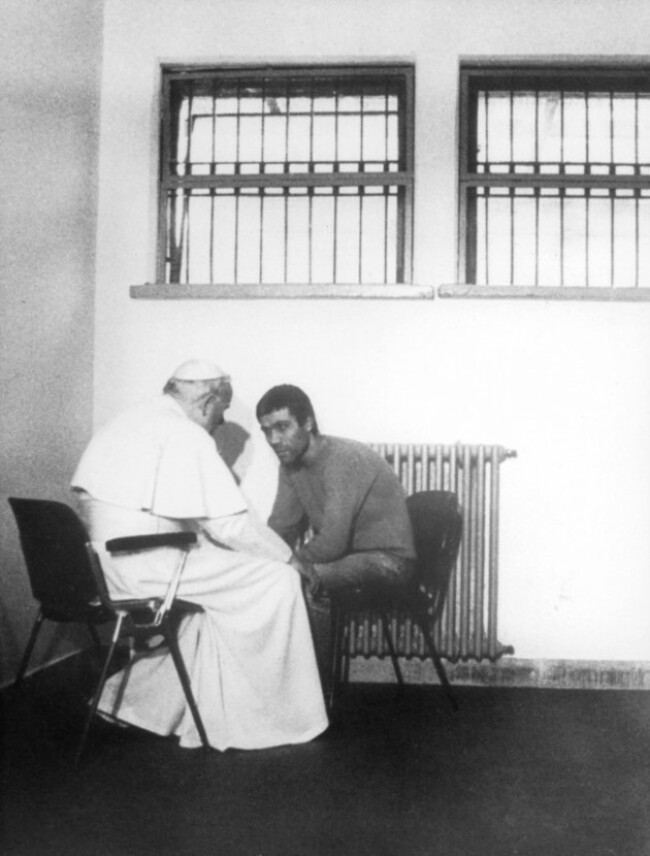
Rebibbia Prison housed Mehmet Ali Ağca during his time in custody in Italy following an assassination attempt on Pope John Paul II on 13 May, 1981.
Pope John Paul II visited Ağca in his cell in Rebibbia and forgave him for the shooting.
Pope Francis requested the opening of this door and said that he hopes this act can be a “sign inviting prisoners to look to the future with hope and a renewed sense of confidence”.
Another incident which added fuel to the conspiracy was when Barstool Sports posted about the Holy Doors ceremony to its account on X, where it has over 6.1 million followers.
Barstool Sports describes itself as a “sports and pop culture blog covering the latest news and viral highlights of each and everyday”.
Its post on X on 12 December read: “Pope Francis Will Be Opening 5 Sacred Portals For A Special Catholic Ritual On Christmas Eve.”
Pope Francis Will Be Opening 5 Sacred Portals For A Special Catholic Ritual On Christmas Eve https://t.co/RWPJWGdjl1 pic.twitter.com/L2xEqNkPUu
— Barstool Sports (@barstoolsports) December 12, 2024
A link accompaning the Barstool Sports’ post on X featured an article by ‘Charisma News’ which claimed that “another layer to this mystery is the broader conversation about portals—spiritual gateways between realms”.
Charisma News describes itself as the “most trusted source for credible news and insight from a charismatic perspective”.
The Charisma News article adds: “Could the Vatican’s Holy Doors be more than symbolic? Are they inadvertently engaging in a spiritual practice they may not fully understand?”
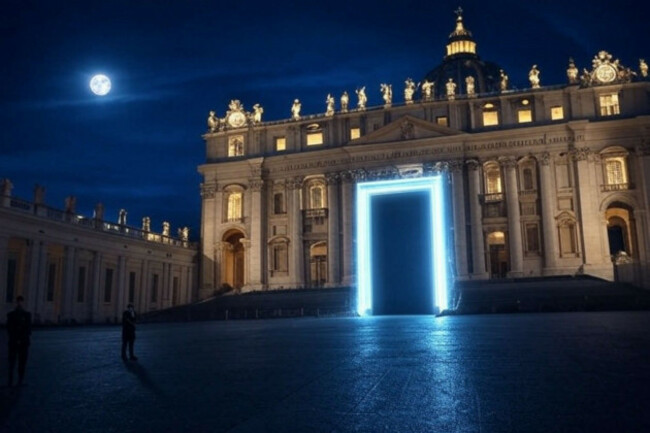
The website also features a doctored image of an alien-esque door outside the Vatican.
In reality, the Holy Doors are symbolic and hark back to several Biblical scriptures – for example, in John’s Gospel Jesus says “I am the door” and in Luke’s Gospel Jesus says, “Knock, and the door will be opened for you”.
On the same day that Barstool Sports directed its followers on X to ‘Charisma News’, a TikTok user called ‘gracexdigital’ went somewhat viral with a post asking if anyone was “concerned about what the Vatican and the Pope are doing on Christmas Eve”.
@gracexdigital They are BURNING through their theatrical budget for the year #POPE #vatican #popechristmaseve #tomboflucifer #yearofthedragon #poperitual ♬ original sound - Gracie 🦋
“Sir, why are you trying to open five spiritual portals that have never been opened before? Maybe there’s a reason no one has tried to open them before,” she says in her TikTok post.
As noted above, this is a symbolic act that goes back to 1500 and the “never before opened” aspect relates to the opening of a Holy Door at Rebibbia Prison.
Meanwhile, many people online have asked how a cameraman was on the other side of the door in St Peter’s Basilica when Pope Francis symbolically opened it.
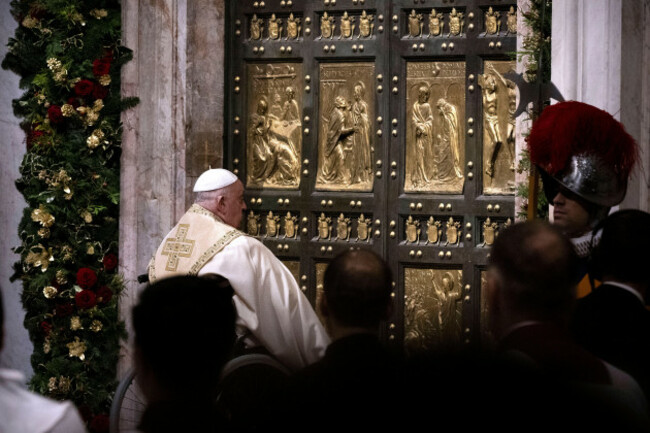
“How did the camera get on the ceiling inside if nobody has been in there for like….forever?,” asked one person on X.
They had wrongly believed that the Holy Door opened into a never before entered space, and queried how a camera was in this untouched room.
The Holy Door in question is in the atrium of St Peter’s Basilica and is beside the main entrance.
And like the main entrance, the Holy Door simply opens into the nave of St Peter’s Basilica, with the Holy Door being located close to the Pietà by Michelangelo.
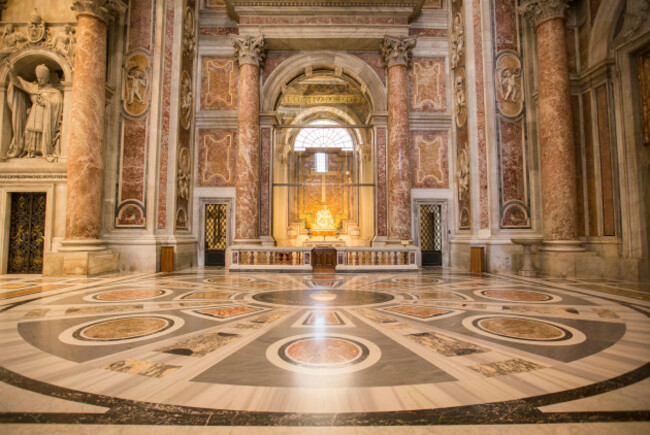
TikTok user gracexdigital also claimed that the Vatican “livestreamed the Tomb of Lucifer, that’s under the Vatican, for people to see”.
It’s unclear where the origin for this claim lies, but could stem from a book titled ‘Guide to the Vatican Necropolis’ by Michele Basso.
This book is used as a reference on the St Peter’s Basilica website, which notes that the entrance to the tomb marked ‘Lucifer’ has been “reduced because of a fault in the architrave”.
However, the tomb was constructed in the pre-Constantine era and before the term Lucifer developed its association with the Devil.
The tomb could be that of St Lucifer of Cagliari, who died in 370 and was a prominent defender of the doctrine of the Trinity.
Meanwhile, the Holy Doors weren’t the only aspect of the Jubilee Year to attract conspiracy theories.
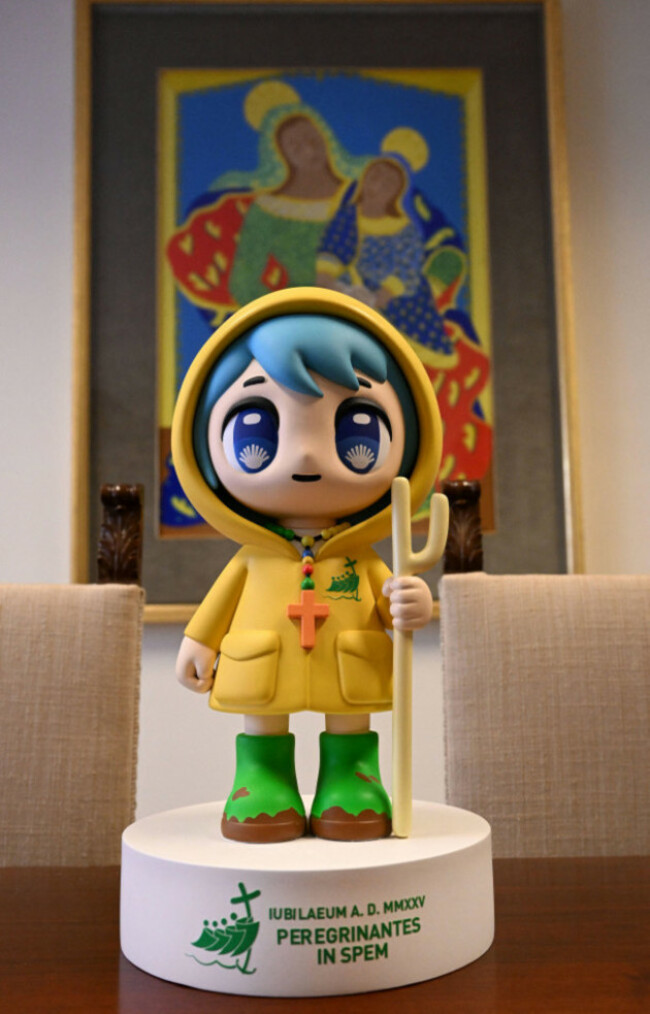
To mark the Jubilee Year, the Vatican adopted an official mascot called Luce.
She is an anime-style character and her name means “light” in both Italian and Latin.
However, some falsely claimed the name was an allusion to Lucifer.
The Jubilee Year will come to an end on 6 January, 2026 with the closing of the Holy Door at St Peter’s Basilica.
One of the standout events planned for the Jubilee Year is the canonisation of teenager Carlos Acutis, who will become the first millennial saint in April.

To embed this post, copy the code below on your site












have your say