We need your help now

Support from readers like you keeps The Journal open.

You are visiting us because we have something you value. Independent, unbiased news that tells the truth. Advertising revenue goes some way to support our mission, but this year it has not been enough.

If you've seen value in our reporting, please contribute what you can, so we can continue to produce accurate and meaningful journalism. For everyone who needs it.

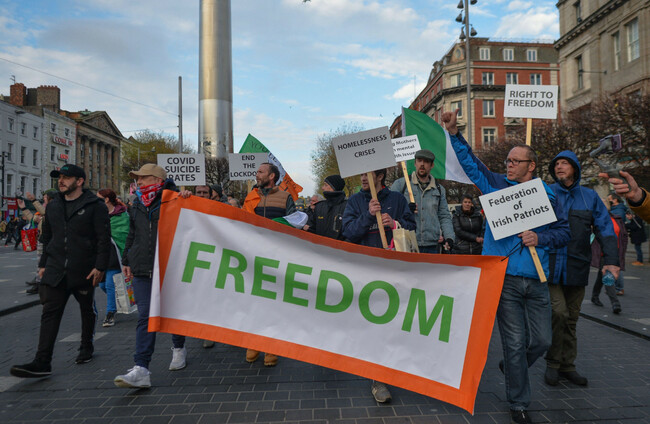
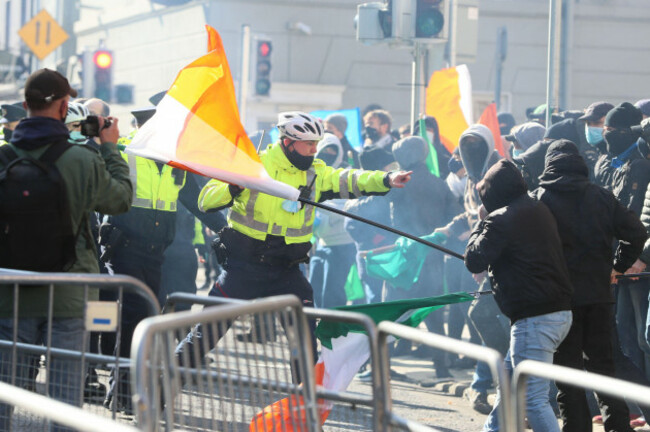
People opposed to the Covid vaccine and lockdowns protesing in Dublin, 2020. Alamy Stock Photo

Just like during Covid, conspiracy theorists are thriving amid the Middle East fuel crisis

Conspiracy theorists are pushing the same ideas of attacks on civil liberties they did during the pandemic.

THE LAST OF the Covid-19 pandemic lockdowns was lifted more than four years ago, but a new global crisis has brought back memories of government-imposed restrictions, leading conspiracy theorists to sound the alarm about the impending dystopian vision of a “New World Order”.

Conspiracy theorists on social media are finding in the energy crisis brought on by the war in the Middle East a perfect opportunity to rehash the same narratives about threats to civil liberties that they used to stir fears during the height of the Covid pandemic.

This time round, however, they are more coordinated and have a wider reach then they did four to six years ago.

On top of this, social media companies have rolled back efforts to combat the spread of false information in recent years, while also increasingly monetising viral content and encouraging people to seek engagement over anything else.

“The concern is that disinformation attacks social cohesion, and if there is going to be some form of crisis or some sort of fuel rationing that requires a national response, a lack of social cohesion will damage that,” Aidan O’Brien of the European Digital Media Observatory told The Journal.

members-of-an-garda-order-counter-demonstrators-to-retreat-during-an-anti-lockdown-protest-outside-leinster-house-dublin-as-ireland-continues-to-be-at-a-nationwide-level-3-coronavirus-lock-down Gardaí and anti-lockdown protesters clashed a number of times during the pandemic. Alamy Stock Photo Alamy Stock Photo

A very real crisis

As with many conspiracy theories, this one is based on real events and concerns, but adds speculation and often outright fabrication.

The US-Israeli war on Iran has led to fuel shortages and soaring prices since the commercially vital Strait of Hormuz was effectively closed to maritime traffic by Iran.

The economic forecasts that have come since have made for alarming headlines and governments around the world are scrambling to put measures in place to try and preserve fuel.

“The war in the Middle East is creating a major energy crisis, including the largest supply disruption in the history of the global oil market,” said Fatih Birol, head of the International Energy Agency (IEA), when publishing advice to governments.

Birol’s missive on 20 March listed actions that could be taken to alleviate pressure on fuel supplies.

Those included conserving fuel and encouraging people to work from home and avoid travelling by plane or car if possible.

There are measures already being put into place around the world to curtail energy usage.

So far, these have mostly taken the form of cuts to taxes on fuels, but there have been more forceful actions taken by some governments.

In Egypt, shops and other businesses have been told to close at 9pm, while the Philippines has declared a national emergency and, like China, India and other Asian countries that rely heavily on the Strait of Hormuz, is now stockpiling oil.

Tánaiste Simon Harris said this week that the government may soon be encouraging people to take measures to reduce fuel consumption, but ruled out any pandemic-style restrictions.

Harris also pointed out that the situation is very different from the pandemic.

‘The globalist agenda’

All of this well-founded concern has provided those who peddle disinformation with fertile ground in which to propagate the same fears and theories they did during the pandemic.

For those conspiracy theorists who never believed in the threat posed by Covid, which killed millions of people, the response to the pandemic was never about public health and safety, it was about government control.

Conspiracist influencers and those who follow them are now applying the same thinking to the current energy crisis, with many invoking the term “lockdown” to suggest similar restrictions on movement will be enforced in Ireland and around the globe.

They are also pushing the same false narrative about a “New World Order” or the “globalist agenda” being imposed under the cover of an emergency.

“Is the Iran war the perfect excuse for another lockdown?” asked former comedian and actor-turned-conspiracy influencer Russell Brand this week.

“Anyone smell lockdowns coming?” asked Irish far-right social media activist Ben Girloy, while another member of the Irish far right, failed election candidate Derek Blighe, declared that Ireland was “facing another lockdown”.

The operating idea for people who indulge in this line of conspiracist thinking is that governments around the world, in coordination with the billionaire class, have long planned to shut down society and strip citizens of their freedoms.

This supposed plan for world domination takes on many forms in the conspiracist imagination, from real policy proposals like net-zero carbon emission targets and 15-minute (walkable) cities, to speculation about increased surveillance and control through digital identification, physical tracking with chips or barcodes and the use of vaccines for nefarious purposes.

The term globalist has long been used in conspiracy theorist circles to describe multinational organisations like the UN and EU, as well as billionaires like Bill Gates and George Soros, but it also serves as a shorthand for describing Jews and feeds into the age-old antisemitic theory that Jewish people run the world.

The involvement of Israel in the current conflict has also helped antisemites to promote this idea.

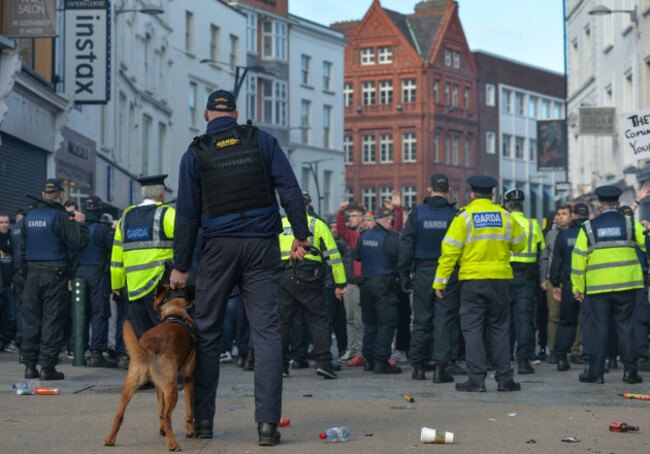
members-of-garda-irish-police-clash-with-protesters-during-anti-lockdown-protest-on-grafton-street-in-dublin-city-center-during-level-5-covid-19-lockdown-on-saturday-fabruary-27-2021-in-dublin An anti-lockdown protest in Dublin, February 2021 Alamy Stock Photo Alamy Stock Photo

Old theories, new terrain

All of this has created a “potent mix” for those who seek to exploit real-world events in order to further their political goals or to simply make money from an increasingly monetised social media landscape, according to Aidan O’Brien of the European Digital Media Observatory.

O’Brien said the community of Irish social media accounts that routinely spread false information has grown since the Covid pandemic, and that regulation of the platforms has simultaneously declined.

Not only has the community of disinformation spreaders in Ireland expanded and become more cooperative, but the playing field has also changed since the return of Donald Trump to the White House.

“Perhaps most concerning of all is that during Covid, the major social media platforms began aggressively, proactively policing health disinformation of their own volition,” which is unlikely to be the case this time around, O’Brien said.

Ciaran O’Connor of the Institute for Strategic Dialogue is of the same opinion when it comes to how the Irish disinformation ecosystem has developed since 2020 alongside the decline in content moderation.

As for how people online are using this new crisis to promote the same speculative or even outright false claims as they did before, he said conspiracy theories and templates “rarely emerge from scratch”.

“There’s nothing new under the sun,” he says.

This is borrowing from a very similar playbook we’ve now seen in use on multiple social media platforms for a number of years.

“So we’re seeing, again, the conspiracy theorist accounts taking speculative pieces of news reporting and building an entire, very certain fabrication around that.”

O’Brien said he is concerned about the potential consequences of a larger and more organised group of people willing to spread disinformation this time round.

“The Irish disinformation ecology is exponentially larger in 2026 than it was in 2020, and these groups are far more coordinated and organised, which may lead to protests and potential civil unrest much earlier (than during the pandemic),” he said.

“If widespread disruption does occur in Ireland, the threat of disinformation may be more serious than during Covid.”

Readers like you are keeping these stories free for everyone...
It is vital that we surface facts from noise. Articles like this one brings you clarity, transparency and balance so you can make well-informed decisions. We set up FactCheck in 2016 to proactively expose false or misleading information, but to continue to deliver on this mission we need your support. Over 5,000 readers like you support us. If you can, please consider setting up a monthly payment or making a once-off donation to keep news free to everyone.

Close
JournalTv
News in 60 seconds