Sign in. It’s quick, free and it’s up to you.
An account is an optional way to support the work we do. Find out more.
Sign in. It’s quick, free and it’s up to you.
An account is an optional way to support the work we do. Find out more.

THE UNITED STATES – and the internet – have been gripped by the case of an alleged gang rape of a student at the prestigious Cornell University in Ithaca, New York over the past week.
The alleged incident occurred in late 2024, but an investigation into it has been reopened by State prosecutors in the wake of a civil case filed by the alleged victim, known as Jane Doe, against Cornell and seven male defendants in September.
Jane Doe was a 20-year-old undergraduate student at the Ivy League university in 2024 when she alleges she was raped by a group of seven men at a fraternity house at the university.
It is claimed in the lawsuit that Cornell failed to appropriately punish the accused men or protect the alleged victim. In the weeks since the secrecy surrounding the incident was blown up, various screenshots of text messages, names and allegations have been widely shared online.
Here’s what we know so far.
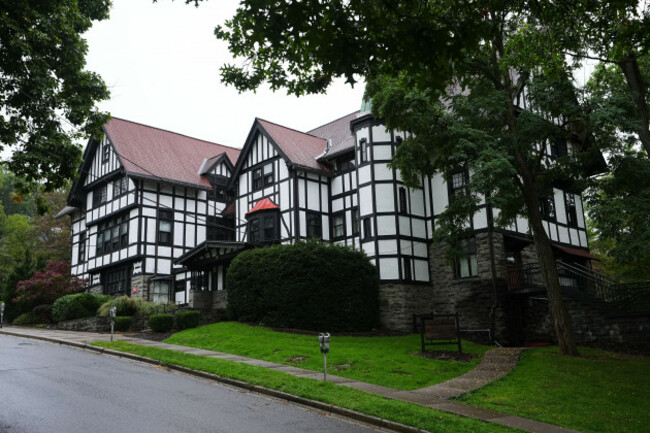
On 19 October 2024, Jane Doe was drinking with her sorority sisters before she “stumbled alone” to Chi Phi fraternity house to meet a male friend, the lawsuit states.
She had consumed around 10 drinks over roughly three hours.
Once she arrived at the fraternity house, she alleges she was given drugs and more alcohol. It was then that she says she was initially raped by two men, after which more men entered the room.
She believes she was raped by seven men, all of whom were members of the fraternity.
An image of a text exchange on the night in question, in what is purported to be a fraternity group chat on Snapchat, was submitted in the lawsuit.
A message sent at around 1.42am said that there was “free pussy upstairs”, and another member said “like you can walk in and whip it out”.
A member of the chat replied affirmatively when someone asked, “Shop still open?”.
There was ketamine, marijuana and alcohol involved in the incident, the woman alleged in the suit, and it continued until 5.45am. Doe later told police that two other people walked into the room and said they were “shutting it down”, which caused those there to leave.
CBS has reported that days later in October 2024, the woman was contacted by one of the defendants.
In the text exchanges, reported by the network, that defendant appears to apologise for “how things went down”, and said his memory of the event “kinda fuzzy”.
He also said that he and the other male from the first part of the night were sorry they were too intoxicated to “shut it down and kick people out before it got way out of hand”.
The woman is said to have replied that she was also struggling with remembering the details of the night and said she liked being with him and the second man.
“Non[e] of the sexual stuff was illegal,” the texts are alleged to say.
She is then reported to have suggested they meet up to smoke again, however adding, “but like leave out the extra 5 billion men and ketamine”.
Jane Doe’s attorney Thomas Giuffra confirmed that Doe had been contacted by one of the defendants after the event, but could not confirm whether the texts reported by CBS were legitimate.
He also said that Doe was traumatised and in denial about the incident, and was trying to find out more about what had happened.

Around three weeks later, on 8 November 2024, Jane Doe went to Cornell University Police Department and reported the alleged incident.
She told campus police that she had agreed to have a threesome with two Chi Phi fraternity members on the night of the event – one of these men being the defendant that contacted later – according to a summary of the six-page typewritten statement provided by Doe and released by prosecutors.
The three began to engage in activity, the statement summary continues, and then another man entered the room and joined in. Other men began to enter and exit the room.
The six-page statement was shared with Tompkins County District Attorney Matthew Van Houten’s office. Based on this, the DA decided not to bring charges against any of the accused.
Van Houten said Doe had not alleged rape, nor had she alleged that she didn’t willingly consume any drugs taken in her police interview, although he later said he had not seen the transcript of her interview.
Van Houten’s office didn’t independently investigate the complaint and relied solely on information supplied by the university police, he said.
However, a transcript of that interview acquired by CBS this week revealed further details of what Jane Doe alleged had occurred on the night – and what she told Cornell police.
She was “physically hit very, very hard”, she said in her interview.
Doe had difficulty remembering what had happened, but told investigators that she could say with “100% confidence” she was raped, the transcript said. She also said she was coerced into beginning the initial sexual encounter.
The same day the complaint was made, the fraternity was temporarily suspended while university police investigated the claims as a potential violation of the university’s code of conduct.
The students Jane Doe accused of attacking her were also suspended shortly afterwards.
Three days after the incident was reported, the Chi Phi fraternity voted to remove the men from the chapter. It is not clear whether all seven defendants were removed.
Later that month, on 26 November, the university’s interim president issued a public update to students, where he said: “I am writing with information regarding the ongoing investigations into the serious and deeply disturbing allegations of drug abuse and sexual violence at the Chi Phi fraternity house.”
The chapter was closed in 2024 and barred from campus.
Doe’s attorney Giuffra told media outlets that the accused men were not appropriately punished by the university: only two were expelled.
Cornell’s president later told a student government meeting that two of the accused were expelled, two were suspended for at least two semesters, one had already graduated before any punishment could be handed down, and two were found not to be responsible for sexual misconduct.
It was alleged that some of the accused’s punishments were as light as suspension, writing essays and taking part in workshops.
Cornell said it is not true that the men involved in the case were only given essays to write as their disciplinary action.

On 14 January 2025, Jane Doe filed a complaint with the university’s Title IX coordinator, which investigates internal accusations of discrimination and harassment.
A Title IX inquiry was opened.
By May 2025, at least 12 hearings into the accusations had been held.
On 16 September 2026, Jane Doe filed her civil suit against the seven men, Chi Phi fraternity, her own sorority and the university.
The suit, which was 101 pages long, contained additional allegations that had not been provided to university police in the weeks following the alleged event.
On 28 September, District Attorney Van Houten said his office would be reopening the case.
The allegations laid out in the civil suit are “dramatically different” to those shared by the young woman in her interview with campus police in 2024, he said.
“It’s our intention to present the case to the Tompkins County grand jury with Jane Doe’s cooperation,” Van Houten told ABC News.
“We want to re-examine whether there’s additional evidence that we were not aware of in November of 2024, that exists now that would change our assessment of the case and would result in the grand jury finding that there was criminal conduct.”
The seven men were named by Cornell’s student newspaper on 21 September.
It was after this that one of the defendants, through his lawyer, who allegedly sent two responses into the Snapchat group, denied the accusations.
The accused’s lawyer Jeremy Saland said an “ugly Snapchat… doesn’t make my client a rapist, and it certainly doesn’t make anyone a sex offender”.
Saland said his client had briefly entered the room where the alleged incident occurred in response to the message, but did not touch her and left within minutes.
“She was not incoherent but in fact was coherent and again left that room without touching her or having any physical interaction with her whatsoever,” Saland said.
“We are available to present exonerating evidence. I just hope the right thing is eventually done, this case is closed, and my client can live his life and not be subject to this selfish, repugnant, vile claim by this woman about him,” he said.
Another named defendant similarly denied allegations against him.

To embed this post, copy the code below on your site













have your say