Sign in. It’s quick, free and it’s up to you.
An account is an optional way to support the work we do. Find out more.
Sign in. It’s quick, free and it’s up to you.
An account is an optional way to support the work we do. Find out more.
IT MIGHT NOT be the most exclusive club in the world, but it does have one very strict entry requirement: you have to be called Andrew.
That’s the premise behind the “Council of Andrews”, an online group that has quietly amassed thousands of members across the world, all united by nothing more than a shared first name.
The idea was recently brought to wider attention in a feature by The Guardian, which traced the origins of the group from a half-joking Facebook experiment into a global community of Andrews, Andys, Drews and Andreas.
In an era where right-wing ‘manosphere’ figure Andrew Tate and Andrew Mountbatten-Windsor, a former prince, have dominated Andrew-related headlines, the name has garnered some less-than-flattering associations.
The name Andrew is even being removed from street signs.
As an Andrew myself, it felt only right to investigate the Council of Andrews, and talk to some of its founding – and Irish – members.
The group was started on Facebook in 2019 by Andrew Patts, who at the time was living in a new city in the US and, by his own account, feeling isolated.
What started as a joke, inviting fellow Andrews into a vaguely mysterious online collective, quickly took on a life of its own.
The idea isn’t entirely new. About a decade ago, as social media groups were still finding their shape, similar experiments briefly appeared, with groups of Johns, Seáns, Wills and other shared-name communities popping up on Facebook. Most faded quietly.
But some have endured. A group of Ryans alone now has more than 100,000 followers on Instagram, suggesting the appeal of name-based belonging hasn’t disappeared.
“At first, our plan was to take over the world,” Patts said, only half joking.
“But then one of the Andrews needed help and he flagged it in the group. That’s when we realised there was something bigger here.”
That moment, when members raised money to support someone in need, marked a shift. The group was later formalised as a non-profit, and today it operates as a kind of loose, name-based network where members swap advice, share life updates and occasionally rally around each other.
Beyond the day-to-day posts, which are largely made up of memes, in-jokes and light-hearted updates, the group has also developed its own traditions.
Members organise in-person meet-ups known as “DrewFests”, where Andrews gather from across different regions to socialise, often for the first time outside the group chat.
One meeting, held in Las Vegas, garnered around 40 Andrews.
The council has also taken on a more practical role at times, raising thousands of dollars for members in need, including helping to cover legal fees, rent support and even contributing towards a prosthetic limb for one member following a serious accident.
Following the Guardian coverage, Patts said the group saw a surge of interest.
“We had about 700 new Andrews join almost immediately. That’s massive for us,” he said.
The council, once overwhelmingly American, is now becoming more international, with a noticeable uptick in Irish and UK members.
Not all of them are convinced of the premise, however.
Andy Smith, from Westmeath, said the concept, a group built purely around a shared name, lacks the substance of other online communities.
“Having a name in common is not fertile ground for commonality,” he said.
A member of several other niche groups, Smith joined the group two weeks ago, and said he found some aspects of the council unusual, including how readily people shared personal struggles.
“People are quicker to offload emotional problems,” he said.
“That would be better served by groups equipped to deal with that than a bunch of randomers with the same name.”
He also pointed to an increase in posts seeking financial help.
“It confirms two things to me: there are a lot of lonely people out there, and there are always people willing to scam.”
Still, he plans to stick around, if only out of curiosity.
“If it’s not moderated properly, I can see it folding under its own weight,” he said.
Others are taking a more relaxed view.
Andrew Noble, a Carrickfergus native who now lives in Co Wicklow, said he joined after hearing about the group on the radio, and was drawn by the novelty.
“I thought it would be a great laugh,” Noble said.
“The idea of someone shouting your name and 100 people turning around, that would be brilliant.”
For Noble, the name itself carries a more personal weight. He was named after three relatives who died during the Second World War, giving it a significance that goes beyond coincidence.
But he also believes the name has lost some of its shine.
“I think it’s an old-fashioned name that has gone out of style,” he said.
I asked my parents yesterday why I was given the name.
Apparently it was because it was “a strong name”, and no one else in the family had it.
It also meant, practically, that they didn’t have to keep searching beyond the A section of the big book of baby names.
In the year I was born, there were more than 200 Andrews born in Ireland, a reminder that it wasn’t always quite so unusual.
Data backs that up.
According to the Central Statistics Office, Andrew was among the most popular names for boys in Ireland in the late 20th century, peaking in the early 1990s when more than 400 babies a year were given the name.
In recent years, that number has dropped sharply, with just over 50 boys named Andrew in 2025.
I’m slightly worried the name is drifting into “old-fashioned” territory, but at least for now, the best Andrews seem to be keeping it afloat.
CSO statistician Seán O’Connor said the trend reflects a broader shift.
“There’s a lot more variety now in what parents are choosing,” he said, noting that thousands of unique names are now recorded each year. In 2025, there were 4,848 unique boys names registered for newborn boys.
Names, like fashion, tend to cycle, falling out of favour before sometimes making a comeback.
Andrew, it seems, may be somewhere in the dip.
That hasn’t been helped by some previously-mentioned high-profile namesakes.
Noble admits it can be frustrating.
“It annoys me,” he said. “It can mean negative associations with my name.”
Smith, on the other hand, is unmoved.
“You’d have to be fairly delicate for that to have an effect on you,” he said.
Ireland, of course, has produced its own Andrews, though not all lean into the name.
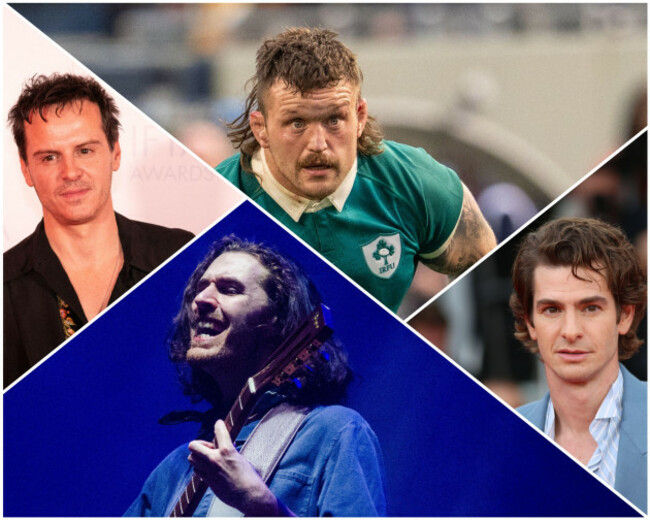
Hozier, arguably the country’s most famous Andrew, is rarely referred to by it publicly, while Andrew Scott has given the name a more quietly respected presence on stage and screen.
For Patts, however, the focus of the Council of Andrews is less on reputation and more on connection.
“There’s a real need for people to be part of something,” Patts said.
“We’re filling that gap.”
It’s a strange idea, building a community around a shared first name, but it clearly taps into something real.
In a world where everyone is trying to stand out, thousands of people have found connection in having one very ordinary thing in common.
And, for better or worse, I’m one of them.

To embed this post, copy the code below on your site













have your say