Sign in. It’s quick, free and it’s up to you.
An account is an optional way to support the work we do. Find out more.
Sign in. It’s quick, free and it’s up to you.
An account is an optional way to support the work we do. Find out more.
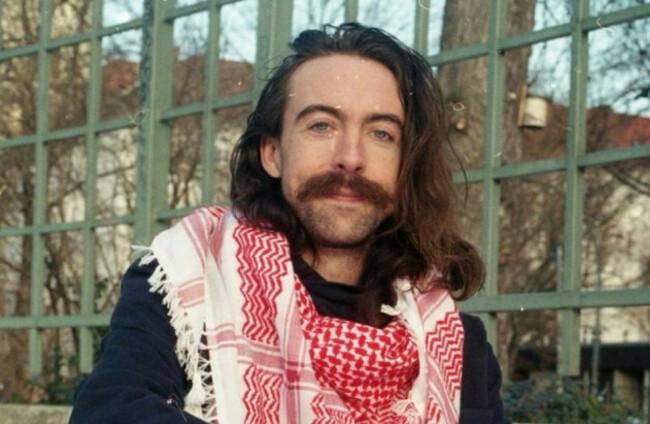
THE FATHER OF Irish activist Daniel Tatlow-Devally has said his son and four fellow defendants are being made to “look like Hannibal Lecter” as politicians called on the government to send an independent observer to the group’s trial in Germany.
Conor Devally said his son and the other members of the so-called Ulm 5 had been “punished in advance” by being held in custody ahead of the conclusion of the case.
“I think these five people have been nominated to be made to look like Hannibal Lecter, and have been punished in advance by their being detained on a premise that doesn’t exist,” Devally said.
He said his son is permitted two half-hour visits each month, making family visits from Ireland difficult because of the distance to Ulm prison.
Devally said the only reason given for refusing his son’s bail was that he was considered a flight risk because he could return to Ireland or travel to other English-speaking countries.
He said this ignored the fact Tatlow-Devally had lived in Berlin for seven years and had built his life there.
“He’s very invested in the culture and his life there, and he does not want to leave,” he said, adding that all five defendants wanted to stand trial.
Devally was speaking alongside a cross-party delegation of Irish politicians who returned from Germany after attending Tatlow-Devally’s trial in Stuttgart and visiting him in prison.
The delegation, which included People Before Profit-Solidarity TDs Richard Boyd Barrett and Ruth Coppinger, Sinn Féin TD Mairéad Farrell, Labour TD Duncan Smith, Social Democrats Senator Patricia Stephenson, Fine Gael TD Barry Ward and Sinn Féin MEP Lynn Boylan, called on the Department of Foreign Affairs to send a legal observer to the trial, arguing there were serious concerns about both Tatlow-Devally’s detention and the conduct of the proceedings.
Boyd Barrett, Farrell and Ward visited Tatlow-Devally in prison the previous day.
Ward, a qualified criminal defence solicitor, said he travelled to Germany not to judge the allegations against Tatlow-Devally but to assess whether he was receiving the basic protections expected under the European Convention on Human Rights.
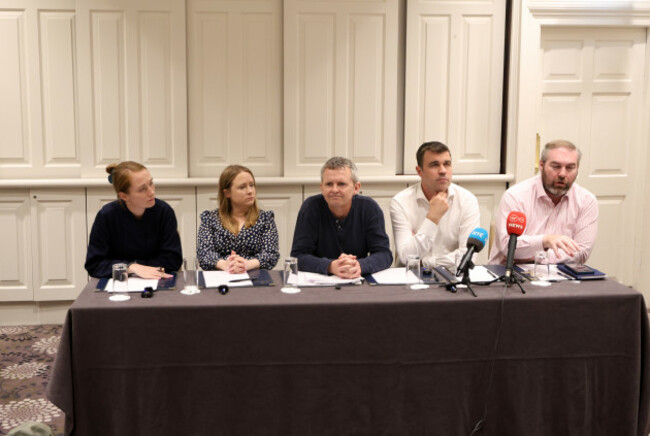
“I do have difficulty with what I saw as being far short of the minimum standards we expect for fair trials,” Ward said.
“He’s in such an oppressive regime, and there doesn’t appear to be any objective basis for that,” Ward said, describing how Tatlow-Devally spends 23 hours a day alone in a five-metre by two-metre cell with only one hour of exercise in a small, enclosed yard.
Ward explained that Tatlow-Devally has no meaningful opportunity to socialise, receives only limited family visits and has had to fight for access to books while in prison.
He added that during winter, Tatlow-Devally told him he found himself sleeping for long periods because of the isolation.
Boyd Barrett said the delegation was “shocked” by what it witnessed both in prison and in court.
“He’s 10 months now, 23 hours a day, locked up on his own,” Boyd Barrett said.
He said Tatlow-Devally had “great difficulty” speaking to his legal team while in prison and described the restrictions on family visits as “very, very severe”.
Farrell said she returned from Germany with greater concerns than when she travelled there.
She described being “shook” after visiting Tatlow-Devally in prison and said she was deeply concerned by his confinement.
The delegation also outlined several concerns about the trial itself.
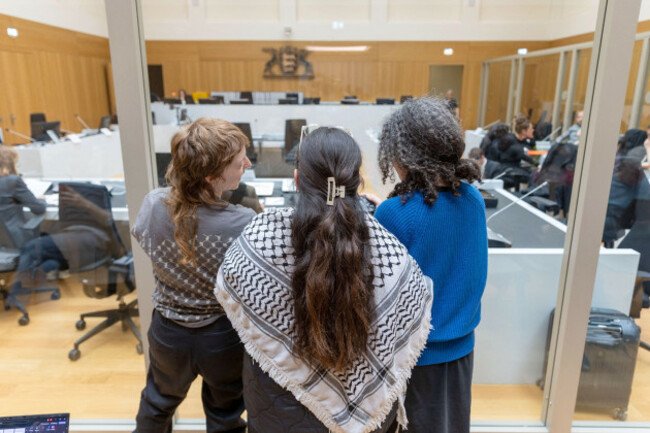
They said the five defendants, known as the Ulm 5, sit behind a glass barrier, preventing them from communicating easily with their lawyers.
The parliamentarians attending the hearing had pens, notebooks and even belts confiscated before entering the courtroom.
Ward said the defendants were unable to confer privately with their legal teams during proceedings because they were separated by glass.
He also criticised the absence of an official transcript or recording of the trial, saying it could make any future appeal more difficult.
“If there is to be an appeal of any aspect of the trial, there is not a reliable or independent note of what actually transpired,” Ward said.
Boyd Barrett said the delegation had also sought permission for parliamentarians to take notes, but no ruling was made on the request.
Ward agreed with descriptions of the proceedings as a “show trial”, saying he believed the presiding judge did not appear to engage equally with applications made by the defence.
“There is no impression … that she’s taking on board applications from the defence in a sincere or genuine or equal way,” he said.
Stephenson said Ireland should send an independent legal observer, arguing there was precedent for doing so in other countries.
“We are not asking them to break the rules,” Stephenson said of the German officials.
“We’re asking for them to observe whether the rights of an Irish citizen are indeed being violated, as we think that they are.
“There is a sense that the handling of this trial is completely disproportionate to what the Ulm 5 are allegedly said to have done.”
Duncan Smith said the delegation wanted to increase public attention on the case.
“The stakes are extremely high,” Smith said.
Boyd Barrett added that defence lawyers for the activists are not expecting a positive verdict in the trial, adding: “They feel the presumption of innocence has gone out the window”.
The Ulm 5, a group of activists from Ireland, Germany, Spain and the UK, are on trial over an alleged break-in at an Elbit Systems defence factory in the German city of Ulm in September 2025.
German prosecutors allege the group caused around €1 million worth of damage at the Israeli-owned site and have charged them under Section 129 of the German Criminal Code, which relates to membership of a criminal organisation.
If convicted, they face prison sentences of up to five years.
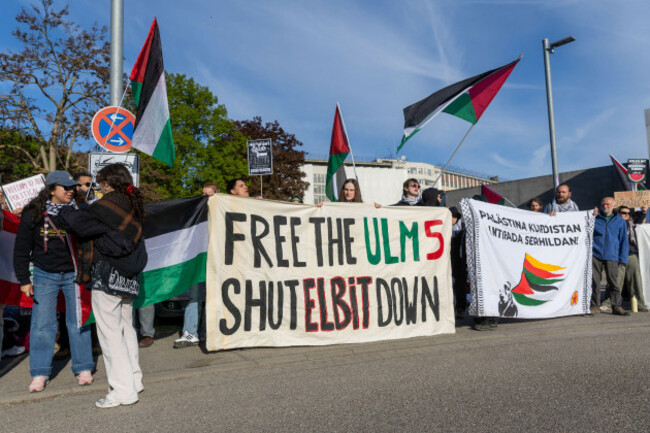
The group has said it carried out an act of civil disobedience against Israel’s genocidal war in Gaza, and has denied wrongdoing.
Concerns have repeatedly been raised about the defendants’ detention and the conduct of the trial, including allegations that they have been held in unusually restrictive conditions and prevented from properly communicating with their legal teams.
Those allegations have previously been disputed by German prosecutors.

To embed this post, copy the code below on your site













have your say