Sign in. It’s quick, free and it’s up to you.
An account is an optional way to support the work we do. Find out more.
Sign in. It’s quick, free and it’s up to you.
An account is an optional way to support the work we do. Find out more.
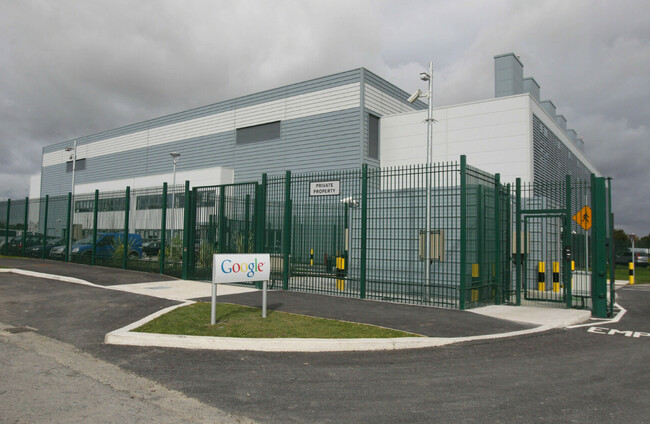
IRELAND’S ENERGY REGULATOR is being taken to the High Court by an environmental groups over its policy on the powering of data centres.
Friends of the Irish Environment has lodged a judicial review alongside Friends of the Earth Ireland and ClientEarth Limited.
They are taking issue with the Commission for Regulation of Utilities (CRU) decision to allow some fossil fuel energy to be used to power new data centres.
The CRU said this morning that it was aware that an application for leave to bring judicial review proceedings against it had been filed in the High Court but it had not yet received notice of any application or any further details.
Speaking on Morning Ireland on RTÉ 1 today, Deirdre Duffy from Friends of the Earth Ireland said that against the current backdrop of rising fuel prices, new data centres using up energy supplies is bad for the country.
“Geopolitical conflict is increasing energy costs here in Ireland, and it’s causing us to be more at risk,” she said.
Duffy also raised the issue of data centres increasing Ireland’s dependency on gas.
She said that any future infrastructure that depends on gas supply “is really not good news for energy security or energy prices for consumers here in Ireland.”
The CRU finalised a new connection policy for data centres in December of last year.
The policy stated that large data centres have to provide dispatchable on-site (or nearby) energy generation, or storage capacity.
Data centres must match 80% of their energy demand with renewable projects, but there is also an option left open for them to use non-renewable sources, including fossil fuels.
Data centres are expected to use up an increasing amount of energy supply in Ireland over the coming years.
In 2023 data centres consumed approximately 21% of Ireland’s electricity supply, and in 2024 they accounted for 22% of usage. This is up from just 5% in 2015.
Friends of the Irish Environment previously submitted analysis to the CRU which warned that the policy “risks locking Ireland into fossil fuel dependency and violating climate laws”.
Their analysis stipulated that the CRU’s view that it does not have a mandate to actually limit data centre emissions and put in place offsetting requirements is not substantiated.
The group also claims that the new policy “ignores” an EU legal directive which requires scrutiny of plans that will have a large role in shaping future development decisions.
Friends of the Irish Environment has also challenged the CRU’s claim that a moratorium on data centres would be “disproportionate”.
Analysis by Hannah Daly, Professor of Sustainable Energy at UCC, formed part of the submission.
In the submission last year, Daly said that the CRU policy for new data centre connections is not compatible with Ireland’s Climate Action Plan, and its requirement for “zero carbon demand growth”.
“It would facilitate electricity demand growth from data centres without emissions mitigation, and require that flexibility come from on-site generation, therefore allowing for greater fossil fuel demand that is incompatible with the Sectoral Emissions Ceilings,” Daly said at the time.
The environmental groups are being represented by solicitor Fred Logue.
With reporting from Valerie Flynn.

To embed this post, copy the code below on your site















have your say