Sign in. It’s quick, free and it’s up to you.
An account is an optional way to support the work we do. Find out more.
Sign in. It’s quick, free and it’s up to you.
An account is an optional way to support the work we do. Find out more.
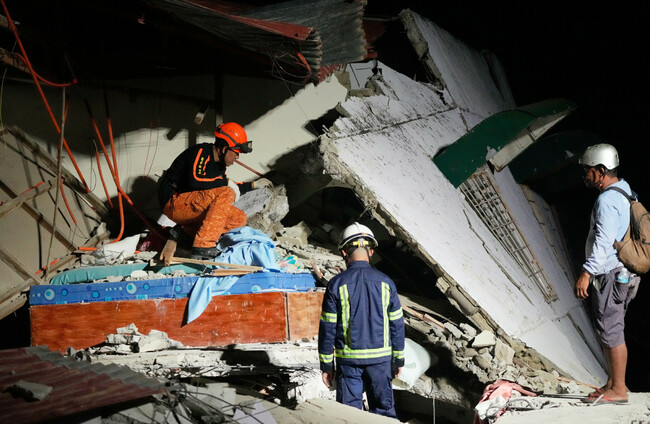
THE DEATH TOLL from a powerful earthquake in the central Philippines has risen to 72 as the search for the missing winds down.
Rescuers have turned their focus to the hundreds injured and thousands left homeless.
The bodies of the three victims were pulled from the rubble of a collapsed hotel overnight Wednesday in the city of Bogo, near the epicentre of the 6.9-magnitude quake that struck on Tuesday.
“We have zero missing, so the assumption is all are accounted for,” National Disaster Risk Reduction and Management Council spokesman Junie Castillo said, adding that some rescue units in Cebu province have been told to “demobilise”.
The government said 294 people were injured and around 20,000 had fled their homes. Nearly 600 houses were wrecked across the north of Cebu and many are sleeping on the streets as hundreds of aftershocks shake the area.
“One of the challenges is the aftershocks. It means residents are reluctant to return to their homes, even those houses that were not (structurally) compromised,” Castillo said.
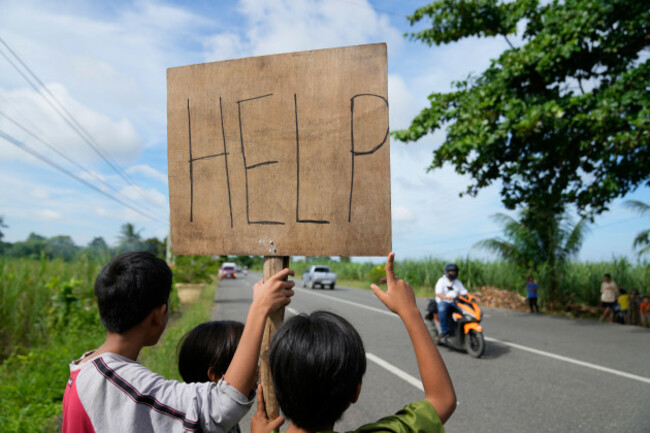
Cebu provincial governor Pamela Baricuatro has appealed for help, saying thousands needed safe drinking water, food, clothes and temporary housing, as well as volunteers to sort and distribute aid.
President Ferdinand Marcos flew to Cebu with senior aides to inspect the damage.
He also visited a partially damaged housing project in Bogo, built for survivors of the 2013 Super Typhoon Haiyan, one of the deadliest natural calamities to hit the Philippines.
Eight bodies were “recovered from collapsed houses” in the project following the quake, a local government statement said.
A tiny village chapel in Bogo was serving as a temporary shelter for 18-year-old Diane Madrigal and 14 of her neighbours after their houses were destroyed. Their clothes and food were scattered across the chapel’s pews.
“The entire wall (of my house) fell so I really don’t know how and when we can go back again,” Madrigal told AFP.
“I am still scared of the aftershocks up to now, it feels like we have to run again,” she added.
Mother-of-four Lucille Ipil, 43, added her water container to a 10-metre line of them along a roadside in Bogo, where residents desperately waited for a truck to bring them water.
“The earthquake really ruined our lives. Water is important for everyone. We cannot eat, drink or bathe properly,” she told AFP.
“We really want to go back to our old life before the quake but we don’t know when that will happen… Rebuilding takes a long time.”
Many areas remain without electricity, and dozens of patients were sheltering in tents outside the damaged Cebu provincial hospital in Bogo.
“I’d rather stay here under this tent. At least I can be treated,” 22-year-old Kyle Malait told AFP as she waited for her dislocated arm to be treated.
More than 110,000 people in 42 communities affected by the quake will need assistance to rebuild their homes and restore their livelihoods, according to the regional civil defence office.
Earthquakes are a near-daily occurrence in the Philippines, which is situated on the Pacific “Ring of Fire”, an arc of intense seismic activity stretching from Japan through Southeast Asia and across the Pacific basin.
Most are too weak to be felt by humans but strong and destructive quakes come at random, with no technology available to predict when and where they might strike.

To embed this post, copy the code below on your site












have your say