We need your help now

Support from readers like you keeps The Journal open.

You are visiting us because we have something you value. Independent, unbiased news that tells the truth. Advertising revenue goes some way to support our mission, but this year it has not been enough.

If you've seen value in our reporting, please contribute what you can, so we can continue to produce accurate and meaningful journalism. For everyone who needs it.


Debunked: Fringe commentator from US spreads false rumour of stabbing at Connolly Station

An accident which left a thick trail of blood appears to have prompted the story.

FALSE CLAIMS OF a stabbing at Connolly Station on Saturday night were shared to millions of people by a US commentator who had travelled to Ireland to cover the fuel price protests.

The rumour, which was likely prompted by a real incident involving a person who broke their stitches and bled in the station, was initially shared on the night of 18 April, along with footage from the Dublin train station.

Much of the commentary about the supposed incident suggested that Dublin or even the entire country had become dangerous — a claim that has long been spread by international far-right voices, despite being in contrast with data that shows that Ireland is one of the safest countries in the world.

“This video, I can’t exactly show you because it’s so bloody,” says one YouTube video soliciting donations, which has been viewed more than 20,600 times since being posted on 19 April.

“But what it is, is somebody dying in a pool of blood, as there’s a stream of arterial bleeding leading up to the actual death.”

This is untrue. Videos from the train station did appear to show a trail leading to a pool of blood underneath a bench, with an abandoned crutch seen leaning against the backrest.

However, despite what that YouTube video said, no stabbing victim is featured in the footage.

A spokesperson for Transport for Ireland, which oversees public transport for the country, told The Journal that there was “no stabbing at all, or any other violent attack” in the station on Saturday night.

“A customer had had a medical procedure on their ankle, and while travelling on the escalator, their stitches ruptured and they experienced blood loss,” they wrote.

It appears likely that people had seen the significant trails of blood and assumed there was an attack, with rumours becoming more extreme as they were spread. Certainly, the initial rumours had not featured a fatality.

“BREAKING,” begins one such post that was first shard on Saturday night by an X user with an Irish tricolour in their profile information. “A man has been repeatedly stabbed tonight at Connolly train station, Dublin.

“The area resembled something akin to a horror movie, and yet the powers that be of Fianna Fáil and Fine Gael will say with a straight face, Dublin is safe.”

That X post accumulated more than 154,100 views — numbers which would later seem small when that post was quoted by an American commentator who helped the rumour go international.

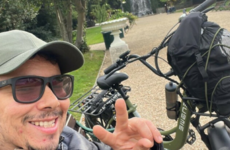
“At the station, I am told there was no stabbing…Then why did I see a janitor washing one specific section of the landing by the vending machines after a video was found tonight of a man being stabbed here?” asks Kevin Posobiec, an American who came to Ireland to cover the fuel protests.

In his video, which has more than 2.2 million views on X, Posobiec films himself as security is called on him, while staff keep telling him that the story he heard about a stabbing was false.

“I saw on the news that someone got stabbed here,” he repeatedly says.

Outside influences

Kevin Posobiec is the brother of Jack Posobiec, a far-right conspiracy theorist famed for spreading the debunked “Pizzagate” conspiracy theory, which posited that there was a child exploitation ring based in secret tunnels under a Washington DC pizza shop.

He has also claimed that the 2020 US presidential election was rigged.

Kevin Posobiec came to Ireland last week, he says, to cover a “tractor parade” protesting fuel prices.

However, as the fuel price protests have ended, he has largely filmed himself walking around Dublin, criticising the city, and in particular the presence of non-Irish people there.

“When Americans visit Ireland, we want to see Irish people,” he posts above a video of himself walking around Dublin, while commenting on the people he sees.

“Probably selling crack,” he said about two black men talking to each other in a park. There is no indication in the video that the men were selling crack or committing any other crime.

“Amidst the beautiful day in Dublin, you have to have your crack dealers out in the open,” Posobiec continues.

Another post, about a stabbing in Cork City, complained that Ireland doesn’t “publish crime data broken down by nationality, ethnicity, or asylum seeker status”, despite no one having been arrested for the crime.

Posobiec is not the only fringe commentator who has been drawn to Ireland due to protests.

Ezra Levant, the co-owner of the far-right website Rebel News, also came to report on the protests, which he described as being akin to the Canadian trucker convoys against Covid-19 restrictions during the pandemic.

Much of Levant’s coverage focused not on the cost of fuel, but on whether the protests could signal the start of an Irish right-wing surge.

“Where is the Irish version of Nigel Farage or Marine Le Pen?” he begins one of his posts from the protests. “Where is the political entrepreneur to lead this grassroots rebellion?”

The Journal has reported on attempts to hijack the fuel protests by far-right figures, both in Ireland and abroad, including British agitator Tommy Robinson.

Levant also conducted an interview with Robinson about the Irish fuel protests, in which Robinson lays out his credentials to speak on the subject: “My mom’s Irish — she’s a mad little Paddy.”

Levant appears to have since left Ireland, though still posts about Irish issues on his social media.

Popobiec, conversely, appears to still be here. But with no fuel protests to cover, his attempts to create outrage are aimed at other targets.

The Journal’s FactCheck is a signatory to the International Fact-Checking Network’s Code of Principles. You can read it here. For information on how FactCheck works, what the verdicts mean, and how you can take part, check out our Reader’s Guide here. You can read about the team of editors and reporters who work on the factchecks here.

Readers like you are keeping these stories free for everyone...
It is vital that we surface facts from noise. Articles like this one brings you clarity, transparency and balance so you can make well-informed decisions. We set up FactCheck in 2016 to proactively expose false or misleading information, but to continue to deliver on this mission we need your support. Over 5,000 readers like you support us. If you can, please consider setting up a monthly payment or making a once-off donation to keep news free to everyone.

Close
JournalTv
News in 60 seconds