Sign in. It’s quick, free and it’s up to you.
An account is an optional way to support the work we do. Find out more.
Sign in. It’s quick, free and it’s up to you.
An account is an optional way to support the work we do. Find out more.
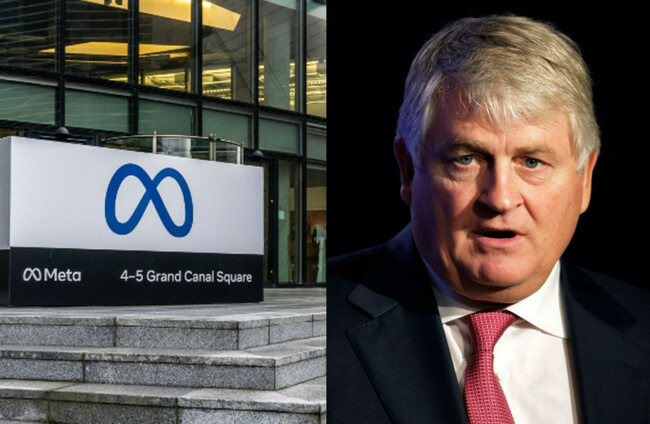
BUSINESSMAN DENIS O’BRIEN has initiated fresh legal proceedings against Facebook and Instagram owner Meta in the High Court.
The Journal has confirmed that O’Brien has taken a new case against Meta Platforms Ireland, the company name of the social media platform’s Dublin-based headquarters in Europe.
He is represented in the case by corporate law firm William Fry.
The specifics of the case are not yet known, and it is unclear what has prompted O’Brien to take the latest proceedings.
It is also unclear whether the new case is linked to another ongoing case O’Brien launched against Meta in 2024 over allegedly fake ads using his name and image.
That case was initiated in July 2024, when O’Brien sought orders requiring Meta to provide information that could help identify the people behind what he alleged were false, malicious and misleading ads posted on Facebook and Instagram.
The businessman claimed his image and manipulated footage of interviews with him had been used in “a clear campaign to promote dubious financial schemes including cryptocurrency investments” to users of the social media platform’s services.
He said that he has nothing to do with the schemes that were advertised.
He claimed the adverts were defamatory and breached his rights to privacy, his good name, data protection law and his property rights.
O’Brien also sought damages on a number of grounds, including defamation and malicious falsehood.
As part of those proceedings, O’Brien sought what is known as a Norwich Pharmacal order requiring Meta to provide details to assist him in identifying those who have placed and paid for the adverts on the social media firm’s platforms.
Meta subsequently provided thousands of pages of information relating to dozens of advertising accounts, and hundreds of additional defendants were later added to O’Brien’s case.
The High Court was told in 2024 that O’Brien’s lawyers could not establish with certainty the identities of many of those behind the accounts, meaning the additional defendants were instead named as “John Doe” or “Jane Doe”.
The court was told that IP addresses and phone numbers associated with the accounts could be traced to countries around the world. O’Brien’s solicitors said they suspected many of the names associated with the accounts may have been fictional.
Court filings in those proceedings include Meta and 736 other unidentified defendants described as “John Doe”.
Dozens of account names written in languages or scripts including Russian, Burmese, Thai, Arabic, Lao, Korean, Khmer, Sinhala, Turkish and Mandarin are among the hundreds of names associated with the online accounts that are listed defendants.
Meta previously told the court that some of the advertising accounts involved may have been compromised by third parties, meaning their original owners could have had no involvement in publishing the disputed adverts.
The company has also previously rejected claims that it breached O’Brien’s rights in its handling of the accounts.
The case was most recently before the High Court in July and is due to return for mention in March 2027.
The proceedings initiated in the High Court yesterday are a separate case, and it has not yet been established whether they concern the same ads or issues from the older case.

To embed this post, copy the code below on your site













have your say