Sign in. It’s quick, free and it’s up to you.
An account is an optional way to support the work we do. Find out more.
Sign in. It’s quick, free and it’s up to you.
An account is an optional way to support the work we do. Find out more.
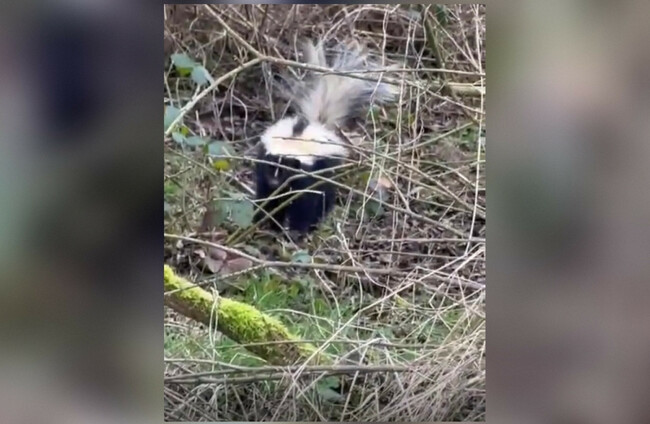
SEVEN SKUNKS WERE captured and destroyed after being found roaming beside a protected raised bog in Co Kildare, The Journal can reveal.
The animals were discovered in the Milltown Bog area near Newbridge during March and April this year, prompting an operation involving the National Parks and Wildlife Service (NPWS), local landowners and members of the community.
The NPWS said it is currently carrying out an investigation into the origins of the animals, and how they came to be loose in the area.
It is not known where the skunks came from, who owned them or whether they escaped or were deliberately released.
The Journal understands that, several weeks prior to the skunk sightings, a post advertising eight skunks for sale appeared in a private Irish pet trading messaging group.
A member of the public first raised the alarm in March after recording video footage of one of the distinctive black-and-white animals moving through dense undergrowth.
According to a statement from the NPWS, regional staff assessed the footage and confirmed that the animal was a striped skunk, whose scientific name is Mephitis mephitis.
A spokesperson said the sighting was reported beside a protected bog which is also an important site for native breeding waders.
The NPWS said that as inquiries continued, it became apparent that more than one skunk was loose in the area.
“The reported sighting was beside a protected raised bog near Newbridge that is also an important site for native breeding waders,” a NPWS spokesperson told The Journal.
“NPWS staff assessed the report with the local community due to potential harm that a non-native omnivore with no natural predators could have on local biodiversity and animals.
“It became evident that there were a number of individual striped skunk reported.”
Local landowners, members of the community and officers from the Breeding Waders EIP Project assisted the operation to locate and remove the animals.
The NPWS said their “foresight and endeavours” eventually ensured that seven skunks were “humanely captured and dispatched”.
The number was confirmed using video and photographic evidence, a spokesperson said.
Six of the skunks were captured and destroyed in March, with the final skunk caught and killed in April, the NPWS said.
While there have been no further reports of the non-native animals in the area, the NPWS has asked the public to remain vigilant and report any further sightings immediately.
It said the service has also liaised with veterinary officers at the Department of Agriculture, Food and the Marine to establish whether there were “any potential disease or other considerations” in addition to the possible ecological damage.
Carcasses of the animals were subsequently sent to a department regional veterinary laboratory for analysis.
Kildare Wildlife Rescue confirmed it had been made aware of the incident but did not have further information due to NPWS leading the operation.
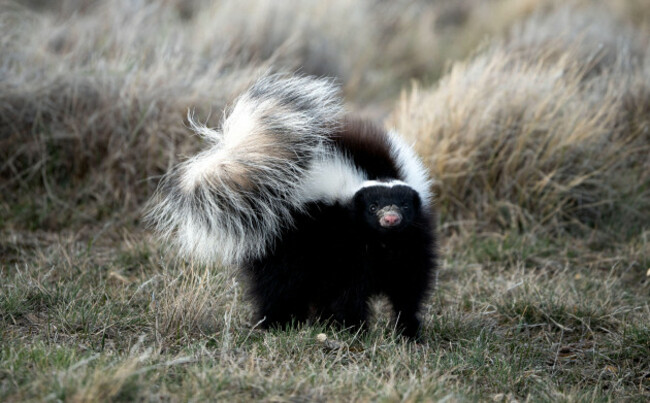
Striped skunks – known for spraying a powerful, foul-smelling scent when threatened – are native to North America and do not occur naturally in the Irish countryside.
Considered opportunistic omnivores, they eat a wide variety of animal and plant matter, including insects, small mammals, amphibians, reptiles and birds’ eggs.
They are also known to prey on the eggs and young of ground nesting birds.
The skunks found in Co Kildare were present between March and late April, during the spring nesting season, raising concerns over disturbances to breeding waders and other vulnerable native species.
The NPWS did not confirm whether there was evidence that the skunks preyed upon birds or other native wildlife before they were captured.
There appears to be no specific prohibition on keeping a striped skunk as a pet in Ireland, although separate restrictions apply to its importation, breeding and release.
Under Irish Birds and Natural Habitats Regulations, it is an offence to release or allow a non-domesticated, non-native animal to escape. The offence can carry a maximum penalty of three years in prison or a €500,000 fine following conviction.
Anyone who saw the animals or who has information about their origins can contact the NPWS wildlife enforcement unit at WildlifeEnforcement@npws.gov.ie or by telephone on 01 539 3230.
Patricia Devlin is an investigative reporter with The Journal Investigates.
Our investigative unit is dedicated to lifting the lid on how Ireland works. This takes time and it takes resources. Find out how you can help:

To embed this post, copy the code below on your site











have your say