Sign in. It’s quick, free and it’s up to you.
An account is an optional way to support the work we do. Find out more.
Sign in. It’s quick, free and it’s up to you.
An account is an optional way to support the work we do. Find out more.
LAST UPDATE | 1 Jul 2024
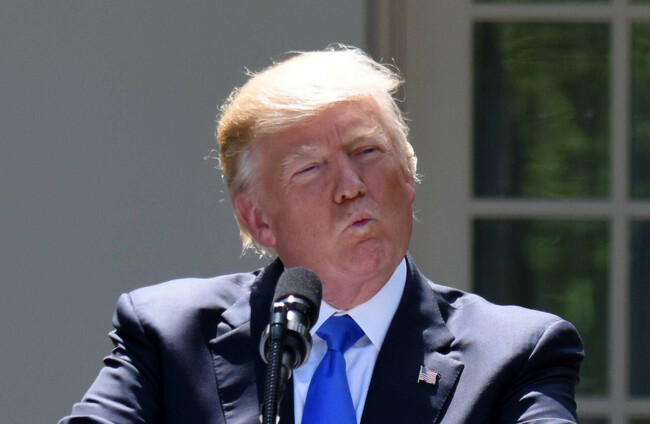
THE US SUPREME Court has ruled that Donald Trump is partially immune from prosecution for actions that are considered “official acts” that were taken during his tenure in the White House.
The court rejected a previous decision from two lower courts that a former president is not entitled to federal criminal immunity for any acts.
Instead, the Supreme Court ruled that a President is “entitled to at least presumptive immunity from prosecution for all his official acts” – but not from unofficial acts.
A federal grand jury indicted the former President on four criminal charges for conduct that happened during his Presidency earlier this year.
The indictment has alleged that Trump conspired to overturn the 2020 election result by spreading knowingly false claims of election fraud to obstruct votes being certified.
Trump fought back against the indictment on the basis of Presidential immunity.
The US District Court and the Washington D.C. Circuit Court had previously decided against his motion, and said that Presidents do not possess federal criminal immunity for any acts.
But the Supreme Court decision today is in Trump’s favour. The Court added, however, that it cannot be the deciding court for the lengths of that immunity.
The official opinion of the Court reads that at this “current stage of the proceedings” it does not require the Court to “decide whether this immunity is presumptive or absolute” and said that it was for another court to decide.
The Supreme Court has sent the previous decision back to the lower courts for a decision to be made.
This will delay the federal trial further – meaning a verdict is likely not to be reached before the election in November – as the court must determine and consider the range of this immunity.
The Supreme Court judges said that, under the constitution, the nature of presidential power entitles a former president to “absolute immunity from criminal prosecutions” for actions that were taken while he held the office.
It added that such an immunity is “required to safeguard the independence and effective functioning” of the Presidency and enable the President to “carry out his constitutional duties without undue caution”.
Ketanji Brown Jackson, a Biden-appointed Supreme Court Judge wrote in her dissenting opinion of the Court’s decision: “Stated simply: The Court has now declared for the first time in history that the most powerful official in the United States can (under circumstances yet to be fully determined) become a law unto himself.
“As we enter this uncharted territory, the People, in their wisdom, will need to remain ever attentive, consistently fulfilling their established role in our constitutional democracy, and thus collectively serving as the ultimate safeguard against any chaos spawned by this Court’s decision,” she added.
It’s a historic decision that is sure to impact the upcoming election – as US President Joe Biden’s re-election campaign team has made much of Trump’s legal woes.
Trump is still facing a number of other cases and allegations made against him, all of which he has denied.
In May, the former President was found guilty on 34 counts of federal fraud relating to the falsifying business records in a scheme to illegally influence the 2016 election through hush money payments to porn star Stormy Daniels.
Trump – who has described the process as “a disgrace” and “a rigged trial” – is set to be sentenced on 11 July.
Includes reporting by Muiris O’Cearbhaill
To embed this post, copy the code below on your site













have your say