Sign in. It’s quick, free and it’s up to you.
An account is an optional way to support the work we do. Find out more.
Sign in. It’s quick, free and it’s up to you.
An account is an optional way to support the work we do. Find out more.
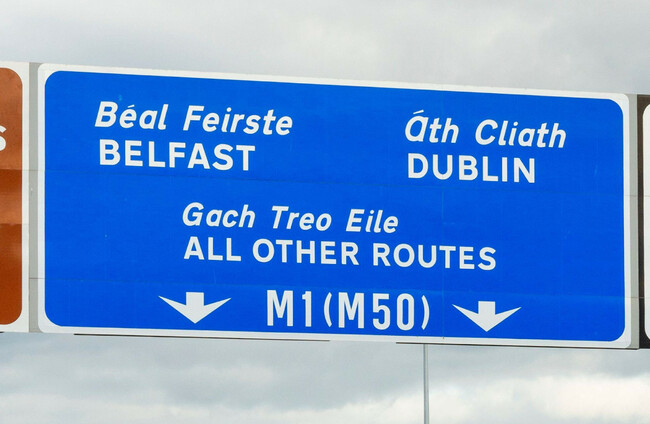
WORKERS IN DUBLIN would need more than 13 years of their gross annual salary to buy a typical home, compared with six years in Belfast.
The findings are contained in a new Central Statistics Office (CSO) report comparing economic performance in Ireland and Northern Ireland, which found that house prices have significantly outpaced earnings growth south of the border over the past decade.
In 2024, the median price of a home in Dublin was more than 13 times the median gross annual salary of employees. In Belfast, the equivalent figure was six times annual earnings.
The CSO also found that gross domestic product (GDP) in Ireland, which is a measure influenced by the presence of large multinationals, was almost three times higher than in Northern Ireland in 2024.
The CSO said the affordability gap has widened considerably in many parts of Ireland since 2014.
In Louth, one of the counties at the heart of the Dublin-Belfast Economic Corridor, the median house price increased from five times annual earnings a decade ago to almost 11 times earnings in 2024.
By contrast, house prices in Newry, Mourne and Down remained broadly stable relative to incomes, with the median home costing around nine times annual earnings throughout the period.
Despite the housing pressures, incomes were found to be higher in Ireland than in Northern Ireland.
Disposable income per person stood at €21,488 in Ireland in 2023, compared with €18,998 in Northern Ireland.
All regions in the Republic recorded higher disposable incomes than Northern Ireland, with the Eastern and Midland region (which includes Dublin, Meath, Kildare and Wicklow) recording the highest level at €22,264 per person.
Within the Dublin-Belfast Economic Corridor, Dublin recorded the highest disposable income at €24,006, ahead of Lisburn and Castlereagh at €20,978 and Kildare at €20,910.
However, Northern Ireland recorded higher levels of social support.
Social benefits amounted to €5,645 per person in 2023, compared with €5,056 in Ireland. Social transfers accounted for 30% of disposable income in Northern Ireland, compared with 24% in Ireland.
The report also highlighted significant differences in the structure of the two economies.
Manufacturing accounted for 31% of Ireland’s total gross value added in 2023, making it the State’s largest economic sector, while public administration, education and health was the largest sector in Northern Ireland, accounting for 24% of economic output.

To embed this post, copy the code below on your site














have your say