Sign in. It’s quick, free and it’s up to you.
An account is an optional way to support the work we do. Find out more.
Sign in. It’s quick, free and it’s up to you.
An account is an optional way to support the work we do. Find out more.
ELECTRIC EELS, THE Amazonian fish that can deliver shocks powerful enough to knock down a horse, has a shock system similar to a taser.
That is the finding of a nine-month study into just how the fish are able to shock.
The research was conducted by Professor of Biological Sciences Kenneth Catania at Vanderbilt University in Tennessee and is described in the article “The shocking predatory strike of the electric eel” published in the 5 December issue of the journal Science.
People have known about electric fish for a long time. The ancient Egyptians used an electric marine ray to treat epilepsy. Michael Faraday used eels to investigate the nature of electricity and eel anatomy helped inspire Volta to create the first battery. Biologists have determined that a six-foot electric eel can generate about 600 volts of electricity – five times that of a US electrical outlet.
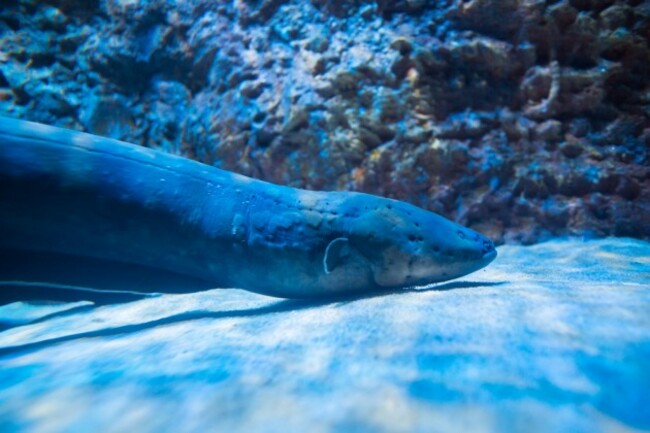
Until now, however, no one had figured out how the eel’s electroshock system actually worked.
In order to do so, Catania equipped a large aquarium with a system that can detect the eel’s electric signals and obtained several eels, ranging up to four feet in length.
As he began observing the eels’ behavior, the biologist discovered that their movements are incredibly fast.
They can strike and swallow a worm or small fish in about a tenth of a second. So Catania rigged up a high-speed video system that ran at a thousand frames per second so he could study the eel’s actions in slow motion.
“It’s amazing. The eel can totally inactivate its prey in just three milliseconds. The fish are completely paralysed,” said Catania.
“I have some friends in law enforcement, so I was familiar with how a Taser works,” said Catania. “And I was struck by the similarity between the eel’s volley and a Taser discharge. A Taser delivers 19 high-voltage pulses per second while the electric eel produces 400 pulses per second.

To embed this post, copy the code below on your site
















have your say