Sign in. It’s quick, free and it’s up to you.
An account is an optional way to support the work we do. Find out more.
Sign in. It’s quick, free and it’s up to you.
An account is an optional way to support the work we do. Find out more.
LAST UPDATE | 31 Mar
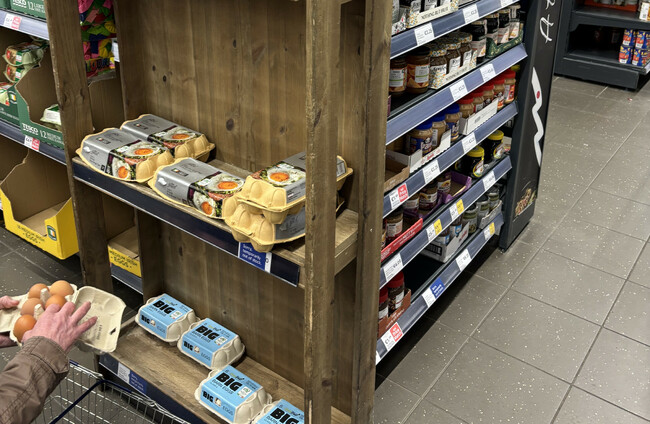
IRISH SHOPPERS EXPERIENCING a shortage of eggs can be traced back to farmers not receiving sufficient pay from retailers, the Irish Farmers’ Association poultry chair said.
Brendan Soden told Newstalk Breakfast this morning that at the moment, “demand has outstripped supply” and eggs have become more popular sources of protein for people in Ireland, particularly young people involved in sport.
Demand has increased while farm gate prices – the price received by farmers for produce at their farm, before additional costs for processing and transport – have remained the same.
Soden said it’s not financially viable for egg farmers to expand their businesses or for new entrants to join due to the amount of investment required.
The IFA has been raising concerns with retailers for two years, he said.
On average, farmers receive €1.52 per dozen eggs, which are then sold to consumers at a price range of €4 to €6. Farmers are seeking an additional 2c per free-range egg and an additional 1c per barn egg.
“It’s a high risk, high investment sector,” Soden said. “And people need a bit of stability in the times that we’re in especially.”
Consumers have begun to notice shortages in various retailers, he said.
There has been a steady increase in eggs purchased by Irish consumers over a number of years, according to Bord Bia.
In October 2025, there was a 4.5% increase in eggs purchased by Irish consumers on the previous year. In 2024, there was a 6% increase on the year prior – and in 2023, it was a 16% increase.
So what’s behind the drive in demand? Primarily more people seeking to increase their protein intake, dietician Sarah Keogh told The Journal.
“We’re in the middle of a giant drive on high protein,” she said. “As fads go, it’s one of the better ones because there’s good reason to have a good bit of protein, but I find most people are massively overdoing it.
“But it is a big drive for people having five or six eggs in an omelette for breakfast, or even snacking on boiled eggs throughout the day.”
It’s also a quick and easy way for some people to get their protein in, although they are significantly lower in protein than the likes of chicken or other meats, she said.
“They’re very handy, they’re very versatile, they’re very nutritious as a food.”
A lot of people don’t realise that the body doesn’t store protein, Keogh said, and only takes what it needs and converts the rest into calories – and aside from those intensively training, many people are already meeting their protein requirements if they have a balanced diet.

To embed this post, copy the code below on your site
















have your say