Sign in. It’s quick, free and it’s up to you.
An account is an optional way to support the work we do. Find out more.
Sign in. It’s quick, free and it’s up to you.
An account is an optional way to support the work we do. Find out more.
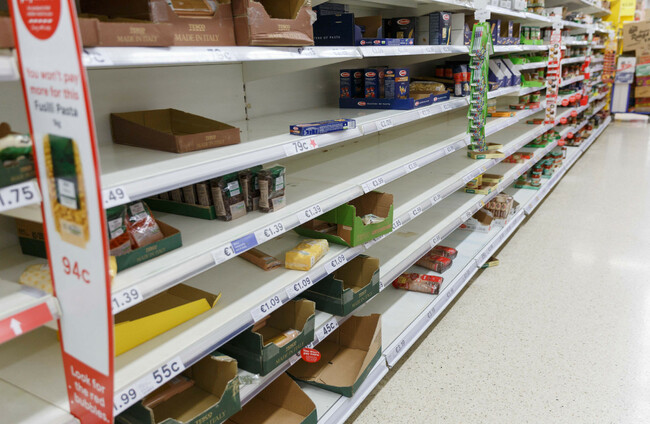
THE GOVERNMENT DROPPED plans to tell households to be self-sufficient for at least 72 hours during emergencies because of concerns it could prompt anxiety about why the advice was being issued.
Records released to The Journal under the Freedom of Information Act show how officials who produced the Be Emergency Ready booklet moved towards asking simply people to maintain an adequate supply of essential items.
The government sought to add reassurance that the State and emergency services would continue helping communities, rather than requiring people to keep three days’ worth of supplies.
An October 2025 submission to then Defence Minister Simon Harris, written by department official Kealan McMoreland, said: “Based on initial feedback, we are moving away from the 72-hours self-sufficiency concept and towards maintaining an adequate supply of essential items as a means to prepare for any emergency.”
The submission said initial campaign designs had been produced in July, followed by focus-group feedback in August that led to a redesign.
The Be Emergency Ready campaign was formally launched by Defence Minister Helen McEntee on 28 August this year.
An Post began a nationwide delivery programme for approximately 2.2 million booklets on 21 September.
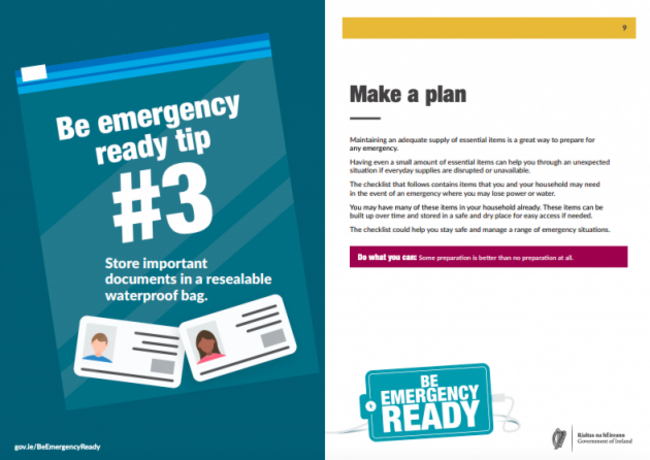
The booklet, published by the Department of Defence’s Office of Emergency Planning, advises households on preparing for power cuts, flooding and other emergencies.
Its checklist includes non-perishable food, two to three litres of drinking water per person each day, a torch, spare batteries, a radio, medicines and copies of important documents.
The initiative followed a wider European push to improve emergency preparedness.
In March 2025, the European Commission and the EU’s foreign policy chief launched the Preparedness Union Strategy, citing growing geopolitical tensions, cyber threats, climate change and natural disasters.
Commissioner Hadja Lahbib later told the European Parliament that the 72-hour advice was grounded “in existing emergency-preparedness guidelines and international best practice”, for short disruptions to services or supply chains.
It called for the public to adopt practical measures, including “maintaining essential supplies for a minimum of 72 hours in emergencies”.
The Commission also proposed developing guidelines to help member states achieve that level of self-sufficiency, allowing people to meet their basic needs if services or supplies were disrupted.
The Irish version of the campaign brings together earlier Be Winter Ready and Be Summer Ready initiatives.
Records show that the department’s submission also cited the findings of a report about Storm Éowyn that referenced the importance of households and communities being self-sufficient.
A July 2025 presentation by advertising agency Javelin described the campaign’s objective as helping people manage their fundamental needs “for at least 72 hours without external assistance”.
However, an August report by market research company Ipsos B&A found that early advertising concepts could prompt anxiety about why the government was issuing the advice.
Researchers were reported to have tested three approaches: “Be Ready Ireland”, “What If?” and “Be Aware & Prepare”.
The study examined reactions to advertising concepts, rather than measuring how prepared households were for emergencies.
Records show that when participants saw the first concept without an explanation of the campaign’s purpose, they tended to question what had prompted it.
The report summarised their concerns as: “What has happened that I do not know about?”, “What is being hidden from me?” and “Is this something I should be worried about?”
One participant said: “If I’ve seen that, I’d be like, oh my god, what do they know that I don’t know?”
Researchers said providing a relatable example, such as checking torch batteries before a storm, was critical to avoiding an anxious response.
One visual promoting 72-hour preparedness risked being interpreted as a warning that something would happen within the next 72 hours.
The report also described one proposed radio advertisement as having an “abrupt, almost insulting tone”, saying references to people keeping their heads in the sand could imply the audience was “clueless”.
Other designs reminded some participants of wartime posters.
The phrase “What If?” was generally preferred for having a more engaging approach and less anxiety-inducing tone, although researchers found less evidence that it would prompt action.
The ministerial submission does not specify which individual findings prompted the change to the 72-hour message.
The published booklet does not specify how many days households should be able to manage independently.
It instead encourages people to build up essential supplies over time and reassures readers that government and emergency services will support them.
A separate communications toolkit prepared for local authorities anticipated questions about whether the campaign was linked to a particular threat.
Asked whether it was connected to “a specific security or international event”, the suggested response was: “No. The campaign follows an all-hazards approach to preparedness and is designed to help households prepare for a range of potential disruptions and emergencies.”

To embed this post, copy the code below on your site












have your say