Sign in. It’s quick, free and it’s up to you.
An account is an optional way to support the work we do. Find out more.
Sign in. It’s quick, free and it’s up to you.
An account is an optional way to support the work we do. Find out more.
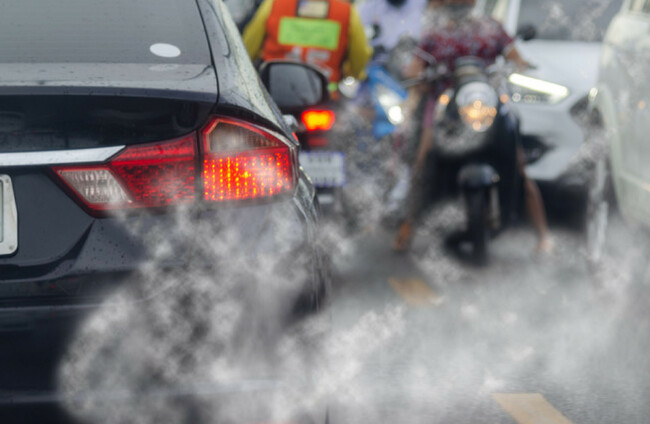
BURNING SOLID FUELS in homes and road traffic continue to be the “main threats to good air quality”, according to the Environmental Protection Agency’s annual air quality report.
The Air Quality in Ireland 2023 report is based on results from 115 monitoring stations nationwide.
And while Ireland met the current EU air quality limits last year, it failed to meet the more stringent World Health Organisation (WHO) guidelines.
It is a target of the Government’s Clean Air Strategy to meet interim WHO guideline limits by 2026, but the EPA warns that this is now “very challenging”.
Despite “comparing favourably with many of European neighbours”, the EPA said Ireland’s 2023 monitoring results would exceed the soon-approaching 2026 targets.
The main pollutants of concern are fine particulate matter from burning solid fuels such as wood and coal, and nitrogen dioxide from vehicle emissions.
Particulate matter levels are at their highest in the winter because of increased burning of solid fuels in fires and stoves and is a problem more associated with towns and villages than cities.
Particulate matter causes the most health issues because the tiny airborne matter is inhaled into our lungs and chronic exposure is linked to stroke and heart disease.
Traffic in cities meanwhile is the main source of nitrogen dioxide, which can impact our heart and lungs, and the highest concentration occurs where traffic is heaviest.
The EPA report states that around 1,600 premature deaths in Ireland per year can be attributed to poor air quality.
The report calls for households to use less solid fuel and cleaner fuels to heat homes and to reduce use of cars.
The EPA stated that local authorities “can facilitate people to make cleaner and healthier air quality choices by acting on the Solid Fuel Regulations and supporting alternatives to car travel” by investing in public transport infrastructure.
It also calls on local authorities to promote active travel by installing and maintaining safe footpaths and cycle lanes.
Dr Micheál Lehane, Director of the EPA’s Office of Radiation Protection and Environmental Monitoring, said Ireland’s “world class air quality monitoring network” shows that “air pollution is not just a city phenomenon, there are negative impacts in towns and villages right across the country”.
“If we want to achieve our ambition of Clean Air for everyone, everywhere, all year round, then we need to address the emissions from residential heating and invest in transport systems right across the country,” said Lehane.
Roni Hawe meanwhile, EPA Programme Manager, noted that progress on residential retrofit programmes will help to reduce fine particulate matter pollution.
However, she added that “vigilance is needed to ensure that only compliant solid fuel, such as low smoke coal and dried wood, is being sold to householders”.
Hawe said a “strong inspection campaign” by local authorities is required this winter to “make sure all retailers only stock and sell approved solid fuel”.

To embed this post, copy the code below on your site













have your say