Sign in. It’s quick, free and it’s up to you.
An account is an optional way to support the work we do. Find out more.
Sign in. It’s quick, free and it’s up to you.
An account is an optional way to support the work we do. Find out more.
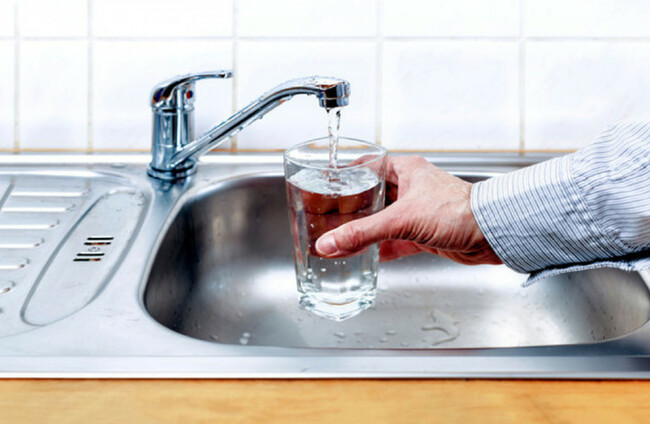
THE ENVIRONMENTAL PROTECTION Agency has said water in areas where “action is needed” due to elevated THM levels is safe to drink.
Long-term exposure to THMs have been linked to cancer and reproductive issues in some studies, though the evidence is not conclusive.
THMs (Trihalomethanes) are currently classified as “possibly carcinogenic” to humans.
Uisce Éireann is set to send a booklet to close to 300,000 customers served by 25 water supplies that are deemed to be at risk of elevated THM levels.
Noel Byrne, the Environmental Protection Agency’s programme manager, said the booklet will contain information on when the supplies will be brought back into compliance, as well as the most current medical advice.
Speaking on RTÉ’s News at One, Byrne said that EPA has a “priority list where actions are needed to resolve THMs”.
This priority list contains 25 supplies that are currently serving 300,000 people, and Byrne said “actions are needed now to bring those to resolution”.
Byrne said “over half of these” 25 supplies will be “resolved” by the end of year and “most remainder will be resolved by 2026”.
While Byrne remarked that water in these supplies is safe to consume, he said they need to be brought into compliance with THM standards “in the longer term”.
He added that the HSE does “not see THMs as an acute risk to health in the short term”.
THMs are chemicals that may be found in water treated with chlorine.
Byrne explained that chlorine is added to water supplies to disinfect drinking water and to remove e-coli.
THMs can also be formed from natural organic matter in the water, such as vegetation and leaves, reacting with chlorine.
The legal limit of total THMs in drinking water in Europe is 100 µg (microgrammes) per litre.
Byrne remarked that the EPA has been highlighting THMs as a “key issue for a number of years”.
He added that he “wasn’t surprised when the European Commission issued proceedings against Ireland for failure to meet the standards”.
The Court said Ireland failed to adopt the necessary measures to be in compliance regarding the levels of THMs, and called on Ireland to resolve the issue as quickly as possible.
It added that Ireland could not fully justify the persistent failure to fulfil its obligations as excessive levels of THMs had been found in drinking water in Ireland “over a considerable time period.”
“There is an issue with THMs,” said Byrne, who added that the EPA is “tracking Uisce Éireann very closely” over THM levels.
He also noted that it was the EPA that issued information to the European Court of Justice for its ruling in January.

To embed this post, copy the code below on your site














have your say