Sign in. It’s quick, free and it’s up to you.
An account is an optional way to support the work we do. Find out more.
Sign in. It’s quick, free and it’s up to you.
An account is an optional way to support the work we do. Find out more.
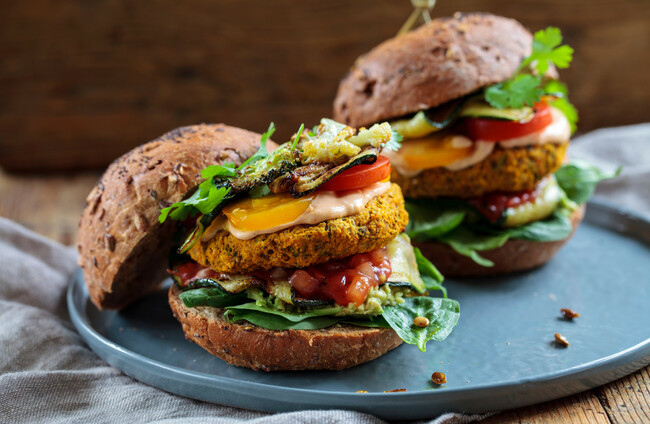
PLANT-BASED “STEAKS” and “veggie burgers” may be on the way out in the European Union after the bloc’s parliament voted to restrict such labels to meat only, in a win for disgruntled farmers.
Many of Europe’s livestock farmers see plant-based foods that mimic meat products as potentially misleading for consumers, and a threat to their already troubled sector.
Heeding their message, EU lawmakers meeting in Strasbourg backed a proposal to reserve a list of labels including “sausage” and “burger” to foods containing meat.
A labelling ban is still some way off: the text needs negotiating with the bloc’s 27 member states before it can become law.
But Celine Imart, a cereal farmer and right-wing lawmaker from France who sponsored the plan, cheered today’s vote as a “victory for farmers”.
“A sausage means meat produced by our livestock farmers. Full stop,” she posted on X. “This is a vote for recognising their work, and for transparency for consumers.”
Enjoying strong support from France’s livestock and meat industry body, the ban was approved by a comfortable majority of 355 votes in favour and 247 against.
The move was also welcomed by Independent Ireland MEP Ciaran Mullooly.
He said the use of phrases such as veggie burger is “misleading” and added that EU lawmakers had “applied common sense” and have “brought an end to the confusion consumers have had to endure”.
He expressed hope that similar changes could be made to the dairy sector to “address the misuse of terms such as ‘almond milk’”.
While he was not present for the vote in Strasbourg due to a family illness, he said he will “continue to lobby on farmers behalf” over the “common sense issue”.
Food retailers in Germany, Europe’s largest market for plant-based alternative products, had spoken out against the text, along with environmentalists and consumer advocates.
Irina Popescu, food policy officer at the pan-European consumer body BEUC called the outcome “disappointing.”
“Our data shows that almost 70% of European consumers understand these names as long as products are clearly labelled vegan or vegetarian,” she said in a statement.
EU consumption of plant-based alternatives to meat products has grown five-fold since 2011, according to BEUC data, fuelled by concerns over animal welfare and greenhouse gas emissions from livestock farms as well as health arguments.
Parliament’s Greens strongly oppose a labelling ban, with Dutch lawmaker Anna Strolenberg charging ahead of the vote that “the meat lobby is trying to weaken its innovative food competitors.”
“If you want to help farmers, give them stronger contracts. Give them a better income. Let’s help them innovate,” she said.
“Stop talking about burgers and start working on the issues that matter.”
The proposal caused division within Imart’s own EPP group, with one German lawmaker Peter Liese dismissing it as “nonsensical”.
“We really have other concerns at the moment,” Liese wrote on X – while predicting the proposal would likely not win the necessary support from member states to become law.
It is not the first time veggie burgers have found themselves in the crosshairs of European lawmakers, with a similar proposal for a ban rejected in 2020.
But the balance of power has shifted since the 2024 European elections saw big gains by right-wing parties that cultivate close ties to the farm sector.
Imart argued the new proposal was “in line with European rules”, which already restrict the use of traditional dairy terms from “milk” to “yoghurt” and “cheese”.
“It’s only fair to do the same for meat,” she said.
The debate has stirred emotions in France, which passed a similar label ban in 2024 to appease angry farmers – only for it to be overturned the following January in line with a ruling by the EU’s top court.
- © AFP 2025 and with additional reporting from Diarmuid Pepper

To embed this post, copy the code below on your site













have your say