Sign in. It’s quick, free and it’s up to you.
An account is an optional way to support the work we do. Find out more.
Sign in. It’s quick, free and it’s up to you.
An account is an optional way to support the work we do. Find out more.
PRESSURE IS MOUNTING on the government to intervene and reverse a HSE decision recommending against funding a treatment for the rare disease Friedreich’s Ataxia.
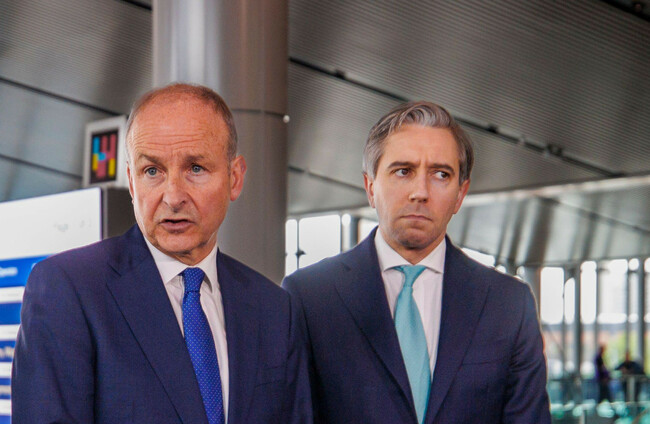
A letter signed by 47 members of the Fianna Fáil parliamentary party this week, including junior justice minister Catherine Ardagh, has been sent to Health Minister Jennifer Carroll MacNeill, Taoiseach Micheál Martin, Tánaiste Simon Harris and Ann O’Connor, Chief Executive of the HSE.
It calls for the government leaders to reject the findings of the HSE drugs group, which decided against funding Skyclarys (omaveloxolone), which is the only licensed treatment available for Friedreich’s Ataxia.
There has been additional pressure today with one backbench Fianna Fáil TD, whose nephew has the rare disease, speaking out about the decision.
Carlow-Kilkenny TD John McGuinness said he was “shocked” by a recommendation to not fund a treatment drug.
Friedreich’s Ataxia is a progressive, neuromuscular disease that mainly affects the nervous system and the heart. It is a hereditary disease caused by a gene mutation.
While there is no cure for the disease, Skyclarys has been found to slow progression and improve neurological function.
The treatment was approved by the European Medicines Agency in February 2024 and has been made available to patients in other European countries.
Around 200 people have Friedreich’s Ataxia in Ireland, and a campaign has been underway to make the drug available by the HSE.
However, the HSE drugs group on Tuesday recommended that Skyclarys should not be funded by the health service at this time.
The group met to consider the application for the reimbursement of Skyclarys – reimbursement meaning it will be covered for patients who have medical cards or who are covered by another state scheme.
The recommendation will now go to a meeting of the HSE senior management team on 25 August, where a final decision will be made.
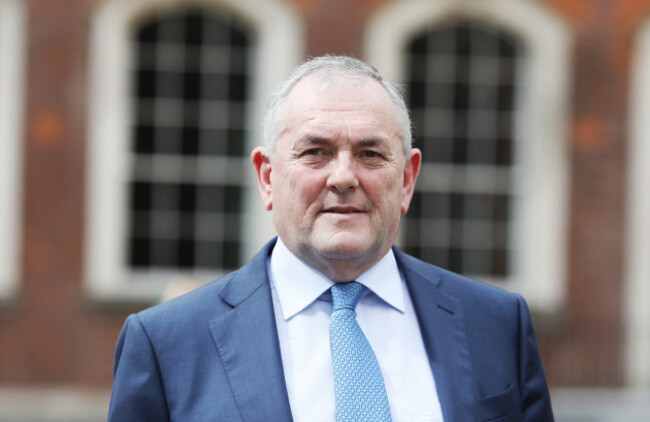
McGuinness today said all non-ministerial members of Fianna Fáil’s parliamentary party have signed a letter raising serious concerns around the recommendation by the HSE drugs group.
McGuinness’s nephew has Friedreich’s Ataxia, and he told The Claire Byrne Show on Newstalk that “these young people have suffered enough”.
“They’ve relied on the political system, and now they demand a response,” said McGuinness.
As public representatives, we demand a response that’s going to support these young people and their care for the future.
He added: “Is that not absolutely alarming that we are now putting a cost on the lives of these young people? They deserve the best possible chance at life.
“They haven’t had the chance that they should have had. The drug will at least stall, over a period of time, the progression of Friedrich’s ataxia.
“Is that not good enough for the government to make a decision in support of these young people, to give them that better life.”
An assessment last year concluded that the drug would cost approximately €280,000 per patient per year, which equates to around €130 million over five years.
The HSE on Tuesday said that when considering any drug for reimbursement, the drugs group looks at the benefits the drug would bring patients, as well as the impact that reimbursing the drug would have on overall resources available to the health service.
McGuinness said his nephew went from “being an active young man in his 20s to now being in a wheelchair and losing his voice”.
However, he added that his is “not an emotional response; it’s a response based on the fact 11 other European countries have gone through this process, and have given young people in each respective country their chance”.
“If anything speaks about a government loud and clear, it is how they treat those that are sick, ill, or marginalised in our society, and this is an absolutely appalling position that these young people find themselves in.
“They feel as if the political system has rejected them, has simply turned a blind eye to them.”
McGuinness said he “firmly believed that as the process progressed…. that the drug would be approved”.
“I’m shocked, as a serving politician and as someone that is close to the issue, that it now comes down really to cost.”
He added: “I have seen, as chairman of the Public Accounts Committee and Finance Committee in the past, money squandered by the state.
“This is money that can be directed towards the health and well-being of 200 individuals.”
McGuinness acknowledged that “people will wonder about the cost of this” but said that “in my opinion, value for money does not come into it”.
“You approach it with that in mind, but then there comes a day when you have to weigh up the costs of the drug, and the value of it to the lives of 200 people.
I know where my decision would lie, and I would come down heavily on the side of those with Frederick’s ataxia, and I would make the drug available.
“We have to look at the funding, I’m not turning a blind eye to that, but I certainly won’t turn a blind eye to the number of people that are threatened that have Frederick’s ataxia.”
He added that it has been “heartbreaking” to see those with Frederick’s ataxia “outside the Dáil, trying to get in touch with politicians and the leaders of government to put their message across, to appeal to them for a better life”.
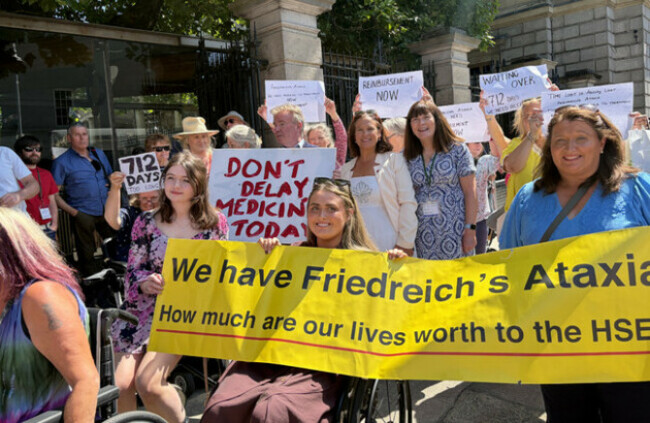
“We are faced with this question today: Is the State going to allow these young people a better life by making the drug available for reimbursement, or is it not?”
Elsewhere, Sinn Féin leader Mary Lou McDonald said the “decision has caused deep distress among patients and their families”.
In a letter to Taoiseach and Fianna Fáil leader Micheál Martin, McDonald called for “transparency around the HSE assessment, the findings of the Drugs Group and the basis upon which this decision was reached”.
She added that the “manner in which patients and families have been communicated with throughout this process has also fallen well short of what they should reasonably expect”.
She also urged Martin to meet with people living with Friedreich’s Ataxia and their families “so that they can hear directly the position of the HSE and have their concerns properly heard”.
McDonald meanwhile urged that the scheduled meeting on 25 August be brought forward and said that “every available avenue for providing access to Skyclarys should now be examined urgently”.

To embed this post, copy the code below on your site













have your say