Sign in. It’s quick, free and it’s up to you.
An account is an optional way to support the work we do. Find out more.
Sign in. It’s quick, free and it’s up to you.
An account is an optional way to support the work we do. Find out more.
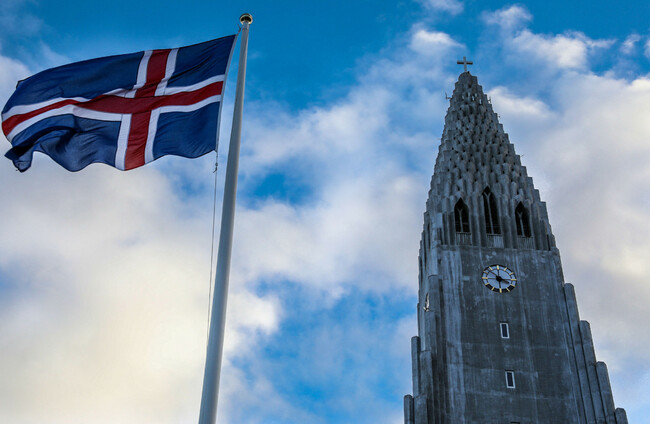
ICELAND LOOKS SET to join Ireland in boycotting next year’s Eurovision Song Contest if Israel is allowed to participate.
A majority of the board of Iceland’s public broadcaster RÚV has said the country should not take part in the 2027 contest unless Israel is barred.
Six of the board’s nine members backed the position at a meeting today, according to minutes reported by RÚV.
The board members directed RÚV’s director to inform the European Broadcasting Union (EBU) that the broadcaster will not participate next year unless Israel is prevented from competing.
They also reiterated an earlier call for Israel to be excluded from Eurovision.
RÚV board chair Stefán Jón Hafstein said the broadcaster’s position had not changed since last year, as he said the EBU had not substantively addressed its concerns.
“It’s quite clear that six board members were on the same page as at the end of last year,” Hafstein said.
Iceland was one of five countries to boycott this year’s Eurovision in Vienna over Israel’s continued participation, alongside Ireland, Spain, the Netherlands and Slovenia.
RÚV announced last December that Iceland would not take part in the 2026 contest, and subsequently cancelled its traditional national selection competition, Söngvakeppnin.
RTÉ has already confirmed that Ireland will remain out of Eurovision in 2027.
The broadcaster announced earlier this month that it would neither participate in nor broadcast next year’s competition, saying its involvement “cannot be justified given the appalling and ongoing loss of lives in Gaza and the humanitarian crisis there”.
It also cited the continued restrictions on independent international journalists entering Gaza.
The Netherlands, however, has decided to return to the competition after its boycott this year.
Dutch public broadcasting body NPO said the EBU had taken “significant steps” in changing Eurovision’s rules since last year’s controversy.
The EBU has introduced a series of changes following criticism of the contest, including reducing the maximum number of votes that can be cast using each payment method from 20 to 10 and bringing professional juries back for the semi-finals.
The changes followed controversy over voting at the 2025 contest, when an Israeli government agency used social media advertising and state accounts to encourage people to vote for the country’s entry.
Israel’s Yuval Raphael ultimately finished second after receiving the highest number of public votes.
Despite those changes, RÚV’s board has now maintained its position that Iceland should not participate while Israel remains in the competition.
That leaves Spain and Slovenia as the only other countries which boycotted this year yet to confirm whether they will return in 2027.
The president of Spanish broadcaster RTVE has said he will propose maintaining Spain’s boycott, while Slovenian broadcaster RTV Slovenija told The Journal earlier this month that a final decision had not yet been made.
The 2027 Eurovision Song Contest will be held in Burgas, Bulgaria.

To embed this post, copy the code below on your site










have your say