Sign in. It’s quick, free and it’s up to you.
An account is an optional way to support the work we do. Find out more.
Sign in. It’s quick, free and it’s up to you.
An account is an optional way to support the work we do. Find out more.
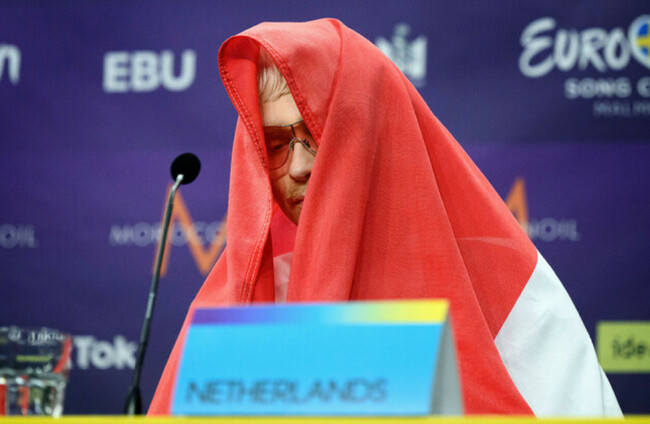
THE NETHERLANDS WILL participate in the 2027 Eurovision Song Contest in Bulgaria, after it boycotted the competition this year over Israel’s participation.
Dutch network Atrovos, which selected the country’s entry and broadcast the show, withdrew in 2026 and said it would not participate this year as the event can “no longer be considered neutral while a participating country remains involved in a large-scale military conflict”.
It was one of a number of public broadcasters, including RTÉ, that withdrew from the contest in Vienna after the European Broadcasting Union (EBU) decided to allow Israel to continue competing.
The NPO, the umbrella body which oversees public broadcasting in the Netherlands, has now stepped in.
In a statement, it said coverage of the semi-finals and final will be provided by broadcaster NOS, while an independent team will be set up to select the Dutch participating act.
“It is important that, as a public broadcaster, we remain part of this unifying European event at this moment in particular,” NPO’s director of media Jurre Bosman said.
The statement said the EBU has “taken significant steps regarding the rules of the Eurovision Song Contest” since last year.
These measures were introduced followed controversy over voting practices at the 2025 contest, after it emerged that an Israeli government agency had used social media advertising and state accounts to encourage votes for Israel’s entry.
Israel’s contestant, Yuval Raphael, finished second that year after receiving the highest number of public votes.
The EBU subsequently introduced measures aimed at discouraging government-backed promotional campaigns, reduced the maximum number of votes per payment method from 20 to 10 and brought professional juries back to the semi-finals.
It subsequently introduced a rule that excludes the winning country from hosting the competition if it is engaged in “an armed conflict” or “sensitive geopolitical situation”.
Ireland, Spain, the Netherlands, Slovenia and Iceland all announced boycotts in December 2025, following an EBU meeting in Geneva at which members approved changes to the contest’s voting rules.
It was confirmed this week that Ireland will not participate in the 2027 contest, with RTÉ also refusing to broadcast the competition. It said it feels that Ireland’s participation “cannot be justified given the appalling and ongoing loss of lives in Gaza and the humanitarian crisis there which continues to put the lives of so many civilians at risk”.
“RTÉ also remains deeply concerned by the continued denial of independent access to international journalists to the territory.”
Responding to the announcement, Eurovision Song Contest director Martin Green said the EBU regretted RTÉ’s decision but fully respected it.
Meanwhile, the president of Spain’s public broadcaster RTVE has backed boycotting the contest again.
Jose Pablo Lopez told a Senate committee on Tuesday that it was “deeply painful” that Israel’s public broadcaster would continue to participate in Eurovision “despite everything, and given this situation that is still being experienced in Gaza”.
He said there had been “technical progress, but there is also clearly unfinished business on the ethical front”.
“For this reason, I announce that I will propose to the RTVE board that we maintain the suspension of our participation in Eurovision.”
Iceland and Slovenia have yet to confirm if they will boycott the contest again this year. Public broadcasters RUV and RTV Slovenia have been contacted for comment.

To embed this post, copy the code below on your site










have your say