Sign in. It’s quick, free and it’s up to you.
An account is an optional way to support the work we do. Find out more.
Sign in. It’s quick, free and it’s up to you.
An account is an optional way to support the work we do. Find out more.
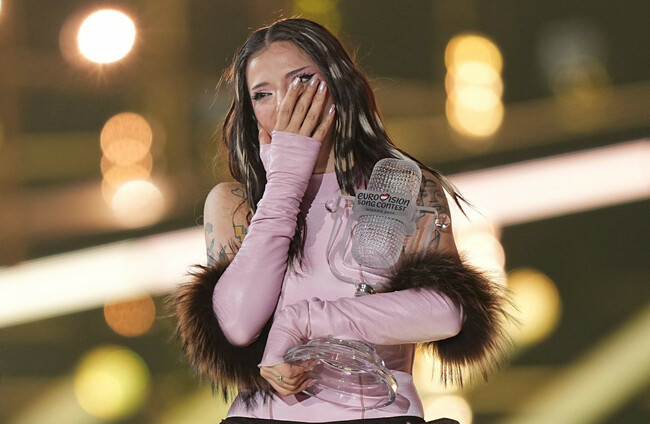
IRELAND WILL NOT participate in the 2027 Eurovision Song Contest in Bulgaria, with RTÉ confirming that it will also refuse to broadcast the competition.
The broadcaster said the decision was taken in response to the ongoing humanitarian crisis in Gaza and restrictions on international journalists entering the territory.
In a statement this afternoon, RTÉ said: “RTÉ feels that Ireland’s participation cannot be justified given the appalling and ongoing loss of lives in Gaza and the humanitarian crisis there which continues to put the lives of so many civilians at risk.
“RTÉ also remains deeply concerned by the continued denial of independent access to international journalists to the territory.”
RTÉ was among five national broadcasters that withdrew from this year’s contest in Vienna after the European Broadcasting Union (EBU) decided to allow Israel to continue competing.
Ireland, Spain, the Netherlands, Slovenia and Iceland announced boycotts in December 2025, following an EBU meeting in Geneva at which members approved changes to the contest’s voting rules.
The meeting followed controversy over voting practices at the 2025 contest, after it emerged that an Israeli government agency had used social media advertising and state accounts to encourage votes for Israel’s entry.
Israel’s contestant, Yuval Raphael, finished second that year after receiving the highest number of public votes.
The EBU subsequently introduced measures aimed at discouraging government-backed promotional campaigns, reduced the maximum number of votes per payment method from 20 to 10 and brought professional juries back to the semi-finals.
However, members did not hold a separate vote on Israel’s participation, prompting the five broadcasters to withdraw.
RTÉ also declined to broadcast this year’s competition. At the time, it said Ireland’s participation was “unconscionable” given the loss of life in Gaza, and raised concerns about the killing of journalists and restrictions on international media access.
Slovenia’s broadcaster explicitly cited the deaths of children in Gaza when announcing its withdrawal. Spain and the Netherlands also confirmed they would not compete following the decision to allow Israel to participate.
According to figures published by Gaza’s health ministry on Tuesday, 1,375 people have been reported killed and 4,686 injured since the ceasefire took effect in October 2025. The ministry put the overall reported death toll in Gaza since 7 October 2023 at 73,789.
The EBU has maintained that its rule changes were intended to protect the neutrality of the competition. Israel has rejected allegations of improper interference in Eurovision voting.
This year’s boycott marked Ireland’s first absence from Eurovision since 2002, when relegation rules prevented it from taking part.
While Ireland will remain absent, Canada is set to compete at Eurovision for the first time in 2027.
Public broadcaster CBC/Radio-Canada confirmed in July that it would send an entry to Bulgaria, becoming the first new country to join the competition since Australia in 2015.
The announcement followed CBC/Radio-Canada becoming a full member of the EBU in June, having held associate membership since 1950.

To embed this post, copy the code below on your site











have your say