Sign in. It’s quick, free and it’s up to you.
An account is an optional way to support the work we do. Find out more.
Sign in. It’s quick, free and it’s up to you.
An account is an optional way to support the work we do. Find out more.
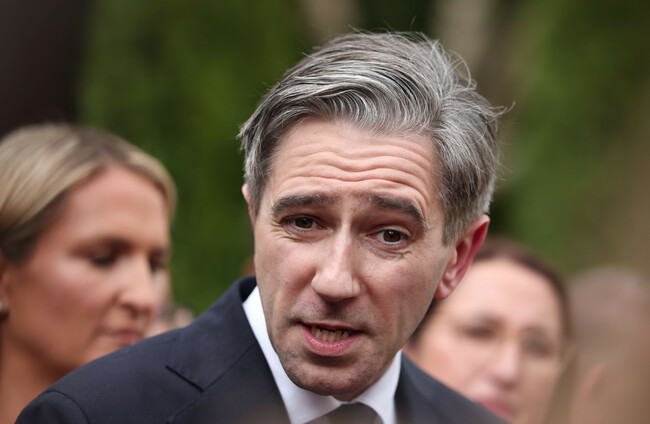

AN UNPOPULAR TAX on investment introduced almost 20 years ago as an anti-avoidance measure looks set to be changed in the upcoming budget.
Simon Harris, the finance minister, told The Journal that Ireland needs to “move beyond” deemed disposal.
Speaking on the sidelines of a European Parliament event in Strasbourg, Harris also lashed out at critics who have said there would be no need for the new personal investment account he has promised if he just scrapped deemed disposal of 38%, which penalises investment in exchange-traded funds. He insisted both were needed.
Asked whether the progress he is now promising on deemed disposal would constitute a reduction in the 38% rate at which it is currently charged, Harris said: “I’ll keep my powder dry on this, but I expect we’ll be able to make some progress on this in the budget.”
Deemed disposal is widely viewed as a deterrent to Irish savers investing in well-diversified, low-fee exchange-traded funds (ETFs).
In other countries, ETFs are adopted as a sound, risk-balanced investment option, but in Ireland, deemed disposal of 38% is charged every eight years on notional or unrealised ‘profit’ i.e. the tax is applied as if the investor had made money through selling the shares, even though they haven’t.
Deemed disposal is allowed as a credit against tax payable when shares are eventually sold, but critics say this doesn’t counteract the fact that it erodes compound gains and makes investing in ETFs unduly complex. Deemed disposal is also charged on life assurance investment policies.
Deemed disposal will not apply to the new retail investment scheme the government has promised will be rolled out next year.
After months of drip-feeding information on his planned new investment scheme, Harris indicated in a statement two weeks ago that changes to deemed disposal more generally were likely to be a matter for budget 2028 (this time next year) or later.
This was met with disappointment from both retail investors and financial advisers and other finance professionals, who want to see the tax axed.
An extensive Department of Finance review of the funds sector published in 2024 recommended that deemed disposal be scrapped.
Harris insisted yesterday that he had never said that there would not be any changes to deemed disposal until 2028.
He also strongly defended his decision to introduce the new investment account and said he “passionately disagreed” with “those who believe that if deemed disposal went away tomorrow morning, there wouldn’t be a need for an investment account”.
“I think those people entirely miss the point,” Harris said.
He said that “even if you had no deemed disposal”, you would still need to address the complexity of investing and introduce the tax-free threshold and a flat tax rates that the new savings scheme will include. (The tax-free threshold and the flat tax rate on the new accounts will be announced in the budget).
He added that the new account would also simplify investing by moving the obligation to sort of tax away from the individual who is investing to the provider of the account.
“So what I just say is, I think we need to do both. We need to reform how we tax existing investments in Ireland, and moving to a future beyond deemed disposal is a key part of that,” Harris said.
“How much we can do in budget 2027 is a matter for the budget in the round. We’ve got to make the numbers fit here. I’d be hopeful we can make some progress.”
Deemed disposal was introduced as an anti-avoidance measure by then-finance minister Brian Cowen in the early 2000s to counter a specific practice identified by Revenue whereby some life assurance policies were being rolled over without becoming chargeable to tax. Deemed disposal was intended to prevent the indefinite deferral of tax.
Many individual investors wrote to the government as part of a consultation for the 2024 funds sector review, arguing that the tax pushes them towards either leaving their savings in the bank at “measly” interest rates, or towards a much riskier strategy of investing in individual equities.
Retail investors told the government the tax was “punitive”, “nonsensical”, “stupid” and “unduly burdensome” to manage.
Some individuals also argued that the measure is reducing the tax take for the government.
“Arguably the tax take for revenue would eventually be higher as the compound nature of ETFs would likely net higher returns once they are finally sold at a profit,” one investor argued.
The government estimated last year that scrapping deemed disposal would cost €142 million in a year. The rate at which the tax is charged was lowered from 41% to 38% in the last budget.
Lobby group Financial Services Ireland told the Oireachtas finance committee in May that deemed disposal forces some investors to sell their assets to pay the tax and is a “major disincentive to retail investing in Ireland”.
The Irish Funds Industry Association told the committee that the 100,000 people who currently invest should not be subject to a “two-track system” whereby the new state-backed investment scheme will be exempt from deemed disposal, but existing investments will not.
Financial adviser Tony Delaney of Sys Financial, told The Journal that if any when deemed disposal is abolished, many investors will also be watching carefully to see what the exact rules are, for instance for someone who currently holds shares they bought, say, five years ago.
“I think they should get rid of it. But…what are they going to do if they do away with the deemed disposal after eight years next year? Is it retrospective to all investments that have been done prior to that year?” Delaney said.
He added that significantly reducing the rate at which deemed disposal is charged, for instance to 20%, would help investors. He said people who are considering investing, for instance in the new scheme to be announced in the budget, should consider their finances in the round and seek financial advice.
In a statement, the Department of Finance said deemed disposal is intended to “prevent the indefinite roll-up of income and gains and the associated loss of tax to the exchequer”.
The department said it is also examining the rate of taxation and administrative simplification in relation to the taxation regime for investment funds and life assurance investment products.
“Measures of this nature are considered as part of the annual budgetary process and, in line with usual budget process, there will be no commentary on individual budget decisions or prejudging of future decisions ahead of October,” the department said.
To embed this post, copy the code below on your site














have your say