Sign in. It’s quick, free and it’s up to you.
An account is an optional way to support the work we do. Find out more.
Sign in. It’s quick, free and it’s up to you.
An account is an optional way to support the work we do. Find out more.
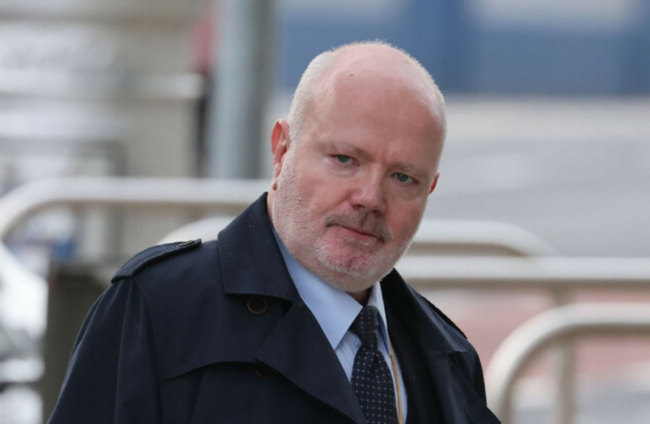
A FORMER CIRCUIT Court judge who was convicted of attempted rape and the sexual abuse of six young men when he was a teacher 30 years ago has appealed his conviction, arguing that the trial judge’s instructions to the jury were “confusing” and “weighted against the defence”.
Lawyers for Gerard O’Brien (61) said the tone of the charge “strayed into conveying the impression” that the judge held a view in respect of the charges. They also argued that the jury may have felt under pressure after the judge told them they could deliberate on Christmas Eve, if necessary.
However, the State’s legal team said the suggestion that there were personal views expressed in the judge’s charge was “misconceived” and urged the Court of Appeal to uphold O’Brien’s conviction.
O’Brien, of Old School House, Slievenamon Road, Thurles, Co Tipperary, was convicted in December 2023 at the Central Criminal Court of one count of attempted anal rape and eight counts of sexual assault in relation to six victims.
The offences occurred at locations in Dublin between March 1991 and November 1997 when O’Brien was aged between 27 and 33 and working as a teacher at CBC Monkstown. The victims – four of whom were students or former students of O’Brien – were then aged between 17 and 24.
The six victims have previously indicated they wished for O’Brien to be named but want to maintain their anonymity.
O’Brien pleaded not guilty to all the charges.
He resigned as a Circuit Court judge, having been appointed in 2015, but had been on leave since the allegations came to light. He was jailed for four years in June 2024 by judge Alexander Owens.
Imposing sentence, Owens said O’Brien was “unsuitable to hold office”.
He said O’Brien appeared to “blame others for his predicament” and feels “he is the one manipulated, not the manipulator”, an attitude the sentencing judge said was “unrealistic” and “self-indulgent”.
O’Brien’s legal team submitted at his sentencing hearing that a psychological report stated the now 61-year-old was psychologically vulnerable, has limited coping skills, has suffered episodes of major depressive disorder and has “unmet sexual needs due to being gay in a homophobic society and his disability”.
Opening the appeal against conviction today, O’Brien’s senior counsel Hugh Hartnett said there were a number of “distinct issues” with the content of the trial judge’s charge to the jury. He said the overarching complaint was that the directions were confusing and weighted against the defence.
“We say the errors are of such importance as to render the appellant’s trial unfair, when considered individually but also cumulatively,” counsel said.
Hartnett argued the charge was “unbalanced” and that on numerous occasions the judge suggested that matters relied on by the defence were “unimportant” or “of less weight”.
Counsel referred to a comment made to the jury that it was important they did not “enter into a parallel universe of make-belief in relation to matters”, which he said had the effect of discrediting O’Brien’s evidence.
He also noted that the judge told jurors that no jury is obliged to accept testimony or accounts given to gardaí which they consider “incredible” or “outlandish”.
Although these comments were not exclusively directed at the appellant’s evidence, Hartnett said there was a clear emphasis on O’Brien’s testimony.
The barrister also suggested that the judge gave a “confusing” warning to the jury regarding the legal principle that that lies told by a defendant do not automatically indicate guilt.
A Lucas warning explains that a lie told by a defendant does not automatically mean they are guilty and that people may lie for many other reasons.
Counsel said the judge had framed part of the warning given as something which was the defence position, rather than endorsing it as the court.
Hartnett also suggested there had been time pressure on the jury as the trial took place close to Christmas. The judge told the jurors that they could deliberate on Christmas Eve if necessary.
Although this was presented as an option, Hartnett said the effect may have been to place pressure on the jury to reach a verdict.
Hartnett said the judge told jurors they could consider O’Brien’s legal knowledge as a judge when assessing the circumstances in which garda interviews and statements were made.
Hartnett submitted that the judge invited the jury to give less weight to O’Brien’s interviews and statements when he asked them to consider his legal knowledge as a judge when assessing what he had said to gardaí.
Hartnett also argued the judge erred in refusing an application for separate trials. The defence had sought to divide the case into two trials as the number of complainants and witnesses could risk “overwhelming” the jury and prejudicing O’Brien’s right to a fair trial.
In response, Anne-Marie Lawlor, for the State, said the suggestion that there were personal views expressed in the trial judge’s charge was “misconceived”. She said there were no personal views expressed in relation to the appellant’s guilt or innocence.
She said a submission that there had been a “discrediting” of O’Brien evidence was entirely without merit.
The jury was advised by the judge that it was entitled to reject the testimony of any witness in the case, Lawlor said.
In relation to the warning regarding lies, Lawlor said it was “ludicrous” and “facile” to suggest there has to be a “specific formulation of words” used by a judge in this regard.
She said the purpose of the warning was simply to communicate to a jury that there may be reasons other than guilt why a person has told lies. Matters were contextualised by the court, counsel said, and careful consideration was urged on the jury when considering what was said by the accused.
She submitted the court properly dealt with the issue of delay and the judge conveyed to the jury the additional care and attention that must be brought to bear when considering historic offences.
Addressing the application for separate trials, counsel said there was “no magic number” or “tipping point” where a court will not permit a trial of connected matters. She asked the court to make a “correct and proper” finding that there was no issue raised in the appeal that would cause the court to quash the conviction.
Judge John Edwards said the three-judge court would reserve judgment.
To embed this post, copy the code below on your site














have your say