Sign in. It’s quick, free and it’s up to you.
An account is an optional way to support the work we do. Find out more.
Sign in. It’s quick, free and it’s up to you.
An account is an optional way to support the work we do. Find out more.

LAST UPDATE | 18 Dec 2025
GARDAÍ HAVE LAUNCHED a pilot that will arm 128 frontline members with tasers for the first time.
Uniform gardaí serving in Dublin’s Pearse Street and Store Street stations and those serving in Waterford will receive the devices for the trial period.
However, Garda Commissioner Justin Kelly said that An Garda Síochána may decide against rolling out tasers across the organisation at the end of the pilot.
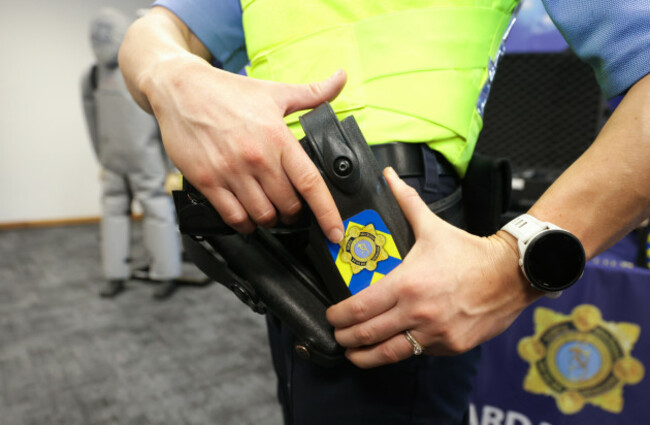
The Conductive Energy Devices (CEDs), also known as the brand name ‘taser’, works by releasing an electric charge to incapacitate a person.
During the pilot a selected group of 128 gardaí from the three designated stations will be authorised to carry tasers while on operational duties.
While they have been in use since 2007, tasers have up to now only been issued to specialist members such as those in Regional Armed Support Units and the Emergency Response Unit.
A garda spokesperson said the pilot will only be carried by the selected gardaí in conjunction with body cameras – with all three designated stations also taking part in a body camera pilot.
To prepare for the pilot, the 128 gardaí have undergone a three-day-long taser training course which was “grounded in Irish Constitution and European Convention on Human Rights principles”, according to the garda spokesperson.
“The deployment of Tasers will be fully human rights compliant and will be subject of rigorous evaluation prior to any decision for wider roll out of Tasers within An Garda Síochána,” the spokesperson added.
Speaking at the launch this morning, Garda Commissioner Justin Kelly said that rolling out this pilot was one of his priorities when he took over.
He added that he has a duty of care to garda members, particularly frontline officers, and that over 300 members are injured each year.
Kelly said it’s important that gardaí “have everything they need to keep them and the public safe” and remarked that “knives, swords, and even axes” have been used in attacks against gardaí.
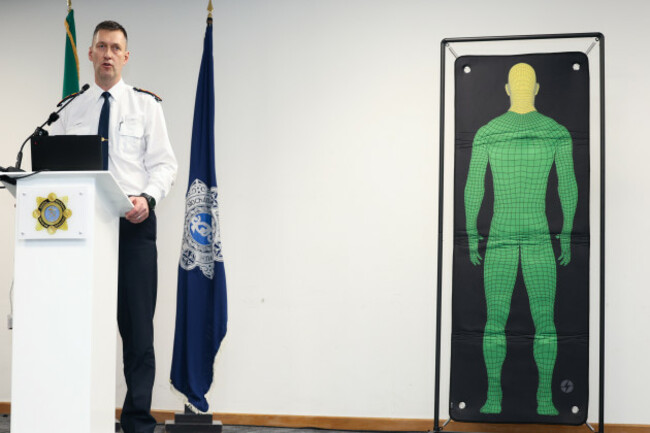
He added that this will help the public feel safe in Dublin City Centre and that this is “not a move to arming members of An Garda Síochána on a full-time basis with firearms” and that not every member will have a taser.
However, Kelly acknowledged that this is a six-month pilot and that there is a possibility that at the end of the pilot, An Garda Síochána may opt not to adopt tasers more fully.
When we get to the end of this pilot, we may certainly say we’re not going to roll out tasers around the organisation, we may certainly come to that conclusion, but we have to wait and see how the pilot goes.
It was also noted at today’s launch that in the UK, over 80% of incidents are resolved without the need to deploy the taser and it’s hoped that similar will be achieved in Ireland, whereby the threat of the use of a taser is enough to de-escalate the situation.
It was also noted that in the majority of cases, tasers would only be used after going through an escalation procedure and Kelly said that a taser wouldn’t be used in “95%” of cases gardaí deal with.
Rather than being used in a riot of public order disturbance, Kelly remarked that the use of tasers would be more suited to “dynamic dangerous situations that members of the public are exposed to”, such as stabbing incidents in public places.
Criticism of plan
However, the rollout has been criticised by the Irish Council for Civil Liberties (ICCL) which said it has “deep concern” over the plan.
It called the speed of the pilot’s rollout “incredibly concerning” and an example of an “expansion of garda powers without sufficient evidence” demonstrating their need.
“Just 16 days after media outlets first reported on the Justice Minister’s plans and without any political debate or public scrutiny, gardaí on the streets of Dublin city centre and Waterford will be carrying tasers,” the ICCL said in a statement.
In its statement, gardaí pointed to their engagement with oversight bodies including the Department of Justice, Home Affairs and Migration, the Policing Community Safety Authority and the Strategic Human Rights Advisory Committee for An Garda Síochána as part of the due diligence.
The garda spokesperson added that any use of a Taser will be notified to Fiosrú, Office of the Police Ombudsman.
On average there have been two taser deployments per month over the last five years.
Speaking about the forthcoming pilot, Acting Deputy Commissioner Security, Strategy and Governance Paul Cleary highlighted that tasers will “only be used where there is a clear, immediate threat that cannot be managed in any safer way”.
“And we will record every use for strict oversight,” Cleary said.
We know trust matters. We know policing only works when the public believe in how we operate and why we do what we do. This pilot is measured, transparent, and grounded in keeping people safe, including the individuals we encounter at their most vulnerable.
Cleary added that frontline gardaí must respond to “fast-moving, unpredictable” incidents every day.
“Almost all are resolved calmly,” he said, “But some can turn volatile very quickly.
“Situations where somebody is armed, distressed, intoxicated, or experiencing a severe mental-health crisis. In some of those scenarios, Gardaí have to make instant decisions to protect the public, protect the person in crisis, and to protect themselves.”
-With additional reporting from Diarmuid Pepper

To embed this post, copy the code below on your site















have your say