Sign in. It’s quick, free and it’s up to you.
An account is an optional way to support the work we do. Find out more.
Sign in. It’s quick, free and it’s up to you.
An account is an optional way to support the work we do. Find out more.
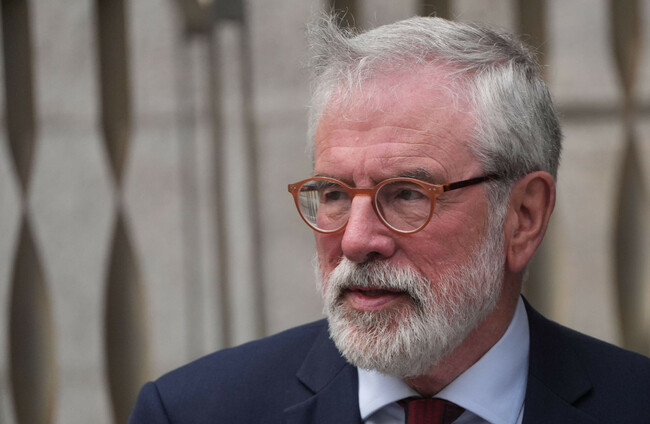
FORMER SINN FÉIN leader Gerry Adams has been awarded €100,000 in damages after winning his libel action against the BBC at the High Court in Dublin.
Mr Adams said that a BBC Spotlight programme, and an accompanying online story, defamed him by alleging he sanctioned the killing of former Sinn Féin official Denis Donaldson, for which he denies any involvement.
A jury at the High Court in Dublin found in his favour on Friday, after determining that was the meaning of words included in the programme and article.
It also found the BBC’s actions were not in good faith and that it had not acted in a fair and reasonable way.
Adams said from his perspective, the case was about “putting manners” on the BBC.
Mr Donaldson was shot dead in Co Donegal in 2006, months after admitting his role as a police and MI5 agent over 20 years.
In the programme broadcast in September 2016, an anonymous source given the pseudonym Martin claimed the shooting was sanctioned by the political and military leadership of the IRA and that Mr Adams gave “the final say”.
In 2009, the dissident republican group the Real IRA claimed responsibility for the killing and a Garda investigation into the matter remains ongoing.
Speaking in Irish after the verdict, Mr Adams thanked his wife Collette and his family for standing by him throughout the trial.
He said he was mindful that Denis Donaldson’s family had to “watch all of this”.
Mr Adams called on Justice Minister Jim O’Callaghan to meet with Donaldson’s family “as quickly as possible”.
“There’s an onus on both governments and everyone else, and I include myself in this, to try and deal with these legacy issues as best we can.”
Adam Smyth, Director of the BBC in Northern Ireland, said the court accepted that the Spotlight broadcast and publication “were of the highest public interest”.
“We didn’t want to come to court, but it was important that we defend our journalism and we stand by that decision,” he said.
He said the implications of this case will be “profound”.
“If the BBC’s case cannot be won under existing Irish defamation law, it’s hard to see how anyone’s could.”
Jennifer O’Leary, a reporter who worked on the Spotlight broadcast, said she had “nothing to hide, only sources to protect”.
She thanked witnesses who took the stand during the trial, including Ann Travers, whose sister Mary was murdered by the IRA in 1984.
O’Leary said she was thinking of the victims and survivors of the Troubles, who “carry the burden of their grief and trauma with incredible dignity and courage”.

To embed this post, copy the code below on your site










have your say