Sign in. It’s quick, free and it’s up to you.
An account is an optional way to support the work we do. Find out more.
Sign in. It’s quick, free and it’s up to you.
An account is an optional way to support the work we do. Find out more.
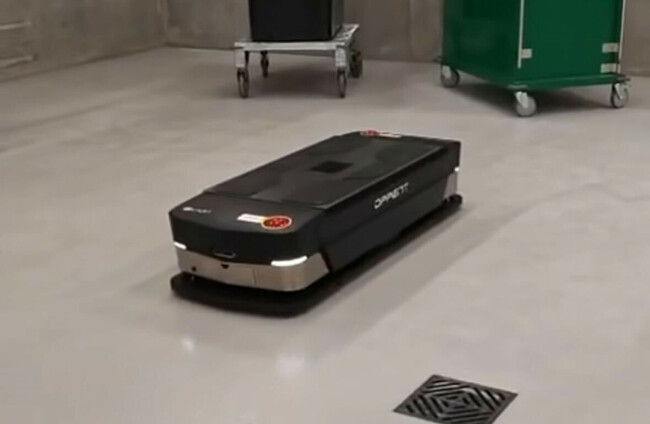
DRIVERLESS ROBOTS ARE to be used to transport food, medicines and other supplies around the new National Children’s Hospital.
The serially-delayed project had an original completion date of August 2022, while costs have ballooned from a planned €650 million to an expected €2.2 billion.
The completion date for the hospital has been delayed 19 times.
In a post to social media from Children’s Health Ireland (CHI), and using a robot emoji, it was announced that “Automated Guided Vehicles” (AGVs) have arrived at the new National Children’s Hospital.
AGVs are portable, driverless robots used for transporting materials without human intervention.
Though primarily used in factories and warehouses, they are also used in hospitals.
CHI has purchased 20 such robots for the new National Children’s Hospital and said they will “help reduce physical strain on staff, improve safety, and allow healthcare teams to focus even more of their time on patient care”.
It added that the AGVs will “play a vital role in supporting hospital teams by transporting food, medicines, linens, sterile supplies, and other essential items safely and efficiently”.
CHI further stated that the robots are designed to “operate reliably around the clock” and will support “faster deliveries, smarter logistics, and a better experience for patients, families, and staff alike”.
“We’re thrilled to see this innovative technology becoming part of the future in paediatrics and can’t wait to see the positive impact it will make every day in our National Children’s Hospital,” added a spokesperson.
However, trade union SIPTU said they are “are engaged in discussions regarding the use of AGVs”.
A spokesperson said that the union has “received assurances that, in all iterations, the use of AGVs will assist but not replace direct labour”.
“We have, however, sought further engagement to ensure that this is achieved in a manner that identifies and creates possible training and promotional opportunities for the grades we represent,” the spokesperson added.
The union has also raised concerns with the “apparent rush” to introduce AI processes into the workplace, which they say was done “without proper due diligence or oversight”.
“Again, while SIPTU understands the many opportunities presented by AI, we remain committed to the view that this cannot come at the cost of good, secure direct employment and can never be allowed to replace the invaluable human interactions so important to safe modern healthcare.”

To embed this post, copy the code below on your site















have your say