Sign in. It’s quick, free and it’s up to you.
An account is an optional way to support the work we do. Find out more.
Sign in. It’s quick, free and it’s up to you.
An account is an optional way to support the work we do. Find out more.


MANY YEARS AGO, I mused over a parental decision that a friend of a friend had made to shield their child from everything reported on the news.
They went to great lengths to ensure their young charge would not be exposed in any way to the daily atrocities of man, reasoning their child was exactly that – a child with the right to live as one.
Adults built the fire; let them put it out. Why subject the smallies to it?
I struggled a bit with it all because, although I greatly admired this person’s approach, I did wonder if, in the long run, they were perhaps being a little too protective and just delaying the inevitable. Life is tough, better to teach them resilience.
Like when their child hears something unsavoury at the playground or at school. Rather than bubble wrapping our youngsters, surely it’s better to prepare them, even a little bit, for life’s many curveballs. By doing that, it automatically follows that they will have a few coping skills in their arsenal.
At present, we appear to have found ourselves inhabiting a dystopian-like world where, it seems, mad men are behind the wheel. If we, the parents in the room, find it difficult to wrap our own heads around the never-ending conflict, how do we explain it to our kids?
Further still, how do we raise them to navigate a world that is on fire? These questions have given me sleepless nights.

Years back, cycling to school, my childhood friend pointed to the large house that was close to where we lived, and announced that that was where she would head if war ever broke out. I was told the house had an underground bunker, and if we got there in time, we’d be grand.
In those halcyon days of my youth, I took what she said with a large pinch of salt. A few decades later, though, I find myself thinking about this house, which is still standing and wondering if my friend’s intel was correct.
A quick mental inventory of my kitchen cupboards reveals a few cans of chickpeas, pasta sauce and the usual baking dry ingredients. If we were to find ourselves scrambling to a subterranean shelter in the dead of night, our meagre food offerings would not earn us brownie points.
I sat my Leaving Certificate in the early 90s, and directions on how to live sustainably were not on the school curriculum. To the best of my knowledge, it still isn’t. Were it to be introduced, I imagine plenty of sceptical teenage eyebrows might be raised.
Questions over the use of Pythagoras’ theorem in the real world could give way to ‘why are growing vegetables, isn’t that what the shops are for?’ We are not all blessed with the ability to repair clothing, and even if I had a modicum of interest in DIY, I suspect I would be useless at it.
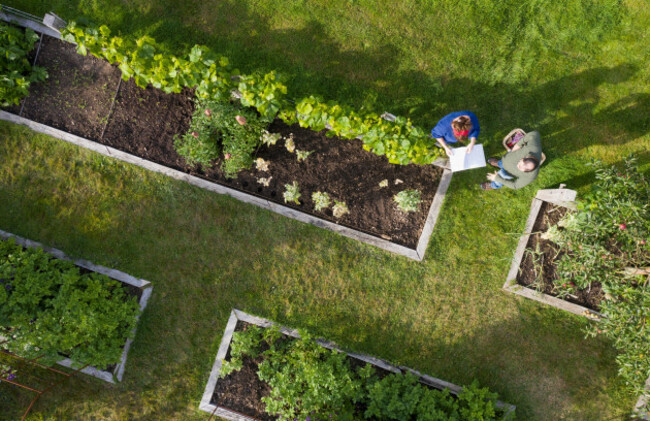
I did briefly experiment with a vegetable patch, and my main takeaway is that it takes a lot of time and patience to produce even a small amount of produce. It feels as if the conveniences of living in the modern world have made us forget how those who came before us actually lived.
Stepping out of the horticultural arena, my own strengths lie in meeting the situation head-on. I’ve always believed we can talk to our kids about anything, provided we use age-appropriate language. After all, we don’t want to scare them, but I think they deserve to have their questions and concerns met with honesty and an open conversation.
History has a nasty habit of repeating itself, and unfortunately, these are not new crises we find ourselves in.
During the Second World War, Operation Pied Piper was a London government initiative that facilitated the evacuation of children and some women to safer locations. Exploring this further, whilst shining a light on the resilience of children during wartime, is the historical fiction novel Goodnight, Mr Tom.
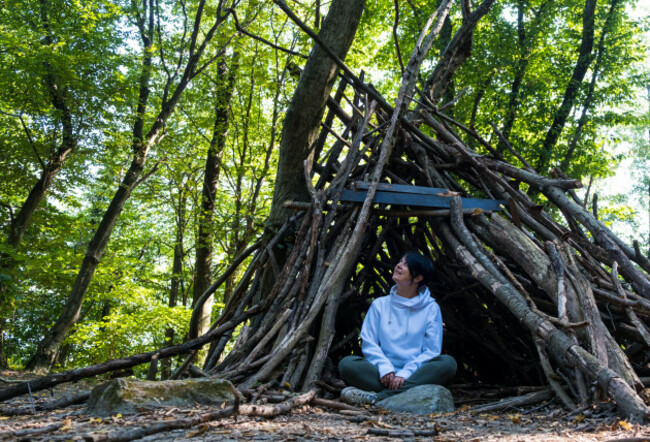
What’s different about the modern world that kids find themselves in is that they are exposed to the visuals and the noise of everyday atrocities by the sheer prevalence of media in their lives. Whether they’re allowed to watch TV or they have devices or not, they will absorb much of the difficult news by osmosis.
The best thing we can do for all concerned is to prioritise emotional well-being by providing stability in a way that suits each family. We can start by managing our own self-care, and for me, the most obvious one is reducing my exposure to upsetting imagery and commentary, particularly online. Our brains cannot cope with a constant influx of distressing information.
I have been paying attention to how young people are managing with the stresses playing out closer to home. Despite everything, they are still having fun and winning at life; passing driving tests, securing early college places and going to the races, amongst others.
Perhaps we don’t give them enough credit for how they navigate hardship. Perhaps the resilience is already there. Our kids look to us for guidance, but maybe we, the adults, could look to our younger generation for a reminder that even in a world of flux, our lives are not defined by crisis. There is ample space for some fun.
Something that has been getting airtime in our house of late is a game called Senior Tag or Water Tag, a game currently being played by Leaving Cert students across the country.
Specific safety rules and locations must be adhered to, and each day, a participant is tagged out of play by a water gun. The game continues until all but one person is left standing, and this winner receives a cash prize from collected entry fees.
It may seem tone-deaf in the middle of a housing crisis and the ongoing political battleground to speak of such a game. But our children and young adults are finding their footing in a way that is instinctively right for them.
Furthermore, if the door to the mythical bunker ever did open, they might rock up to it much better prepared than their parents.
Gwen Loughman is the gatekeeper of four boys, one husband and a watcher over two dogs.
To embed this post, copy the code below on your site














have your say