Sign in. It’s quick, free and it’s up to you.
An account is an optional way to support the work we do. Find out more.
Sign in. It’s quick, free and it’s up to you.
An account is an optional way to support the work we do. Find out more.
THE LATEST ‘CLIMATE Conversations’ survey by the government has found that the public believe that the government is seriously underperforming in its climate action.
This survey is the fourth report of its kind. It gathered its responses through an online public consultation between May and September 2024. It claims to “provide critical insights into Irish citizens’ attitudes, understanding, and involvement in climate action”.
One section of the report, titled ‘Perceptions of the Government’s Performance [on climate]‘, summarised its respondents’ attitudes to Government’s climate performance as so:
“Their performance was generally negatively perceived across all areas, especially in terms of ‘having a clear plan in place for getting Government, businesses and people to work together’, and in ‘Giving citizens a say in climate policy’. ‘Supporting individuals and communities to take climate action’ was also one of the more poorly rated areas.”
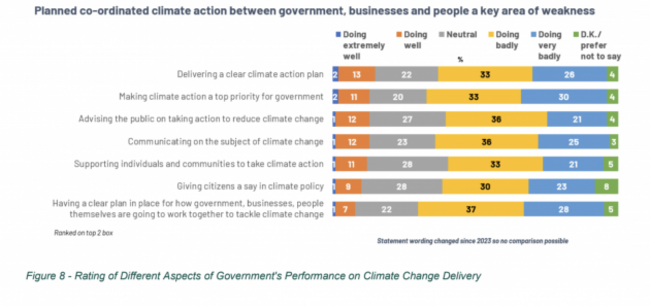
Just over one in seven people who responded to the survey believed that the Government is delivering a clear climate action plan.
The report noted that those that had responded to the online consultation are generally more engaged with the topic of climate change than the general public, and stated “this is worth remembering” in regards to assessing responses from the cohort in which 76% of the respondents expressed that they felt that they themselves could do more to address climate change, an increase in the previous iterations of the survey.
It said that frustration is the dominant emotion felt by the Irish public regarding climate change, followed by worry and powerlessness.
Frustration was recorded by 67% of the 1,9,49 respondents (about 1,306 people), worry by 54% (about 1,052 people), and powerlessness by 51% (994 people).
Respondents decided that in their view, reducing the number of flights, retrofitting, and the installation of solar panels/wind turbines would have the greatest impact on reducing carbon emissions. However, the department said that there was a misperception and that Ireland’s lagging behind on the adoption of electric vehicles was not viewed correctly in this context.
Other key findings within the report included the persisting of “misconceptions” about actions that most effectively reduce carbon emissions. It said that “many respondents” underestimate the benefits of adopting the use of an electric vehicle.
The report recommends establishing community climate hubs, addressing misperceptions about electric vehicles, and enhancing cross-government collaboration on climate initiatives.
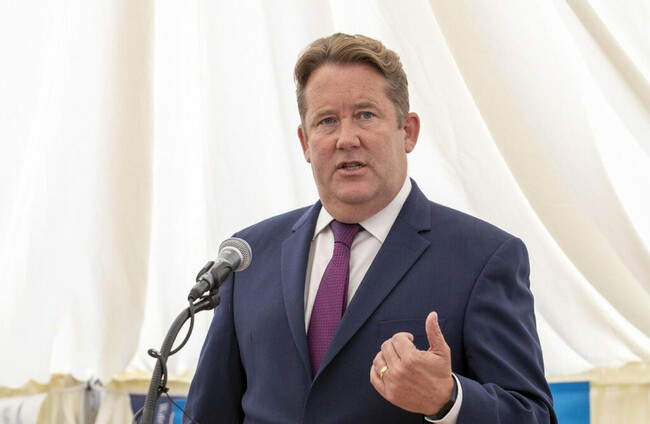
Minister Darragh O’Brien said that the report “provides us with a great understanding of the issues that our citizens and communities really care about when it comes to climate action”.

To embed this post, copy the code below on your site













have your say