Sign in. It’s quick, free and it’s up to you.
An account is an optional way to support the work we do. Find out more.
Sign in. It’s quick, free and it’s up to you.
An account is an optional way to support the work we do. Find out more.
LAST UPDATE | 22 Oct 2024
THE GOVERNMENT IS seeking to double the amount by which a person’s social welfare can be cut if they don’t engage with the State’s employment services.
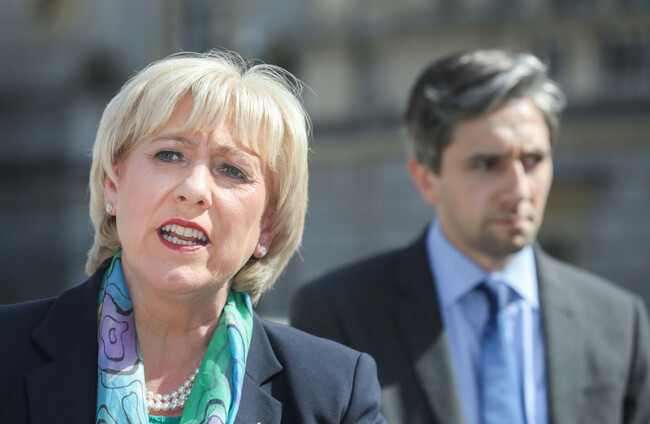
The current penalty is €44, but it would increase to €90 if legislation by Social Protection Minister Heather Humphreys passes.
Speaking ahead of the government’s Cabinet meeting today, where the proposal was discussed, Taoiseach Simon Harris described it as a “common sense measure” to make sure the system is compassionate “but also that people have to play ball”.
“This idea that if you refuse to engage with our activation services in the Department of Social Protection, that that can just continue indefinitely, I don’t think anyone thinks that’s fair,” he said.
“There’s often reasons somebody can’t work, and that’s absolutely appropriate and fine. There’s often people who need support in getting to work. No problem at all.
“But if you’re refusing to engage at all, that has to have an impact in terms of the amount of social welfare payments that you receive.”
The €44 penalty for people on Jobseeker’s Benefit was first introduced in 2011.
However, Opposition TDs have hit out against the move, stating that Fine Gael is playing to its base ahead of the election.
People Before Profit TD Paul Murphy accused the government “following the Tory line”, stating it is a “cruel cut” from Humphreys.
Murphy said it is “exactly what was implemented by the Tories in Britain and the impact will not be to get more people back at work”.
“There will be reasons that people are not at work. For example, severe mental health issues. It will just drive people further into poverty, further into misery,” he said, stating that it will have a big impact on children.
Social Democrats TD Gary Gannon said of the idea of increasing the penalty being a “common sense measure”: “I’d like to see data that backs that up”.
He said that currently the unemployment rate is low, the vast majority of people are on Jobseeker’s Benefit for less than 12 months, and those on it for longer include lone parents, who can’t necessarily go back to work.
Gannon described the higher penalty as “cynical” and “harsh”, saying it will “damage people who are already in a state of vulnerability”.
“It’s a common sense measure if you’re looking at it from a Thatcherite viewpoint.”
Defending the policy this afternoon, Finance Minister Jack Chambers said the move is a continuation of existing government policy.
“We need to continue to reward and support and incentivise work, and that’s why encouraging those who are job seekers to engage in labor activation is an important part of how Department of Social Protection should operate,” Chambers said.
The proposal for higher penalties is one of Humphrey’s last acts as a government minister, as she announced last week that she will not contest the general election.
After 18 years in politics, the Fine Gael deputy leader becomes the eighteenth politician from the party to announce they won’t contest a seat in the next Dáil.
With reporting from Jane Matthews and Christina Finn

To embed this post, copy the code below on your site
















have your say