Sign in. It’s quick, free and it’s up to you.
An account is an optional way to support the work we do. Find out more.
Sign in. It’s quick, free and it’s up to you.
An account is an optional way to support the work we do. Find out more.
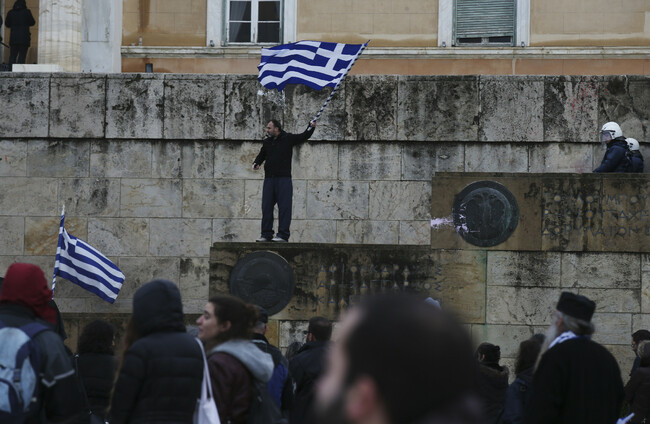
GREEK LAWMAKERS TODAY ratified a landmark name change deal with neighbouring Macedonia: the Prespa agreement.
On January 11, Macedonia’s parliament backed a constitutional revision to change the name to the Republic of North Macedonia, but for the deal to go through, it had to be approved by Greek MPs.
A narrow majority of 153 MPs in the 300-seat chamber approved the deal, with several independent lawmakers supporting Prime Minister Alexis Tsipras’ leftist Syriza party.
The deal is a diplomatic triumph for Tsipras, ending one of the world’s most stubborn diplomatic disputes, an AFP count showed.
Athens has objected to its neighbour being called Macedonia since 1991, because Greece has a northern province of the same name.
In ancient times it was a source of intense pride for Greeks, as the cradle of Alexander the Great’s empire.
Tsipras’ leftist Syriza party secured the vote with the support of several independent MPs.
“With this agreement, Greece regains… its history, its symbols, its tradition,” Tsipras told the chamber ahead of the vote during the two-day debate, calling an end to “thirty years of hypocrisy”.
He stressed that Macedonia will now be “a friend, an ally, a supporter for cooperation, peace and security in the area.”
Making a deal
Greece must also ratify a protocol approving Macedonia’s membership of NATO to make the UN-sponsored agreement final. This is expected to take place next month.
In addition to normalising relations between the two countries, implementation of the agreement will make it possible for Macedonia to join the European Union. Previously, it was blocked by Athens’ veto.
Critics say the agreement — which drops Greece’s objections to an official Macedonian language and identity — opens the way for possible cultural usurpation and trade disputes.
Controversy
Main opposition leader Kyriakos Mitsotakis of the conservative New Democracy party said the agreement “creates new problems” and “awakens nationalism”.
“Your foreign policy is superficial and ignorant… you should be ashamed,” he told the government.
In response, Tsipras insisted yesterday that “we never had a Macedonian language. Alexander the Great spoke Greek.”
But in Greece, Macedonia’s name still fuels political and social controversy, ahead of parliamentary elections scheduled in October.
Protests have been held in both countries against the agreement, some of them violent. Lawmakers in Greece have reported threats and arson attacks against their homes.
Two polls held by Greek media showed that more than 60% of respondents were against the deal.
On Sunday, clashes between police and masked protesters left 40 people injured as tens of thousands demonstrated in Athens against the name change.
The government blamed far-right extremists and the neo-Nazi Golden Dawn party for the violence.

To embed this post, copy the code below on your site












have your say