Sign in. It’s quick, free and it’s up to you.
An account is an optional way to support the work we do. Find out more.
Sign in. It’s quick, free and it’s up to you.
An account is an optional way to support the work we do. Find out more.
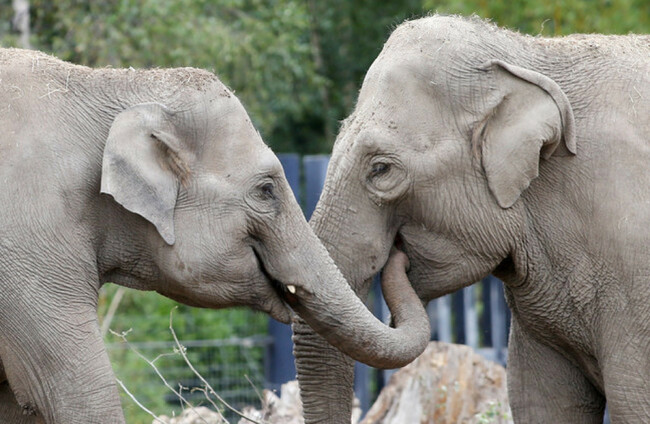
ELEPHANTS AT DUBLIN Zoo have been given a clean bill of health following an outbreak of Elephant Endotheliotropic Herpesvirus (EEHV) over the summer.
In total, five elephants had tested positive at the Zoo. Sadly, two young elephants Avani (8) and Zinda (7) died as a result of the infection in July.
After extensive care measures taken at Dublin Zoo, in coordination with international vets and zoos, gardaí and the Irish and British Government, three elephants are now healthy and fully recovered.
17-year-old Asha, 10-year-old Samiya and 40-year-old Dina, mother of the two deceased elephants, have since been returned to a shared space with bull elephant Aung Bo, who was kept in quarantine for a lengthy period of time and never got sick.
The virus can remain dormant in elephants for years, but when active it can lead to internal bleeding and later death. Not much is known about the EEHV virus at this time, but research continues.
It’s vital that EEHV is detected early, the Zoo says, but it is still particularly tricky to treat in young elephants, like Avani and Zinda, as they live with less levels of immunity.
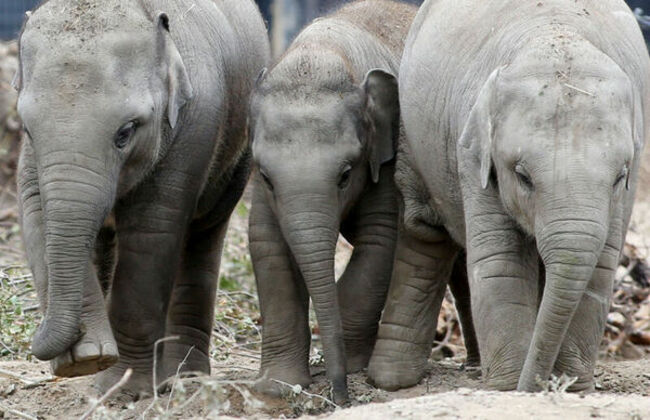
Chester Zoo in the UK assisted with the importation of medicine to treat the remaining female herd.
Dr Christoph Schwitzer, Director of Dublin Zoo, described the moment as “bittersweet”.
“While we are relieved and grateful that our elephant herd has recovered from the EEHV outbreak, we will never forget the tragic loss of two elephants earlier in this challenging journey,” he said.
Dublin Zoo said staff tackled some “challenging days” during the time they spent treating the elephants for the illness and thanked the help of the Irish and UK Governments with hastily importing much-needed medicine for the animals.
One staff member, vet Niamh McGill, had just arrived back at work following maternity leave.
Dublin Zoo said she was an example of the team’s “commitment and unwavering care” as her husband would bring their newborn to the Zoo so Niamh could breastfeed the child.
Staff and emergency care teams spent hundreds of hours on site during the crisis, the Zoo said.

To embed this post, copy the code below on your site















have your say