Sign in. It’s quick, free and it’s up to you.
An account is an optional way to support the work we do. Find out more.
Sign in. It’s quick, free and it’s up to you.
An account is an optional way to support the work we do. Find out more.
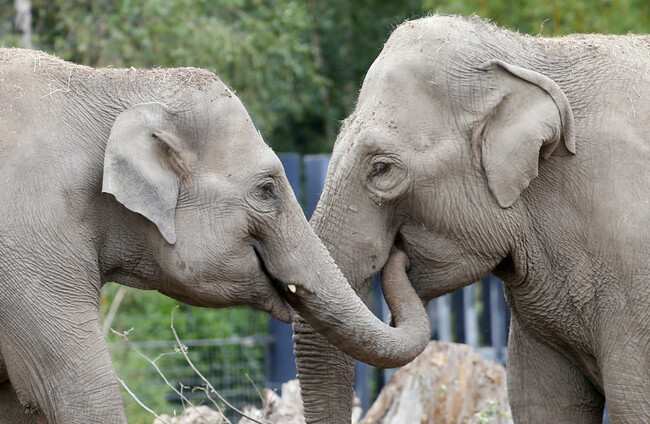
DUBLIN ZOO HAS confirmed that a fourth elephant has tested positive for Elephant Endotheliotropic Herpes Virus (EEHV), which has already caused the death of the two elephants onsite in recent weeks.
Both Samiya, who turns 10 in September, and 17-year-old Asha, who tested positive for EEHV last week, are currently showing no outward signs of illness. Tests have confirmed that both elephants have some antibodies which may boost the chances of a positive outcome.
Management at the zoo say that while EEHV remains an extremely difficult illness to predict. The two impacted elephants continue to receive the best possible treatment from their veterinary and animal care teams.
“Both Samiya and Asha are being continuously monitored for any changes in their health. The other elephants in the herd are currently not showing an signs of EEHV but are also being closely monitored.
“We want to say another heartfelt thank you to the public for the thousands of messages of support we have received over the past two weeks. The Dublin Zoo team is so grateful for all your kind words.”
In recent weeks, eight-year-old elephants Avani and Zinda have died from the virus.
EEHV is a virus which causes fatal hemorrhagic disease, particularly in young Asian elephants.
EEHV often lies latent in elephants and can be triggered without warning, as the virus is carried asymptomatically by many.
Dublin Zoo has enacted its EEHV response plan. They have been in consultation with leading international experts in elephant health, virology, and wildlife management. Older elephants are not as vulnerable to illness from the EEHV virus as younger ones.
There is currently no vaccination against EEHV. However, zoos and wildlife researchers around the world are working tirelessly to develop one with the aim of safeguarding the future of the elephant population from this disease.
Dublin Zoo stresses that EEHV does not pose a health risk to humans and is not transferable.
To embed this post, copy the code below on your site












have your say