Sign in. It’s quick, free and it’s up to you.
An account is an optional way to support the work we do. Find out more.
Sign in. It’s quick, free and it’s up to you.
An account is an optional way to support the work we do. Find out more.
THE DEPARTMENT OF Health has, for the first time, published a report that compares death rates in hospitals and names the hospitals.
The report details deaths from heart attacks and stroke as well as waiting times for certain procedures, cancer survival rates and the rates of Caesarean sections at maternity units.
In a statement today, the department’s chief medical officer Tony Holohan said patients “have the right to know the type of information contained in this report”.
“Ultimately it will help to improve services and patient outcomes and it will, I hope, commence a public discussion on these important issues.”
Reports like this empower patients and service users to make informed decisions about their health care, help health care providers to improve their performance through benchmarking with other services, and they facilitate system-wide quality improvement in health care by informing national policies.
The table below, taken from the report, shows the rates of death in the various hospitals within 30 days of admission for a heart attack:
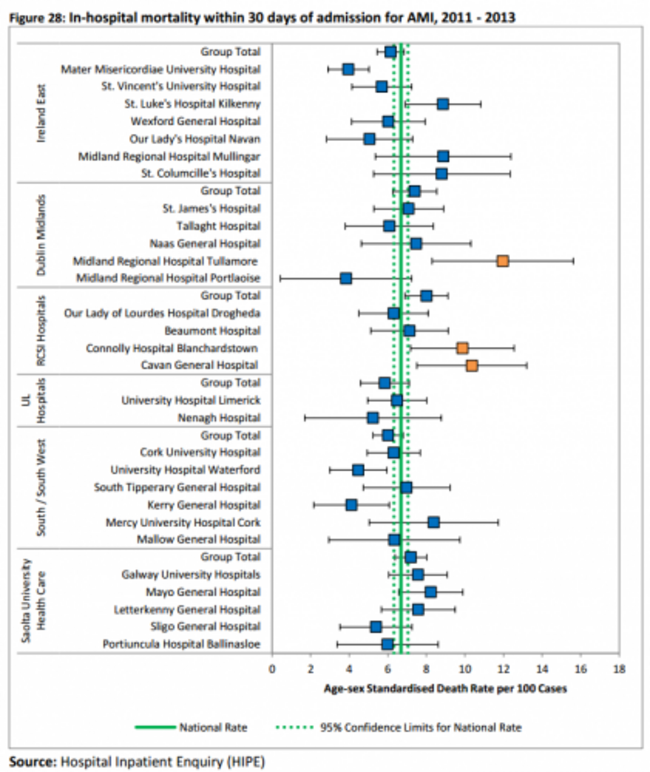
It shows the highest rates are at Midland Regional Hospital in Tullamore, Cavan General Hospital and Connolly Hospital in Blanchardstown. The lowest rates are seen at Midland Regional is Portlaoise.
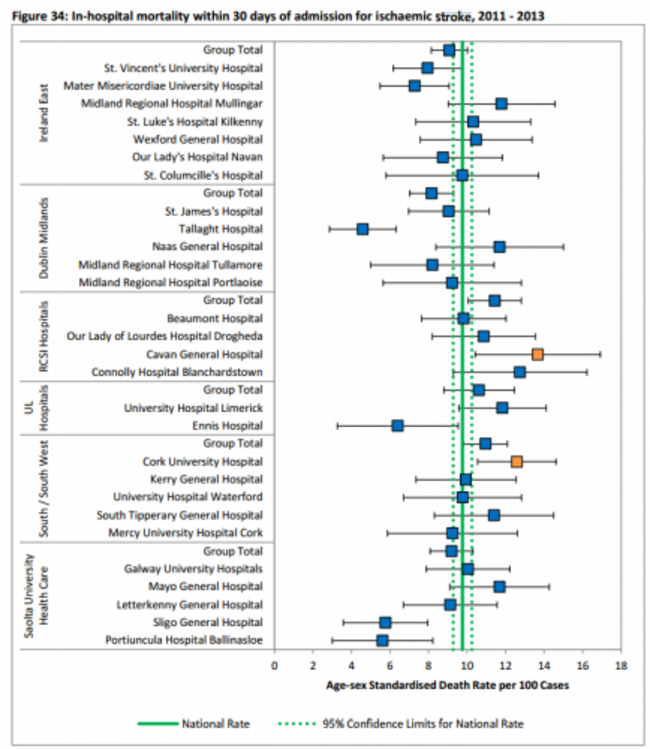
For ischaemic stroke, the hospitals with the highest rate between 2011 and 2013 were Cavan General Hospital and Cork University Hospital.
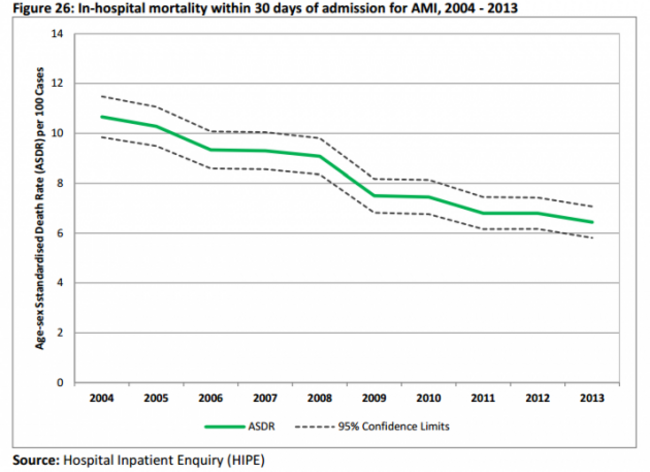
Overall in-hospital death rates have been dropping in the last ten years, however:
Caesarean section rates were highest for St Luke’s Hospital in Kilkenny, followed by Mayo General Hospital and lowest for Sligo General Hospital.
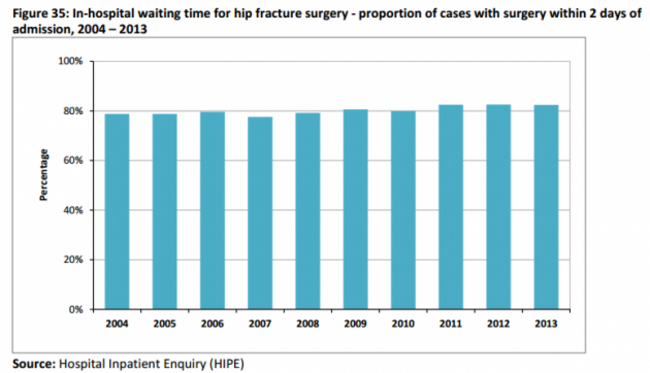
Details on cancer survival rates for breast, cervical and colorectal cancers were also included in the report as well as waiting times for hip fracture surgery, which haven’t changed much in the last ten years.
Today Dr Holohan pointed out that there is no such thing as “perfect data” but the indicators presented in this report “signal to us that certain services require further analysis and examination in order to identify if a problem exists”.
One can draw on the analogy of a smoke alarm going off. Further investigation may reveal a faulty smoke alarm or an actual fire.
Health Minister Leo Varadkar welcomed the publication of the report, saying he is a strong believer in transparency and open data.
“As they say, if you don’t measure it, you cannot improve it and without regular measurement and reporting you cannot know if your policies and reforms are actually making a positive difference.”

To embed this post, copy the code below on your site















have your say