Sign in. It’s quick, free and it’s up to you.
An account is an optional way to support the work we do. Find out more.
Sign in. It’s quick, free and it’s up to you.
An account is an optional way to support the work we do. Find out more.
THE NATIONAL MONUMENTS Service as well as a member of the Heritage Council have expressed worry that Ireland’s historic monuments are being increasingly targeted by vandalism and attacks.
Pat Reid, who works at the Glendalough Heritage Forum, told The Journal that he was shocked to discover damage to an ancient granite stone last week.
“There’s certainly been an escalation in damage to Glendalough and other important sites in recent years, during Covid but certainly post-Covid,” he said.
“People are visiting sites closer to home, which is great but they’re not always respecting the site. It’s a pity to see this change in attitude towards national monuments and heritage sites.”
The ancient stone in Glendalough with a hollow depression at its centre is known as the Deerstone due to a story linking it to St Kevin and deer.
Reid discovered last week that a fire had been lit on the Deerstone, leaving it with significant cracks which he believes will grow worse in winter time when ice in the damaged stone’s crevices expands.
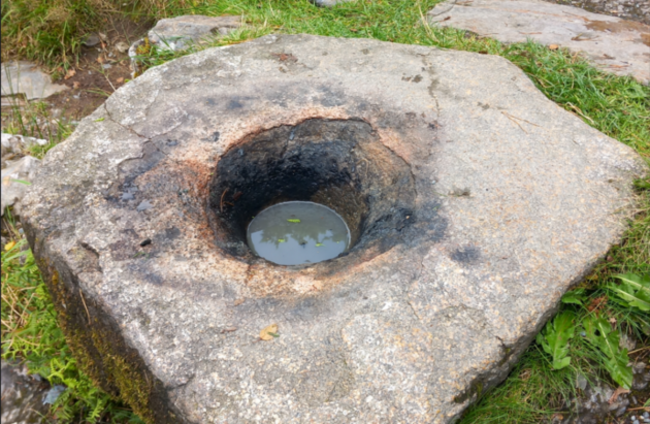
Reid said he wants to assume that whoever lit the fire did so without realising the damage the high heat would cause and didn’t act out of malice.
“There’s no signage directly next to the stone, but it would be impossible for someone to not know it had some significance. Legend has it St Kevin had a doe leave milk in the hollow in the stone so that a baby whose mother had passed away wouldn’t go hungry.”
“Even if you thought it was a regular stone and didn’t know it was linked to a saint, you shouldn’t be lighting a barbeque in a monastic complex,” he said.
Reid believes that it’s more likely that an accelerant such as petrol could have been poured on the stone to start a fire, rather than a naively constructed barbeque, because there was no ash left at the site afterwards.
Glendalough is a national treasure, a place of tranquility, history and heritage. People visit from around the world to admire the natural beauty & learn of the history and the heritage. The vandalism to the Deer Stone is disgraceful pic.twitter.com/5XZE1sEjsB
— Simon Harris TD (@SimonHarrisTD) August 10, 2023
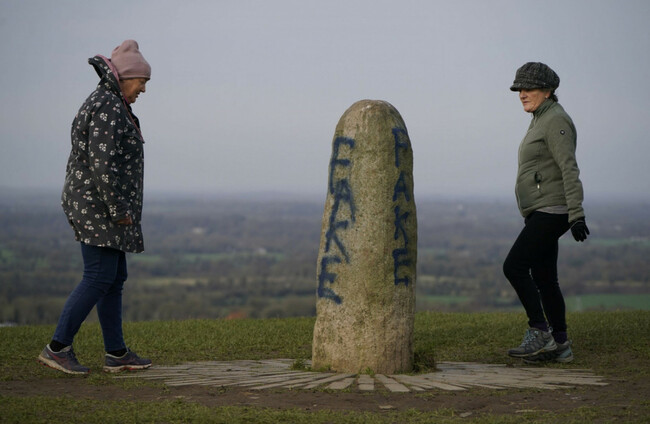
Many other sites around Ireland have also been targeted, including perhaps the country’s most famous stone: the Lia Fáil, or Stone of Destiny at the Hill of Tara, which had the word ‘fake’ spray-painted on it in February.
The stone, which is over 5,500 years old and was used to crown High Kings of Ireland, was painstakingly cleaned with warm water and steam so as not to erode or damage it while removing the paint.
Other historic sites such as St Mary’s Collegiate Church in Gowran, Co Kilkenny have had pieces of stone broken off them, with the 13th-century church being attacked twice last year.
“It’s shocking the disregard some people have for our national heritage. People who just don’t feel attached to it,” Reid added.
A spokesperson for the National Monuments Service said “reports of vandalism and intentional damage to archaeological monuments” have been rising in recent years.
Illegal metal detecting, damage to stone structures and instances of graffiti are increasing, the statement said, while “the lighting of illegal fires at monuments is also of grave concern, with an added risk of course of fires burning out of control and damaging areas of natural heritage also”.
Minister of State for Heritage Malcolm Noonan told The Journal that the National Monuments Service has “sought to modernise and consolidate the legislation that protects our monuments”.
The Historic and Archaeological Heritage and Miscellaneous Provisions Bill 2023 (the Bill) is “expected to be enacted in coming months”, he said.
The legislation will include penalties of up to 5 years imprisonment and a €10,000,000 fine and a new fixed payment notice regime to allow authorised officers to issue on-the-spot fines.
“While there are existing legal consequences for causing damage to the State’s heritage, the new Bill will bring added clarity and robustness to this process. The lighting of fire, as occurred last week at Glendalough, is among a range of offences created under that Bill,” Noonan stated.
“Educating people is very effective in discouraging them from inflicting intentional damage at heritage sites, but also in creating greater awareness about the unintentional damage that visitors to heritage sites can cause,” he added.
Reid was also of the belief that encouraging people to learn about Ireland’s history was the best way to prevent vandalism.
“I don’t think carving off sites behind fences or putting up CCTV is the way to stop this. Adequate signage and the opportunity to learn about what you’re visiting is key,” he said.
“The only way we will stop this is by educating people who are in the demographic who are likely to do this: probably younger people who like camping and the outdoors.”
“You don’t realise the importance of these places when you’re young but there will come a point in their lives in 10 or 15 years time when they become parents and later, grandparents, who will want these valued and cherished sites to be around for their kids and grandkids to see.”

To embed this post, copy the code below on your site











have your say